



Scientific planning can reduce flood impact







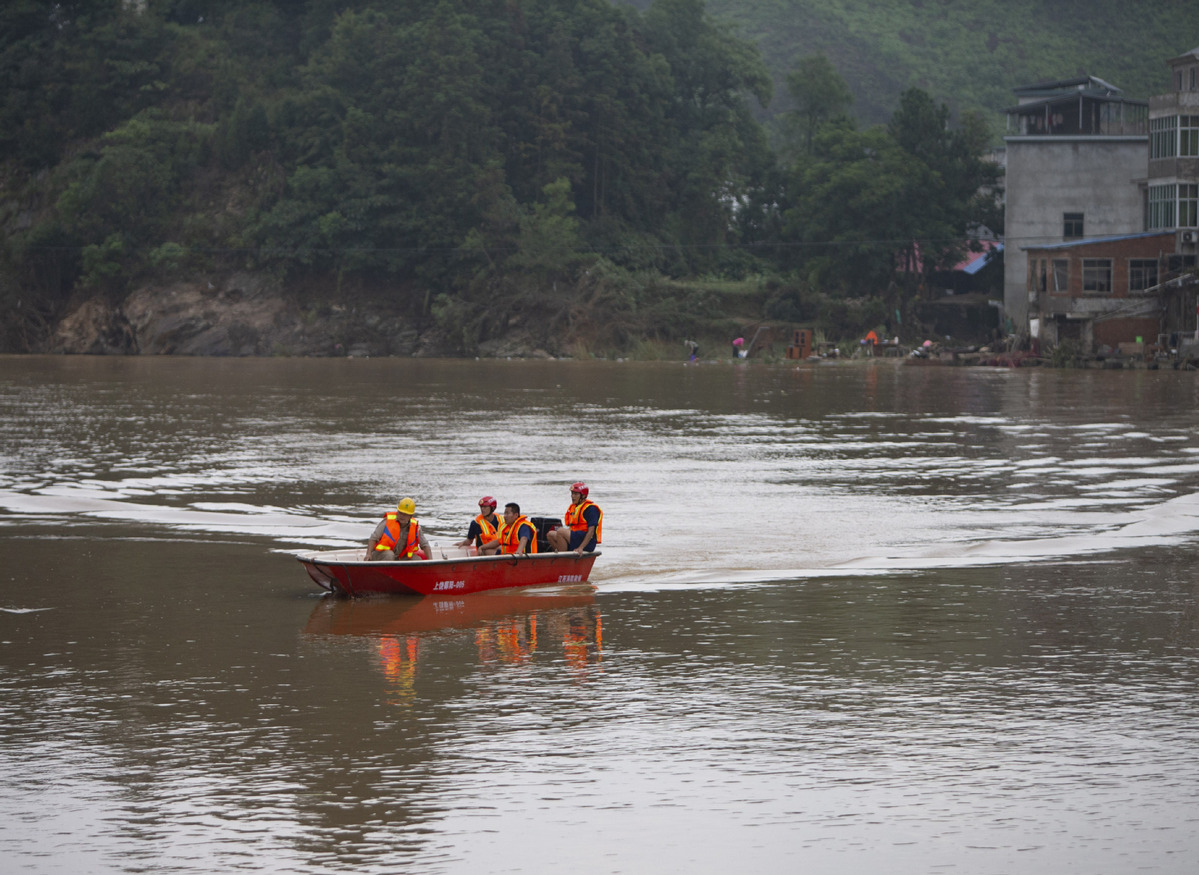
Editor's Note: Southern China has been battered by heavy downpours and floods since June, with 433 rivers flowing above the warning levels and about 39 million people being affected. Why are the floods so severe this year? And what can be done to minimize the impact of the floods? Two experts share their views with China Daily's Yao Yuxin on the issue. Excerpts follow:
More dams and reservoirs can minimize flood impact
Owing to its geography, climate and the uneven distribution of precipitation, China is prone to floods. Given the erratic weather, the precipitation could move northward, or hang over the Yangtze River basin raising the threat of heavy downpours and floods.
Yet despite the many rivers flowing above the danger levels this year-above the levels in 1998 when the last devastating floods in China claimed more 4,000 lives across 29 provincial-level regions, and caused economic losses worth billions of dollars-the flood situation today is not as bad as in 1998.
Since 1998, China has been allocating increasing amounts of funds to build water conservancy facilities, including the Three Gorges Dam. The rising number of dams and reservoirs in China has reduced the economic loss from 2.3 percent of GDP in the 1990s to 0.4 percent in recent years, while also reducing the number of deaths. And although people are worried due to the water level in some sections of the Yangtze River flowing above the 1998 level, the fact is that the huge number of dikes have largely confined the excess water to the main channels of the river.
The actual volume of water flowing in the Yangtze River is less than in 1998.With many farmlands and residential areas relocated way from the river's banks, larger areas of floodplains have been created to absorb the excess water flowing in the river.
But despite expediting infrastructure construction including bridges, highways and railways, China has not given equal priority to building reservoirs and dams as they need huge investments but yield slow returns. Yet given the rising intensity and frequency of floods, China has to improve its flood resilience capacity by building more reservoirs and dams, especially on small and medium-sized rivers.
In fact, China plans to construct 409 water conservancy facilities during the 14th Five-Year Plan (2021-25) period, twice of the number during the 13th Five-Year Plan (2016-20), which will increase the water retention capacity by 9 billion cubic meters. But since the construction of big dams could spark controversy, the government has to address public concerns about the ecological and environmental impact of dams by, for example, building tunnels for fish to swim through dam barriers to spawn and properly relocate residents.
It's impossible to prevent floods, which ironically carry millions of tons of silt every year that fertilizes the soil and protects the deltas against seawater erosion. Yet measures need to be taken to minimize the negative effects of floods, by building more water conservancy facilities, and better protecting the ecology and environment.
Cheng Xiaotao, member of an experts' committee at the National Disaster Reduction Committee
Improve coordination to combat floods
Floods have become more frequent and intense in recent years mainly for three reasons. First, extreme weather events, including unusually heavy downpours, have increased in recent years thanks to climate change.
Second, due to rapid urbanization, plenty of open space and wetlands have been developed into residential areas or business districts to accommodate rising urban populations, increasing the pressure on urban sewage systems.
And third, many local governments haven't made enough efforts to implement environmental protection projects, including expanding the sewage system.
To prevent a city from being flooded during the rainy season, it's necessary to use scientific urban planning including expanding and improving the drainage system, and widening the green landscape. In this regard, big data could play a leading role. For example, digital simulation can make it easier to devise and implement targeted measures to control floods by, for instance, building reservoirs which can absorb excess rainwater and identifying flood-prone areas and taking measures to minimize the impact of a deluge on the city.
Besides, government departments should improve coordination to address the flood problem in cities, reduce economic losses, build a more eco-friendly environment, and meet people's demand for a better life.
Ren Nanqi, vice-president of and a professor at the School of Environment, Harbin Institute of Technology
The views don't necessarily represent those of China Daily.





