Traveling chefs cook up recipe to fight poverty







A minivan loaded with folding tables, chairs, pots and pans is the "mobile restaurant" with which Xie Junming tours the countryside of Guangdong province.
Whenever a rural family holds a wedding, celebrates the arrival of a newborn, or bids farewell to a deceased member, this 45-year-old chef and his wife are there, setting up a dozen tables laden with delicacies, from simple fruit salads, to fish with carrot-carved flowers.
In many parts of southern China, they are known as itinerant chefs. In ancestral temples or neighborhood courtyards, they are summoned to cook for hundreds of visiting friends and relatives of the host family in banquets that can last for up to three days and nights.
"People lead wealthier lives in the countryside today, so they hold more banquets. This means more business for people like me, as there are no restaurants in many villages," he says.
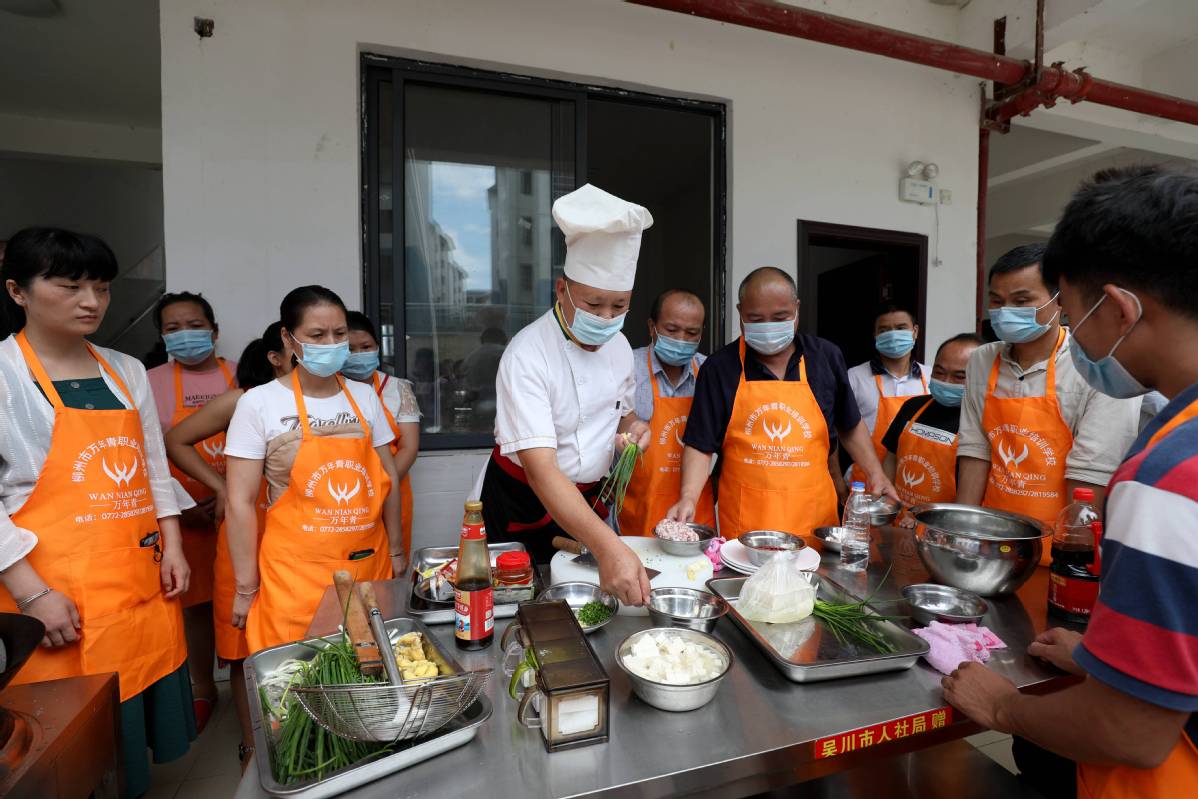
Though most itinerant chefs dress no differently from a villager, Xie dons a white chef's coat to proudly demonstrate his profession.
"I'm a government-licensed chef, not one of those wildcat cooks," says Xie, who graduated from a government-funded program to reduce poverty by training chefs in Cantonese cuisine, a world-renowned culinary genre, and one of the "eight cuisines of China".
Born into a poor family in Nanxiong, once an impoverished city in the wealthy industrial province of Guangdong, Xie left school early to work in restaurants. There he learned culinary skills from chefs, while washing dishes and running errands.
Hoping to start his own business, Xie returned to his hometown in 2008, but dared not enter the profitable trade of village banquets, ashamed of his lack of formal training. He ran a snack stand until he read an advertisement for a government-sponsored chef contest in 2019.
It offered training to all applicants.
"Cantonese cuisine masters from the provincial capital taught us nutrition and gastronomy," he says. "I learned a lot from them, for instance, fried cashew nuts taste more crispy if they are scalded in salty water in advance."
After pocketing a prize and a chef certificate from the contest, Xie mustered enough confidence to start his own banquet catering business in October last year. To build up his reputation, customers are allowed to try a couple of dishes for free before they make decisions.
"Two months into the business, I received orders for more than 300 tables. Local folks all know that I'm an award-winning master," he says.
In 2018, the Guangdong provincial government launched the "Cantonese cuisine masters" program as part of its poverty relief drive to benefit village-touring chefs like Xie. So far, the project has trained over 50,000 chefs, including 11,000 from needy families, according to officials.
"Gastronomy training can aid China's rural poverty reduction," says Li Huixiang, who heads the catering branch of Nanxiong's tourism association.
"Food culture has a long history in China, and each place has its own unique delicacies," Li says, suggesting local governments promote local specialty foods, and enhance training of rural chefs.
Preparing food is not the only trade to benefit from the program. In Nanxiong, rural tourism and goose farms witnessed a business boon after the chef contest put the spotlight on a local dish called "goose king of Meiling".
The surging popularity of the spicy goose stew has brought higher incomes for 400 local chefs, and boosted the yearly sales of local goose farms to more than 16 million yuan ($2.26 million).
Lai Shifeng, a 47-year-old villager, was recently promoted to chef after years of working as an apprentice at a goose restaurant. With her improved income, this mother of four built a new house and removed her family from the poverty list this year.
The influx of goose-gobbling tourists further buoys Lai's future expectations.
"My goal is to open my own 'goose king of Meiling' restaurant in the near future," Lai says.