HK proposal brings flood of crocodile tears







I'm formulating a theory. It's in the early stages; let me know what you think.
Here's what I've got so far: The severity of an action taken by China is inversely proportional to the madness with which the West reacts to it.
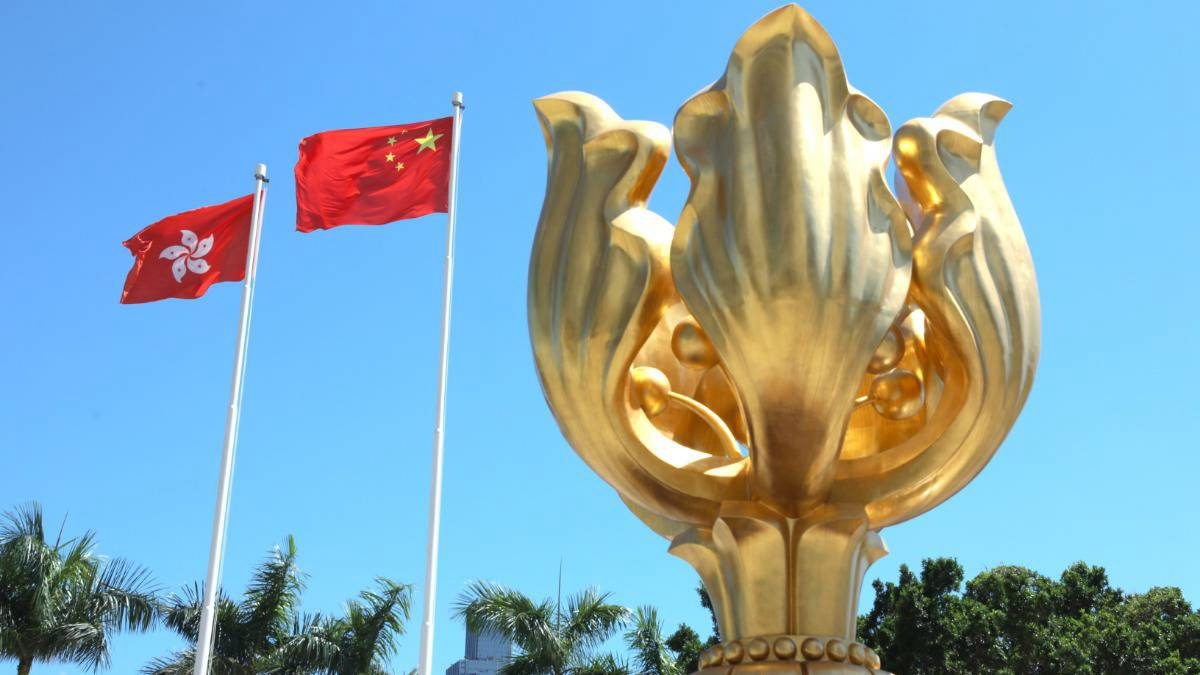
Let's test the theory with a recent example. On May 21, during its third annual session, the 13th National People's Congress announced it would put forward a draft decision on national security legislation for the Hong Kong Special Administrative Region. One week later, that decision was passed.
But immediately after the initial announcement, a sensational theatrical display took place among the Western commentariat. Theirs was a conformity that would put trained dancers to shame. Pronouncements were numerous and apocalyptic: "One country, two systems is dead," "This is the end of Hong Kong," "The sky is falling," so on and so forth.
This pearl-clutching reached its zenith in the halls of power, as it so often does. On Thursday, Secretary of State Mike Pompeo informed the US Congress his department no longer considered Hong Kong to be autonomous, laying the groundwork for a potential revocation of the city's privileged trade status.
It's a familiar pattern. The Chinese government suggests any policy related to Hong Kong — which, let's remember, is its sovereign territory! — and the usual suspects pretend the Four Horsemen are riding into town.
So just what is this national security draft that's got people bemoaning the death of a city?
Would you be shocked if I told you "nothing out of the ordinary?"
The Basic Law, the foundational legal document of the HKSAR, succinctly lays out the need for legislation protecting national security in its Article 23. The article clearly states the region must have laws to "prohibit any act of treason, secession, sedition [or] subversion against the Central People's Government…prohibit foreign political organizations or bodies from conducting political activities in the Region, and…prohibit political organizations or bodies of the Region from establishing ties with foreign political organizations."
The draft decision from the NPC simply affirms the necessity of such legislation, as no bill pertaining to national security has yet been passed in the HKSAR. Hong Kong was returned to China in 1997, after over 150 years of British colonial rule. That's 23 years since the handover without settling a matter enumerated specifically in the Basic Law.
Why should such a loophole be allowed to persist, particularly at a time when US interference in China's affairs is at an all-time high? Critics have no real answer to this question, because the ones who are most loudly protesting the draft decision are also the ones who have been doing the interfering.
Other concerns have been raised over the NPC Standing Committee's drafting the law and passing it along to the HKSAR government, which would then pass it via promulgation. But this, again, is well within the scope of Hong Kong's legal system. Article 18 of the Basic Law reads (emphasis mine): "National laws shall not be applied in the Hong Kong Special Administrative Region except for those listed in Annex III to this Law…The Standing Committee of the National People's Congress may add to or delete from the list of laws in Annex III…Laws listed in Annex III to this Law shall be confined to those relating to defence [sic] and foreign affairs."
When Article 18 is read alongside Article 23, it's obvious a national security law fits comfortably in the NPC's jurisdiction as a matter of both defense and foreign affairs. Complaints that this proposal represents a dire overreach come from a willful misunderstanding of the HKSAR's system.
No one would bat an eye at this if it were being considered anywhere else. There are plenty of national security laws on the books all over the world, and few have generated this level of controversy. Frankly, it's absurd Hong Kong doesn't already have such a law — but it's not for a lack of trying. An attempt to legislate Article 23 in 2003, already several years overdue, was met with rebuke from the same forces now opposing the present proposal.
Much like the now-shelved extradition bill — the target of protesters' ire last year — the draft decision is a perfectly reasonable solution to a longstanding problem. This looming specter of tyranny exists only in the minds of those already predisposed to view any action from China in the worst possible light.
Their grounds were, and are, that any national security law is a per se encroachment by the mainland. But the Macao Special Administrative Region passed a similar law in 2009, and it’s been in effect for over 10 years. If the doomsayers were right about the Hong Kong proposal, then Macao would have become the stuff of dystopian nightmares by now. Yet we've heard crickets, not horror stories; Pompeo, funnily enough, has yet to stage a melodrama on behalf of that region.
The fact is these people don't actually care about the integrity of "one country, two systems." What they want — and refuse to admit — is a totally different concept, one outside the bounds of the law: "two countries, two systems." Because of the autonomy Hong Kong enjoys within China, they think themselves above the principles which undergird that autonomy. It's bizarre. But to them anything linked with China as a whole must be rejected, which means even the most basic functions of a state, like national security, shouldn't apply.
Knee-jerk opposition to whatever the HKSAR or mainland governments do has been the norm for this faction since the end of colonial rule. But it's reached a fever pitch in recent years, with protesters adopting a strategy of deliberate escalation and politicians, especially ones in the US, egging on their every provocation. Emboldened by laws like the "Hong Kong Human Rights and Democracy Act" and public statements of support from figures like Senator Marco Rubio and Pompeo himself, the protesters felt they had carte blanche to ramp up the violence.
This culminated in their immolation of a man who spoke out against them last November, the killing of a 70-year-old janitor in the same month, and the planting of bombs in hospitals in January as the COVID-19 pandemic spread through the city. If guidelines aren't in place for what does and does not constitute subversion or separatism, then the resultant legal grey area will provide cover for these reactionaries to continue their terror campaign.
In any event, we're long past the point where the US can claim any good faith when it comes to China. A near-constant stream of insults and accusations has characterized the relationship since Donald Trump took office, in addition to the economic war being levied via tariffs and sanctions.
If Pompeo or others wanted to be taken seriously, they could have spent the last three years seeking engagement with China instead of playing the schoolyard bully. As it is, they have no leg to stand on.
The author is a US writer with China Daily.
The opinions expressed here are those of the writer and do not represent the views of China Daily and China Daily website.