



Dollar-weary world welcomes the rise of renminbi







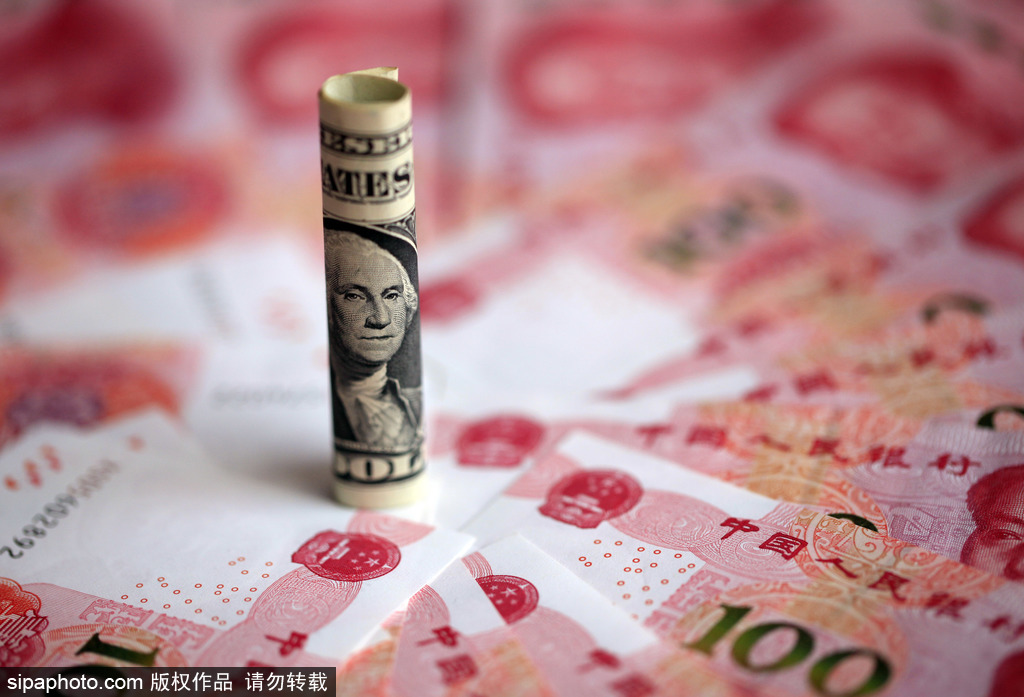
COVID-19 has reaffirmed the US dollar's dominant role in the international monetary system. The dollar is the most important safe-haven currency in times of market panic. And the Federal Reserve performs as the lender of last resort, first by lowering the funding cost of its swap lines signed with five other central banks, then extending the dollar swap lines to nine more central banks in order to meet the surge in dollar liquidity.
The Fed's temporary repurchase agreement facility for foreign and international monetary authorities is also open for all central banks in need, without causing turbulence in the US Treasury securities market. In other words, the pandemic crisis reinforced the dollar's status as a key international currency in the world.
However, the dollar dominance is not trouble-free. For instance, there are compelling reasons to feel concerned about the mismatch of a system where the key global currency is more centralized, while the world trading and production are increasingly diversified.
There is also an inherent dilemma for the US that dollar supply requires the country to run trade deficit and borrow through Treasury bill issuance. With the massive fiscal stimulus on board and the subsequent rapid public debt accumulation, the US is going to borrow more. It is out of question that the US debt is to default. However, in principle, a county's heavy debt could jeopardize the merit of its currency as a safe asset-a modern-day Triffin Dilemma of the Bretton Woods system.
The renminbi came on stage right after the 2008-09 Global Financial Crisis. Zhou Xiaochuan, then governor of the People's Bank of China, the central bank, put forward the idea of super sovereign reserve currency and suggested a rethink of the international monetary system where a single currency dominated. This idea was in line with the discussions to improve the existing international reserve currency system, such as the reform of the Special Drawing Rights or SDRs of the International Monetary Fund.
In the following years, the Chinese policymakers implemented a series of policies to boost the renminbi. The appreciation of the currency in the beginning helped the currency to become a profitable asset, until late 2015 when the currency experienced sharp depreciation.
Currently, the currency's international use covers all the functions of store of value, unit of account and medium of exchange. However, the share of the renminbi in global usage is still limited. For instance, the renminbi is one of the IMF's SDR basket currencies. But the renminbi share that central banks hold is only about 2 percent while the dollar accounts for 64 percent. In global payments, the renminbi ranked No 5 or 6, but its world share was 1.9 percent, much lower than 39.1 percent of the dollar.
Going forward, one challenge underlying the renminbi use is the reallocation of global value chains. The process of reallocation will realign trading partners so that China would step up to improve the renminbi payment system faster than expected.
Another potential push for the renminbi is China's domestic consumption. Domestic consumption contributed 64.1 percent to GDP growth by the end of the first quarter of this year. The figure is expected to be higher in the years to come, making China a major final destination in trade relations with other countries-a fundamental support for trade invoicing of the currency.
China's financial openness will continue to facilitate the renminbi's market function. China has made tremendous efforts to relax restrictions on capital account transactions in the past. The most recent moves include eliminating quota ceilings for QFIIs (qualified foreign institutional investors) and QDIIs (qualified domestic institutional investors) and opening ownership for foreigners.
Compared with some advanced economies, China's financial openness is relatively low. For instance, China's total asset and liability, measured by international investment position, is only about 12 percent of that of the US, 26 percent of that of the United Kingdom, and half of the Japanese size. There is large room for further opening-up.
At the moment, the policymakers are more cautious in achieving a balance between financial stability and openness in the environment of ultra-easy financial conditions and widespread liquidity injection due to the pandemic.
The renminbi's regional use is a natural outcome of China's economic and financial link within the region. One observation can prove that some countries in the region are willing to follow the moves of the renminbi exchange rate, an indicator of a currency anchor in trade and investment.
There is also a sentiment in the region to foster local currency usage, because the countries with relatively high savings rates would be better off if their savings can translate into regional investment, rather than recycle them outside the region.
Ultimately, the future of the renminbi is market choice. China's further reform and opening-up will support the renminbi to be accepted as a trustworthy international currency.
The writer is the director of the Research Centre for International Finance, the Institute of World Economics and Politics, which is part of the Chinese Academy of Social Sciences in Beijing.




















