



Regional integration forges ahead







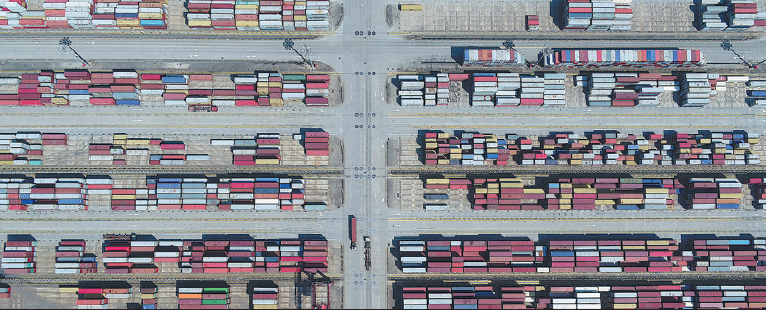
Demonstration zone shows shared goals can be achieved
Editor's Note: With this year's two sessions underway-the annual meetings of the National People's Congress and the National Committee of the Chinese People's Political Consultative Conference-China Daily toured China to gather a series of stories focusing on the achievements and blueprints in various regions. They show how different regions find their own special strengths to achieve sustained economic development and integrated growth.
Looking at a map of China, the Yangtze River, the country's longest waterway, winds down from some of the world's highest mountain ranges on the Qinghai-Tibet Plateau to the vast eastern plains.
As the river enters the East China Sea, the Yangtze forms a delta that has become an economic powerhouse of modern China.
Roughly the size of Germany, the region encompasses Shanghai and the provinces of Jiangsu, Zhejiang and Anhui.
Home to 15 percent of the country's population, it contributes roughly a quarter of China's GDP. It also contributed more than a third of its foreign trade and investment last year, at 11.24 trillion yuan ($1.58 trillion).
In December, the central government unveiled a grand plan for further development of the region over the next 15 years under the key concept of integration. Pushing forward with the integration of the Yangtze River Delta will help elevate the region's standing in the international economy and lead China to further participate in global cooperation and competition, according to the plan.
It is China's third national-level regional integration strategy, after the Beijing-Tianjin-Hebei development plan, proposed at the 2014 annual meeting of National People's Congress, and the framework agreement on deepening Guangdong-Hong Kong-Macao Greater Bay Area cooperation launched in 2017.
The first initiative on regional economic cooperation in the Yangtze River Delta can be traced back to 1992, when 15 cities established a joint mechanism on economic cooperation.
In 2018, President Xi Jinping announced the elevation of the integration of the Yangtze River Delta to a national strategy.
Zhang Zhao'an, an NPC deputy and vice-president of the Shanghai Academy of Social Sciences, said regional integration has five aspects-infrastructure, the environment, marketing, urban planning and institutional structures.
"The most difficult, yet also the most fundamental, is the integration of institutional structures, which ensures the integration of the rest of the aspects," Zhang said at a news conference in May last year.
"It involves the interests of different parties and a variety of policies run in different cities and regions in the delta area."
Zhang's concerns were addressed by the establishment of a demonstration zone for integration projects, which was launched in November.
Spanning 2,300 square kilometers, the demonstration zone sits at the border of Shanghai and two neighboring provinces. It consists of Qingpu district in Shanghai, Wujiang district in Suzhou, Jiangsu province, and Jiashan county in Jiaxing, Zhejiang province.
The executive committee of the demonstration zone is headed by the Shanghai government's deputy secretary-general, Ma Chunlei, and operated by 35 officials from the region.
In a ceremony to mark the opening of the demonstration zone, Ma said one of the most important tasks was to ensure that institutional innovation aids integration.
A council has been put in place above the executive committee and is chaired by deputy governors from Jiangsu, Zhejiang and Anhui and a vice-mayor from Shanghai on a rotating basis. The council will help ensure provincial-level coordination.


- Labubu lights up Shanghai lantern show
- Cherry blossom festival in Yongfu town celebrates agricultural innovation and cultural exchange
- China's first domestically built cruise ship welcomes its 1 millionth guest
- The Devil Still Dances: High Vigilance against Japanese Militarism's Infiltration in Sports and Culture Fields
- 189 historical artifacts of Japanese invasion donated to museum in NE China
- Death toll rises to 8 in North China factory explosion












