Trade war won't help US solve economic problems







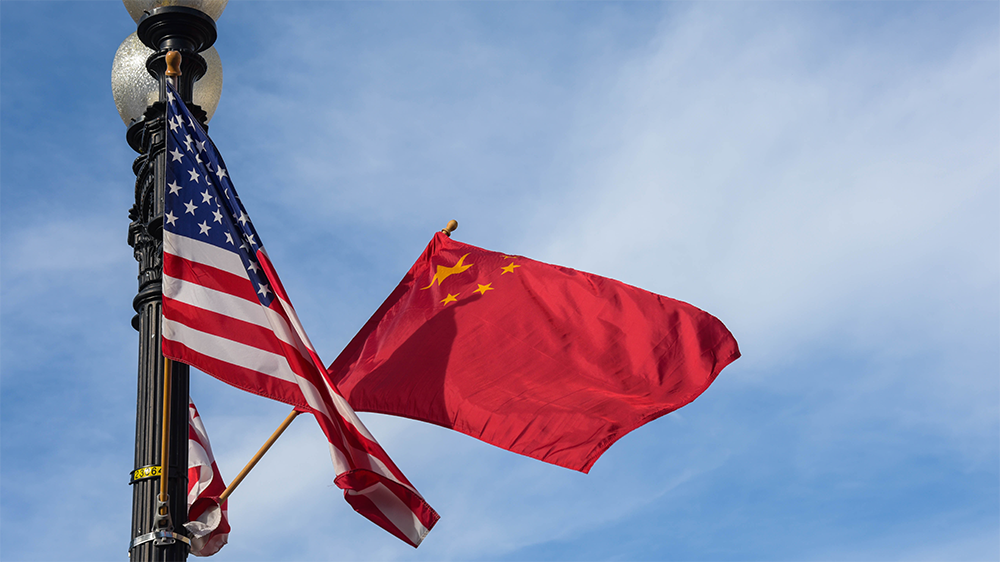
The United States imposed new control measures on Chinese telecommunications company Huawei and its suppliers on Friday, further escalating Sino-US tensions, which have already been high due to the two-year-old trade war and the novel coronavirus outbreak. The measures are meant to restrict Huawei's acquisition of semiconductors that are the direct product of certain US software or technology.
The US accounts for the highest numbers of infections and deaths from COVID-19, and due to disruption in economic activity, its annual GDP growth fell minus 4.8 percent in the first quarter, the deepest contraction since 2009, according to the US Commerce Department.
Blaming China for the pandemic, the White House has adopted policies aimed at "punishing" the country. But such policies, by intensifying the trade war and heightening bilateral tensions, will only increase the burdens on the two countries.
The fact is, China, acting as a responsible major power, has been informing the World Health Organization and other countries including the US about the outbreak and the measures it has taken to contain it. So it is irresponsible of Washington to blame Beijing for the devastation the virus has caused in the US. The US should, instead, focus its energy and resources to contain the spread of the virus at home and save lives.
Besides, to "reshore" manufacturing (that is, persuade US companies to bring manufacturing units back to the country), the US administration said on May 4 that it would form an alliance called "Economic Prosperity Network" with "trusted partners" to rip the links of the global supply chain away from China. It also vowed to impose new tariffs on Chinese products, even though the two sides agreed a "phase-one" deal in January to ease the trade war.
The move to disintegrate the global production and supply chains will deal a deadly blow to many companies, including US companies. In fact, many US companies' stocks fell steeply on the news that the US administration would further restrict tech exports to China, which ironically will further widen the China-US trade deficit.
It's time Washington gave its blind pursuit of anti-China policy a second thought.
Due to its abundant workforce, solid infrastructure and other advantages, China has played an important role in the global production chain. Although the US faces unemployment problems, by persuading leading semiconductor makers such as Intel and Taiwan Semiconductor Manufacturing Corp to establish production units in the US, it has ignored the fact that the cost of making chips in the US is much higher than that in Asia. Also, it will take two years to set up a chip production line in the US compared with only one year in China.
Thanks to its economic power, the US has launched trade wars against other countries whenever it has faced an economic crisis, in order to grab a larger share of the global market. But history tells us that a trade war does not help a country solve its economic problems; instead, it exacerbates it. For instance, during the Great Depression, the expansive US-Europe trade war led to a drastic drop in global trade leading to global recession, which severely affected both sides.
The pandemic-induced drop in consumption is the main reason for the decline of the US economy-as consumption is the major driver of the US economy. But since the US economy will gradually recover once the outbreak is contained, there is no need for it to end economic partnerships, and attempt to disintegrate the global production and supply chains.
Perhaps the White House has targeted China to divert American public attention from the administration's failure to contain the spread of the virus which led to the economic crisis. But in its attempt to stigmatize China, the US would be harming itself.
More important, the US administration cannot depend on "regional" or "local" production and supply chains to boost the domestic economy. Unclear policy expectations will lead Chinese and US enterprises to seek alternative partners and devise alternative plans that would not only result in losses for both sides but also encumber global production efficiency.
Only by working together can the two countries repair their ties. And for that, the US should objectively deal with the Sino-US trade imbalance and US companies' investments in China. For example, the two sides could work together in the infrastructure sector. Many US infrastructure facilities need thorough repair or overhaul; the country also needs new infrastructure. And China, given its rich experience and expertise in infrastructure construction, can help the US do so.
China has made increasing efforts to meet the high standards of trade and economy set by the international community, enhanced transparency and developed competitive neutrality. So the US should objectively view the differences between the two countries' resource endowment and positions on the global production chain. Only if China and the US overcome the barriers to cooperation, seek common ground can they resolve their disputes and venture on a common development path, and lead the global economy on the path of recovery.
The author is an associate researcher at the Institute of American Studies, the Chinese Academy of Social Sciences. The views don't necessarily represent those of China Daily.