



Asia-Pacific needs clean oceans to stay afloat







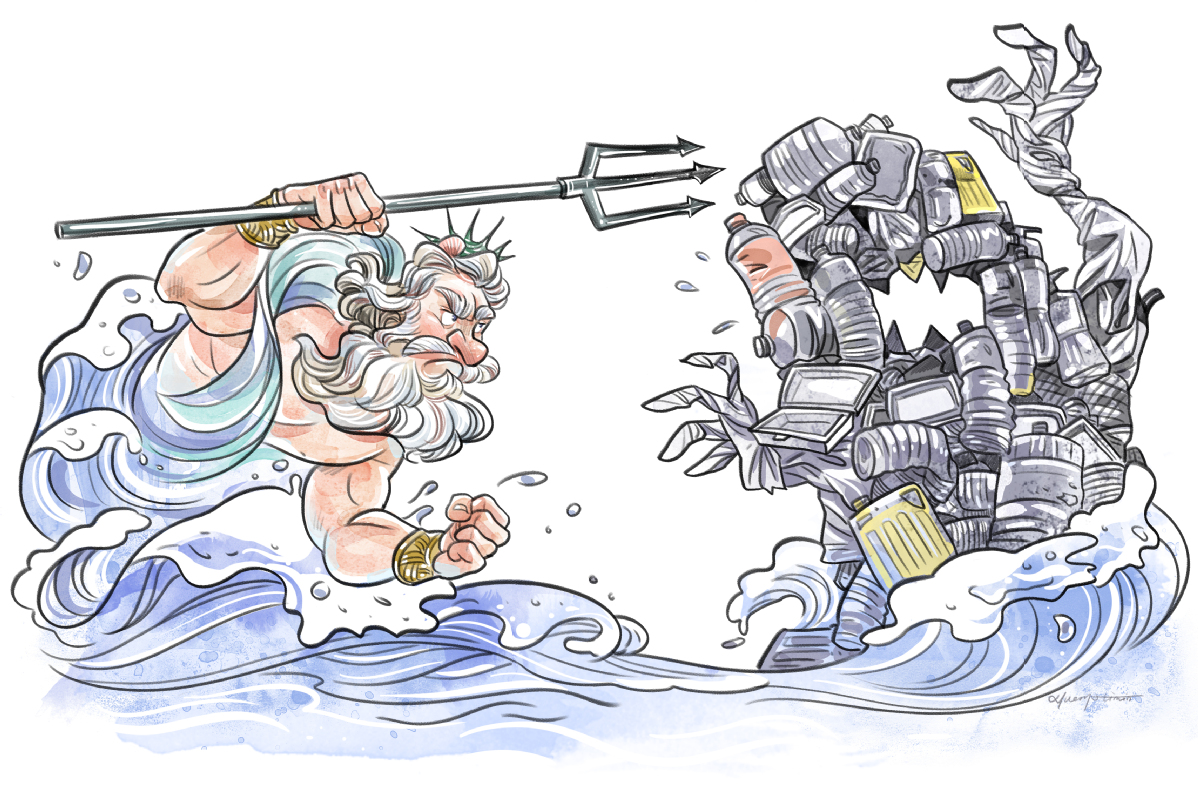
Memories of idyllic beaches and sonorous waves may seem far away while we remain at home. Yet we need not look far to appreciate the enduring history of the ocean in Asia and the Pacific. For generations, the region has thrived on the seas. Part of our name bears a nod to the Pacific Ocean, a body of water tethered to the well-being of billions of people in our region. The seas provide food, livelihoods and a sense of identity, especially for coastal communities in the Pacific island states.
Sadly, escalating strains on the marine environment are threatening to drown progress and our way of life. In less than a century, climate change and unsustainable resource management have degraded ecosystems and diminished biodiversity. Levels of overfishing have exponentially increased, leaving fish stocks and food systems vulnerable. Marine plastic pollution coursing through the region's rivers has contributed to most of the debris flooding the ocean.
While the COVID-19 pandemic has temporarily reduced emissions and pollution on the ocean, this should not be just a moment of reprieve. Rather, recovery efforts have the potential to rebuild a new reality, embedded in sustainability and resilience. It is time to take transformative action for the ocean, together.
Despite a seascape celebrated in our collective imaginations, research shows that our picture of the ocean is remarkably shallow. Insights from "Changing Sails: Accelerating Regional Actions for Sustainable Oceans in Asia and the Pacific", the theme study of this year's Economic and Social Commission for Asia and the Pacific, reveal that without data, we are swimming in the dark.
Data are available for only two out of 10 targets for Sustainable Development Goal-14: Life Below Water. Due to limitations in methodology and national statistical systems, information gaps have persisted at uneven levels across countries. Defeating COVID-19 has been a number's game and we need similar commitment to data for the state of our shores.
While there is much we cannot see, images of plastic pollution have become commonplace. The Asia and the Pacific region produces nearly half of global plastic by volume, of which it consumes 38 percent. Plastics represent a double burden for the ocean: their production generates carbon dioxide absorbed by the ocean and as a final product enters the ocean as pollution. Beating this challenge will hinge upon effective national policies and rethinking production cycles.
Environmental decline is also affecting dwindling fish stocks. Our region's position as the world's largest producer of fish has come at the cost of overexploitation. The percentage of stocks fished at unsustainable levels has increased threefold from 10 percent in 1974 to 33 percent in 2015. Generating complete data on fish stocks, fighting illicit fishing activity and conserving marine areas must remain a priority.
Economic activity from shipping must also be sustainable. While the most connected shipping economies are in Asia, the small island developing states of the Pacific experience much lower levels of connectivity, leaving them relatively isolated from the global economy. Closing the maritime connectivity gap must be placed at the center of regional transport cooperation efforts. We must also work with the shipping community to navigate toward green shipping. As an ocean-based industry, shipping directly affects the health of the marine ecosystem. Enforcing sustainable shipping policies is essential to mitigate maritime pollution.
The magnitude of our ocean and its challenges represent how extensive and collaborative our solutions must be. Trans-boundary ocean management and linking ocean data call for close cooperation among countries in the region. Harnessing ocean statistics through strong national statistical systems will serve as a compass guiding countries to monitor trends, devise timely responses and clear blind spots impeding action.
Through the Ocean Accounts Partnership, ESCAP is working with countries to harmonize ocean data and provide a space for regular dialogue. Translating international agreements and standards into national action is also key. We must fully equip countries and all ocean custodians to localize global agreements into tangible results. ESCAP is working with member states to implement International Maritime Organization requirements on emissions reduction and environmental standards.
Keeping the ocean plastic-free will depend on policies that promote a circular economy approach. This strategy minimizes resource use and keeps them in use for as long as possible. This will require economic incentives and disincentives, coupled with fundamental lifestyle changes. Several countries in the region have imposed successful single use plastic bans. ESCAP's "Closing the Loop" project is reducing the environmental impact of cities in ASEAN member states by addressing plastic waste pollution and leakages into the marine environment.
Our oceans keep our health, the economy and our lives above the waves. In the post-COVID-19 era, we must use the critical years ahead to steer our collective fleets toward sustainable oceans. With our shared resources and commitment, I am confident we can sail in the right direction.
The author is the United Nations undersecretary-general and executive secretary of ESCAP.
The views don't necessarily reflect those of China Daily.





