



Online teaching: A prospective educational model?







Over the past few months, the COVID-19 pandemic has caused great uncertainty around the world. On April 4, the IMF reported that the World Pandemic Uncertainty Index (WPUI) hit a record high in the first quarter of 2020. Indeed, with the rising number of infections, the pandemic-induced uncertainties and consequences are affecting people's lives in all aspects: The global death toll has surpassed 140,000 and is showing limited signs of deceleration, and meanwhile, it is estimated that nearly 25 million jobs could be lost during this period of crisis.
Education is no exception. According to UNESCO, 191 countries implemented country-wide school and other educational institution closures to contain the COVID-19 pandemic. The massive closures have affected around 91% of students on an unprecedented scale. It is worth noting that the COVID-19 pandemic has challenged the traditional mode of teaching – face-to-face interactions and has brought about a prospective model for educational systems around the world.
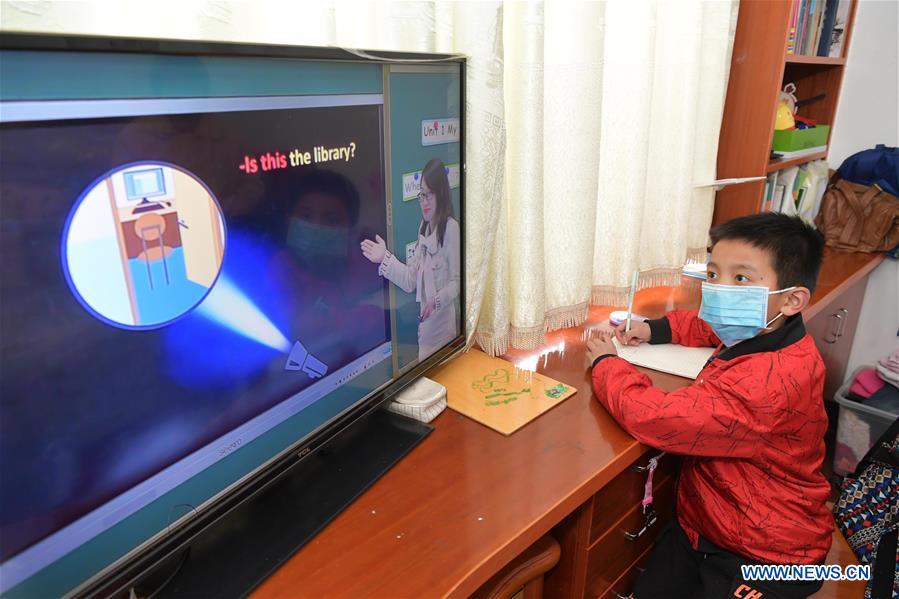
As the first country to implement social distancing, China made an immediate and decisive move that resulted in educational disruptions. It is reported by the Ministry of Education that as of April 3, over 1,450 Chinese colleges and universities had started the spring semester online, and the number of home-schooled students reached 270 million. As the pandemic swept the world, more countries, such as South Korea, Italy, and the USA, all turned to online instruction to minimize the impact of the pandemic on education.
In China, the primary reason that classes can resume at a rapid pace is the development of educational apps and online platforms in recent years. Teachers can choose either collaboration platforms that support live-video communication or shoot video classes in advance for students with no real-time access to the internet. Shortly after, live stream classes became the adopted norm by schools and universities on a national scale.
The Ministry of Education stated that the use of e-learning is phenomenal not only in scale and scope but also in depth. For one thing, the impressive practice sets an excellent example for other countries, pioneering a global move; for another, it proves how modern technology alters the way students are educated and encourages further research and development of educational technology to innovate and recreate virtual communities between students and teachers.
School closures and distance learning, at the same time, present challenges for both teachers and students. Despite many efforts to bridge the information gap, the educational disruptions uncover the digital divide and could make this problem even worse. For example, rural students with no access to the internet and television might be left behind under this new model. When e-learning becomes the sole solution to deliver knowledge, the existing divide could be widened, further deepening education inequality. Also, the quality of teaching becomes heavily dependent on uncertain factors, such as a stable connection to the internet, technical skills, and teachers might find it inconvenient to provide detailed instructions as much as before, let alone other learning opportunities.
In fact, online instruction as an alternative teaching mode has been expanding rapidly in recent years. Many Chinese start-ups focus on AI applications in online courses, and various online educational platforms are launched to replicate the success of after-class tutorial agencies. Moreover, online education is fairly acceptable for tertiary education. The online education platform MOOC has attracted the world's top universities to upload and share resources with students around the world. A wide array of courses is available on MOOC, including literature, history, math, and engineering. Learners can even earn entire degrees without being physically enrolled in a university.
Compared with formal instruction, online courses save abundant costs and create a flexible teaching mode – homeschooling, especially during a crisis. However, face-to-face teaching is still unparalleled because it offers sufficient communication between students and teachers. The upside to this development is that although online teaching is just a temporary solution to make the transition, it gives us a chance to revisit and reconsider the current educational systems.
As an educator commented, technology and the internet are necessary for learning in the 21st century. Indeed, a single teaching mode is not the case to cultivate more talents and fuel sustainable development, and again, teaching requires technology to let students learn out of campus. Technical difficulties or the imbalances brought by technologies are the main obstacles that need to be resolved: a high-level interactive and collaborative platform is required, and the digital divide should be eliminated at all costs. Admittedly, technology and the internet cannot wipe out educational inequalities, but more efforts should be made to strengthen scientific and technological innovations to provide favorable conditions for both students and teachers.
Besides, schools should attempt to get students accustomed to diverse teaching methods, and more importantly, help them foster good study habits – leastways, students can concentrate on what they learn without a "traditional" teacher standing beside them.
It is still too early to predict how the future of the educational system would look like. Yet, the pandemic has undoubtedly affected the current teaching style in a sweeping manner and given educators around the world ample time and space to think about the alternative educational models.





