



The dangers of questioning China's UNSC compliance







On April 17, a 267-page United Nations report – prepared by independent experts monitoring the implementation of sanctions on the DPRK – raised questions about China's enforcement of UN sanctions.
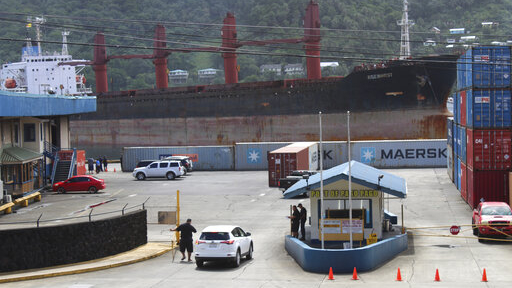
It blamed China for facilitating illicit "sand-export operations" of the DPRK, and claimed several Pyongyang vessels were anchored in Chinese port waters, carrying illicit coal shipments.
The report, citing vague satellite imagery from an unspecified source, was inexplicably taken down the day it was posted – now slated to be released again in multi-language formats.
Western commentators, media outlets, and select diplomats have used this as an opportunity to undermine China's fulfillment of international obligations, despite Beijing's clarification that the report does not represent the opinion of the UN expert group.
The panel – citing an unnamed member country – states that between May and September 2019, about 37 different Chinese ships have been loading coal from Nampo and Taean in the DPRK, and delivering them "directly to three ports in Hangzhou Bay, China."
All coal exports have been prohibited by UN sanctions since 2017, and by making these false allegations, the so-called source attempts to toy with the legitimacy of the UN panel's findings.
Moreover, the source claims that the the DPRK was using China's "Lianyungang anchorage area to conduct illicit ship-to-ship coal transfers."
It is easy to understand why the Chinese government has declared a "serious lack of accuracy" in the report: the panel takes an unspecified source's assessments on face value.
China's actions have always been in accordance with UN security council resolutions, and its role in the effectiveness of international law is well established.
In fact, the panel itself reports that China has "been strictly implementing the supervision measures on commodities imports from and exports to the DPRK, and conducting inspections according to relevant laws and regulations" – contrary to the scathing allegations.
The absence of an independent probe by the panel to determine the veracity of the source has also allowed key U.S. media outlets, such as the Wall Street Journal, to allege China's role in "facilitating the smuggling."
This is a dangerous and malicious assertion that is brazenly attributed to the UN investigative panel, even when UN-based foreign affairs analyst Pamela Falk makes it categorically clear that the report "assigns no blame to China."
Interestingly, adding to this stream of data distortion, is the role of the United States.
In the report, Washington claims the DPRK has repeatedly exceeded its limit of purchasing 500,000 barrels of petroleum products in 2019, and cites Beijing's export figures as a potential contributor.
These scathing allegations borrow from a larger U.S. campaign afloat, such as the so-called "Compliance Reports," designed to question China's conformity to global regulations.
Beijing responded to Washington's accusations within the report by noting "that it [China] needed more evidence and information to make a judgment on the issue." It also made clear that the so-called information was far from "conclusive."But United States' willingness to disrupt the global strategic equilibrium by scapegoating China, conveniently discards these realities.
Despite most UN Security diplomats preferring not to endorse Washington's fabricated view of Beijing, some have tried to add to its mythmaking.
One official recently toldReutersthat Beijing does possess the capacity to prevent the DPRK's alleged sanctions-busting, but "is simply choosing not to implement the [Security Council] resolutions." Speaking on the condition of anonymity, he accused China of receiving "real-time notifications" of DPRK vessels entering its territorial waters, alleging China knew they were "in violation of the UN Security Council resolutions."
This line of argument is designed to give the misleading impression that China is sidestepping transparency vis-à-vis UN sanctions.
In truth, Chinese authorities have been transparent in their cooperation with the UN panel, giving access to everything from government data to comprehensive trade figures.
Similarly, the accusation that China carried out a "substantial sand-export operation from the DPRK" induced a straight-forward response from Beijing: there was no confirmation over the claim, neither the vessels' voyage.
Washington can spin it whichever way it pleases.
It is important to note that back in January, a senior Trump administration official accused China of failing to send home all the DPRK workers. "We know one particular country [China] has the large majority of the DPRK guest workers and has not taken action." The allegation was put to rest by China's UN mission.
However, the same toxic trend cuts across the current UN report.
An unnamed "member state" is cited in the report, making the claim that by November 2019, several information technology workers belonging from the policy and oversight arm of the DPRK's nuclear program obtained "freelance work" in China, and channeled a portion of their income back to Pyongyang.
Ironically, the credibility of this allegation – and much of the other conjecture – stands rejected by the report's own declaration. It states that all the "imagery, data and calculations covering the period from January 1 to October 31, 2019" were received from the United States.





