



International cooperation, policy coordination vital to global economy







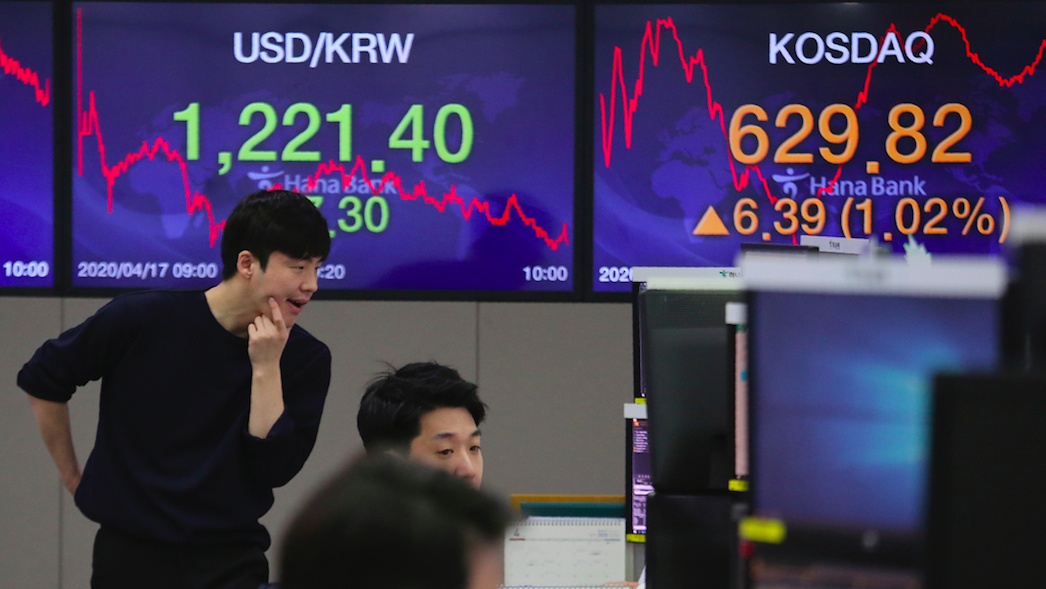
The recent spread of COVID-19 worldwide has caused global financial turmoil, economic recession and short-term disruption to supply chains. The global economy and financial sector are teetering on the edge of crisis, and humanity is facing grave challenges.
The future of the global economy depends largely on the two factors: pandemic control and policy response. The outcome of the pandemic control measures is only as good as the slowest and worst performer in the world. The problem with policy response lies in the uneven economic development of different countries.
The challenges the world is facing and urgently needs to resolve are: How to sail through this crisis together; how to prevent the economy from plunging into a deep recession or protracted depression, and how to get used to China's rise and the changing global, political and economic structure?
Current status of the global economy
Thanks to the whole-of-society approach, China has won the battle against the virus. China's GDP contracted by 6.8 percent in the first quarter of this year, recording its worst plunge since 1992 – the year when the quarterly data became available. The growth rate is expected to be around two percent for the whole year, which will represent a new low since 1977.
US economic and political might is waning, and the leverage ratio of non-financial sectors and government departments are at a historical high. Worryingly, the credit ratings of highly leveraged U.S. companies have been downgraded, posing serious structural risks.
The Fed's zero interest rate policy and unlimited quantitative easing measures may further drive up the Gini coefficient, aggravate the income inequality and widen the gap between different social groups.
Some companies with poor revenue profiles and low credit ratings will face great challenges amid the U.S. economic downturn, uncertainties caused by global trade frictions, high corporate employment and rising labor costs.
Risks and challenges
It is heartening to see that countries have adopted a series of crisis response measures, ranging from macroeconomic policies to public health policies. However, it is also regrettable to see that the global economy and finance are still facing three major enemies.
First, with the rising tide of anti-globalization, the basis for cooperation is shrinking. Global cooperation mechanisms, such as the Group of 20 and the World Health Organization, are poisoned by growing mistrust among member states, which has made substantive consensus and action difficult.
Second, as the room for policy maneuvering gets smaller, negative interest rates will become more commonplace.
Third, still on the eve of a new round of tech revolution, the world has made little progress in fundamental economic and social reforms.
Facing the global financial crisis in 2008, most economies in the world created an even bigger debt bubble to service the massive debt left over, which has led to a tsunami of debt across the world today.
But such a response did not really solve the three fundamental problems of the global economic downturn: falling global investment caused by an aging society, falling consumption caused by uneven income distribution and falling trade caused by anti-globalization.
The world still faces four major risks, and the first of them is the hidden debt crisis. The U.S. corporate sector and the European government sector are plagued by massive debt. The sovereign debt ratios in Italy, Greece and Spain stand at 137.3 percent, 178.8 percent and 97.9 percent, respectively.
Emerging economies, including Brazil and South Africa, are being weighed down by excessive foreign debt. The reversal of the EU's integration process and the dichotomy of the eurozone's fiscal and monetary policies is the second risk. The third is the escalating global trade frictions and fragmented supply chain in the wake of the trade war. Meanwhile, the fourth risk is the geopolitical crises in regions like the Middle East.
Coping strategies
Against this backdrop, everyone needs to realize that the virus is the common enemy of all mankind. It's imperative to step up international cooperation and policy coordination under the philosophy of building a community of shared future for all human beings.
Again, disease control is the prerequisite for economic recovery and development. Any macroeconomic policies that lose sight of the public health side of the story are doomed to fail. The following are the coping strategies:
First, the world must strengthen cooperation in the pandemic response. Countries with strong public health systems should do their best to provide struggling countries with technical and personnel support, as well as medical supplies.
Second, macroeconomic policies must help provide stable expectations and restore confidence in the market. Fiscal policies must play a leading role by allowing for higher deficits and bigger government debt when monetary policies remain easy.
Third, social policies must be more targeted. It's urgent to ensure that entities and individuals at the micro level, especially small- and medium-enterprises and low- and middle-income groups, will not succumb to the pandemic.
Fourth, structural reforms must be carried out immediately to rebalance income distribution and promote skill training for low- and middle-income people.





