



China should use low oil prices to boost its strategic petroleum reserve







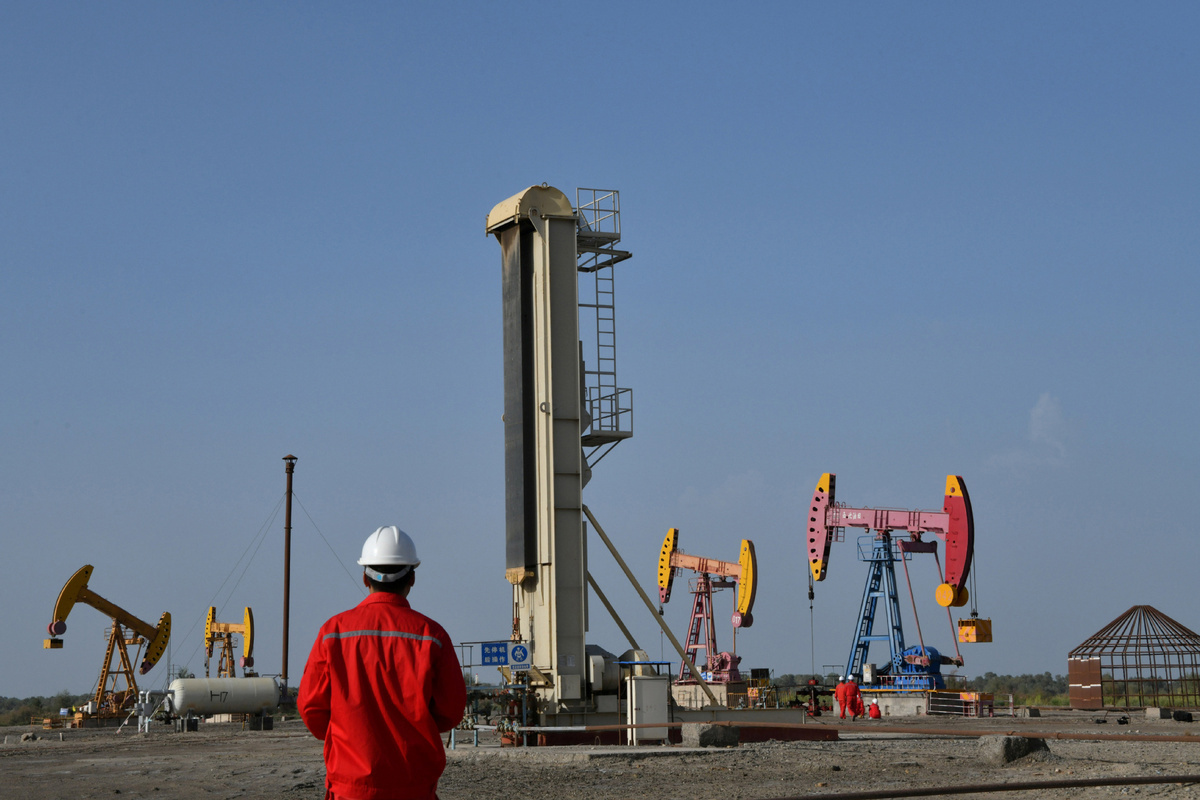
Crude oil benchmarks fell sharply on Monday, with the Brent Crude hitting its lowest point since November 2002 as the novel coronavirus pandemic intensified and the Saudi Arabia-Russia oil price war showed no signs of abating.
Saudi Arabia said on Friday that it was not in talks with Russia to balance the global oil market despite the increasing pressure from the United States to stop a price rout amid the pandemic, although a senior Russian official had said before Friday that a larger number of oil producing countries could cooperate with the Organization of Petroleum Exporting Countries and Russia to stabilize the oil prices.
According to the General Administration of Customs' statistics, last year China's crude oil imports exceeded 500 million tons-up 9.5 percent year-on-year-for the first time. China is the world's largest oil and gas importer and second largest oil and gas consumer. In fact, in 2019, China's foreign crude oil dependence rate was as high as 72.4 percent.
Since China's dependence on imported crude has been increasing from year to year, it should increase its strategic reserve of crude. And as the ongoing oil price war has caused a new round of decline in global oil prices, this is a good opportunity for China to increase its strategic petroleum reserve.
As Saudi Arabia and Russia are yet to reach a consensus on production reduction, the sharp decline in global oil prices will redefine petroleum-related geopolitics. The sharp decline in oil prices is the consequence of the imbalance in global petroleum supply and demand, as well as the competitive dumping of oil and gas by petroleum producing countries to grab a bigger share of the global market.
If the global crude market is not unified and the petroleum producing countries' policy negotiations fail, these countries may adopt different policies depending on their own actual situations.
No wonder the US administration and enterprises are trying to stabilize global oil prices through diplomacy. On the one hand, they urged Saudi Arabia to reduce production within a "reasonable" range before the price war erupted. On the other hand, they indirectly threatened Russia with new sanctions to prevent a drastic drop in oil prices.
Oil prices have dropped also because of slowing global economic growth, and the ever-maturing new energy market. But the extremely low price of $30 per barrel or less will not last long, and prices are expected to gradually rebound in the near future.
China should seize the opportunity offered by the low oil prices to also enhance its anti-risk capacity in terms of petroleum reserve. It should not only strengthen its petroleum security strategy, but also take advantage of its huge foreign exchange reserves to reduce the exchange rate risks owing to the fluctuating US dollar.
Thanks to the novel coronavirus pandemic, this year's global economic growth will be much lower than earlier forecasts. The Chinese economy, too, faces increasing uncertainties and inflation pressure. Yet the drop in oil prices will help China's petroleum industry to reduce its costs, which in turn will benefit downstream industries that use petroleum products as a raw material to make plastic and other products, as well as the transportation, rubber and other industries which use petroleum on a large scale.
Moreover, since petroleum is a core upstream raw material, its low price will reduce the production cost of surgical masks, personal protective equipment, hazmat suits and safety goggles, which are urgently needed to fight the novel coronavirus. In other words, China should seize the valuable opportunity offered by low oil prices to facilitate its economic recovery.
The author is a researcher at the Chinese Academy of International Trade and Economic Cooperation. The views don't necessarily represent those of China Daily.





