



Bookstores struggling in crowd-shy period







Offline noncore products and services, social retail through livestreaming and e-commerce embraced to deal with risks
When Jiang Wei made his first major investment by opening a bookstore in Shanghai in early January, he wanted to prove it's a normal profitable business that can support itself rather than his being seen as committing an act of charitable behavior among nostalgic intellectuals clinging to tradition.
And now, the novel coronavirus epidemic has given his lofty aspiration an unexpected shock. Jiang's Therion was one of the first bookstores to reopen in the city on Feb 10. The number of visitors to the high-footfall urban neighborhood dropped about 90 percent to fewer than 10 per day, most of whom just grabbed a cup of coffee and left.
Like other offline retailers suffering from the epidemic, bookstores have been severely affected even after reopening their doors.
Dan Jie, chairman and CEO of bookstore chain Yanjiyou, said most of its 62 stores nationwide had closed or shortened business hours due to epidemic controls, with visitor numbers decreasing by 80 percent and revenue by 95 percent.
By mid-March, 58 stores had reopened, but the number of visitors was 80 percent fewer than during the same period in 2019 due to concerns about visiting crowded confined spaces, Dan added.
Book chain Danxiangjie initiated crowd funding on Feb 24, saying its revenue dropped by 80 percent in February, which was critical to an industry with slim profits.
Sales from Zhongshuge bookstore, with 24 stores nationwide, reached 1.05 million yuan ($149,000) from January to mid-March, which was only 13 percent of sales recorded during the same period last year.
According to a survey by Chinese brick-and-mortar bookstore alliance Shumeng, about 90 percent of its 1,021 respondents across China had closed by Feb 5, and 79 percent said their current funds could only support operations for another three months.
Sun Qian, founder of the alliance, said small and medium-sized bookstores that rely on a single business are facing the most pressure in terms of rent, human resources and debt.
Brick-and-mortar bookstores have faced challenges from e-commerce for a long time with their disadvantages in terms of pricing and convenience, and the epidemic has just worsened the situation, experts said.
Data from Beijing-based research firm Openbook showed online book sales grew 24.9 percent year-on-year to reach 71.51 billion yuan in 2019, while sales among bookstores fell 4.24 percent to about 30.76 billion yuan.
"Over the last several years, most bookstores have transformed themselves into lifestyle shops to survive the impact of e-commerce-offering coffee, travel accessories and stationery-to attract consumers and provide better shopping experiences," said George Ren, senior partner and vice-president of consultancy Roland Berger China.
And the function of bookstores has expanded from merely selling books to cultural and entertaining consumption-to evolve into "a hub of events and gatherings for publishing companies, writers, key opinion leaders and book enthusiasts", Ren added.
Jiang, Therion's founder, had planned to stage mini concerts and live theatrical performances in soundproof rooms to enrich offline experiences. But all of these proposed activities had to be postponed. Now most of its work has moved online, such as membership promotions, takeout services and pushing articles on WeChat and Sina Weibo accounts to build brand awareness, he said.
The novel coronavirus epidemic has also forced bookstores to develop a digital touch.
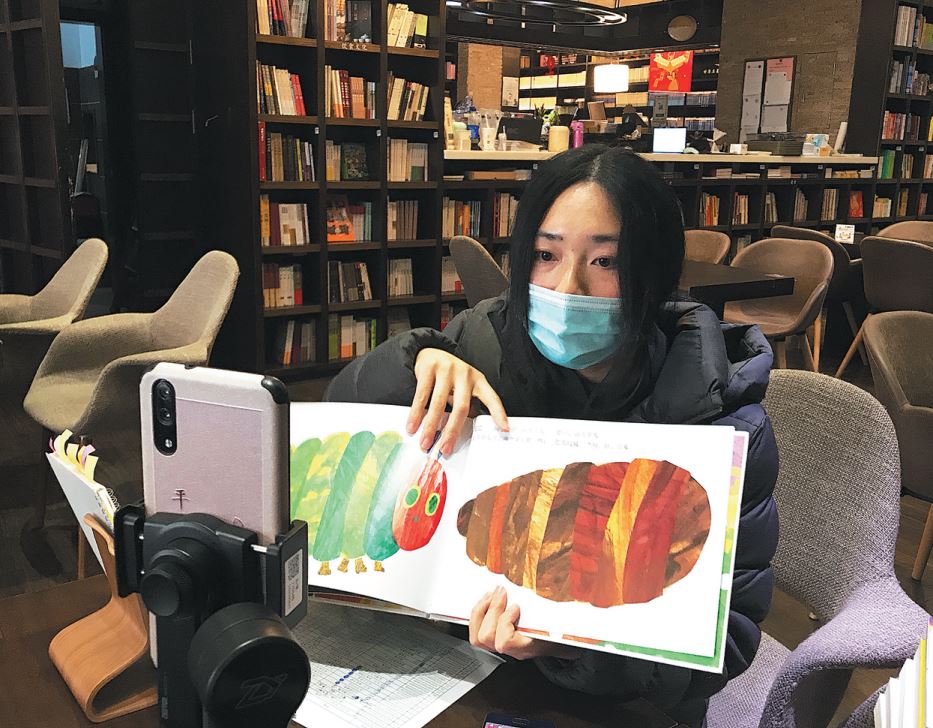
On March 9, six independent bookstore owners gathered at the livestreaming room of Taobao's toptier influencer Viya Huang.
"Blind bags"-a type of surprise grab bag with mystery contents-went for 99 yuan apiece during the livestreaming. Each has at least one book and one cultural and creative product.
The event's online viewers reached over 140,000 at one point, with more than 3,000 bags sold.
From Feb 4 to Feb 25, Zhongshuge staged six livestreaming broadcasts to introduce books and show purchasing links from time to time.
In early March, 72 physical bookstores in Beijing became the first to sell books using on-demand service platform Meituan-with support from the Beijing municipal government-to increase revenue.
Yanjiyou began to sell books on food delivery service platform Ele.me on Feb 12. "Though the bookstore emphasizes offline experiences, the online channel meets demand of readers who want to read but don't want to go out," Dan said.
Since February, Yanjiyou has uploaded about 1,000 books to e-commerce platforms to boost online sales, promoted stored-value memberships and developed livestreaming activities to tackle cash flow pressure. Revenue has so far recovered by 30 to 40 percent, he added.
"The outbreak spotlighted the importance of having multiple business models," Dan said.
Many cities including Beijing, Tianjin, Xi'an and Hangzhou have released preferential policies to help bookstores, such as government subsidies, rent reductions, encouraging publishers to extend payment periods and promoting online book clubs, sales and delivery.
Cheng Sanguo, president of bookdao.com, a publishing and book selling industry platform, told People's Daily that bookstores need to enhance connections with readers through WeChat accounts, online groups and memberships, to maintain a steady and growing pool of users.
He also suggested bookstores develop diversified and stable income structures that include both offline nonbook products and services, and online social retail and e-commerce, to improve the ability to deal with risks.



















