



The wisdom behind China's COVID-19 gains







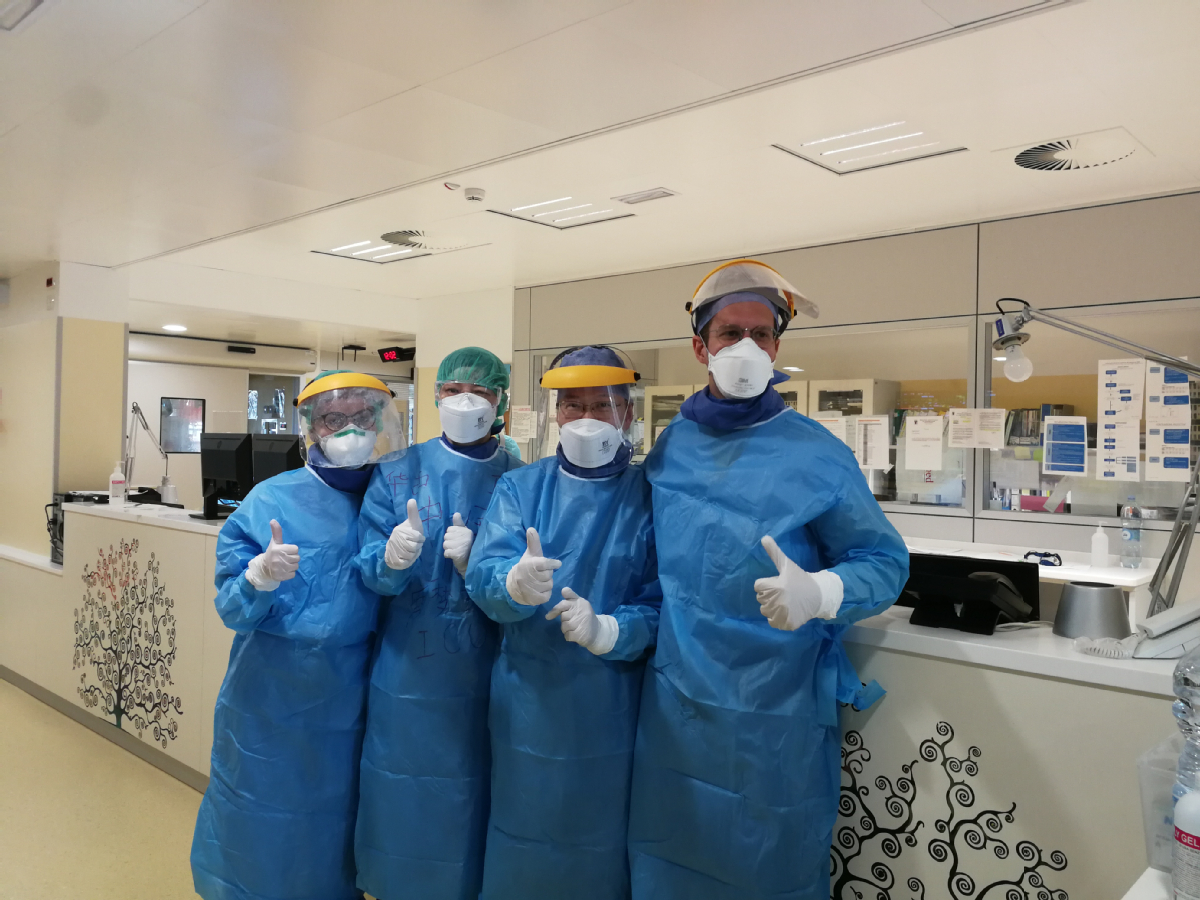
Crucial signs demonstrating the effectiveness of China's fight against COVID-19 are well in view. Last Thursday, China reported no local new cases of the novel virus, with serious cases decreasing by 173.
Domestic transmission – a worrisome dynamic in many parts of the world – has been met with remarkable stagnation this week, as the trend continues in the country for three days straight.
Though the developments do not constitute a beforehand elimination of COVID-19, and Chinese authorities remain absolutely focused on a long-term, comprehensive strategy, they are nonetheless complemented by drastic slowdowns in death rates, and a relaxation in quarantine measures across Wuhan. Prospects for gradually lifting the lockdown – if progress sustains – have also gained optimism among experts.
The central message in China's transition is that its progress on COVID-19 is no coincidence. It is the direct result of precise, target-oriented measures including the prioritization of first-responders and critical health infrastructure, development of a strong government-academia rapport, sustained economic stimulus, and the implementing quarantine measures in a way that doesn't fracture social interaction.
All of these merit an in-depth examination, as the world navigates a perilous COVID-19 challenge.
Chinese authorities have placed a high value on the response and treatment capabilities of its emergency support personnel. This serves as a critical judgment call, as it reinforces the faith of medical workers in the health system and enables them to deal with the COVID-19 pandemic head-on.
Arguably, the most effective impact of this measure was on the residents of Hubei Province itself, at the peak of the outbreak: It spared residents the burden of making effective epidemic control decisions all on their own.
Analyses offered by academics from the Harvard School of Public Health stress that a spike in cases could reflect a "testing capacity issue" instead of the nature of the pandemic itself, illustrating the extreme effectiveness of China's multi-pronged approach.
Government authorities were also quick to identify these capacity needs early on, and continue to bolster the supply side of public health to deliver significant control over the worst of the COVID-19 outbreak.
Moreover, China has never once operated as a "closed-door player." This pragmatism adds to its multilateral approach to fighting the pandemic, most recently demonstrated with 20 million U.S. dollars in assistance to the World Health Organization.
Beijing has also made its diagnosis and treatment plans readily available to many nations, and is extending protective equipment and COVID-19 testing kits to 82 countries. The treatment of COVID-19 as a borderless, collaboration-intensive endeavor is of paramount importance, given how international solidarity must be kept focused and consistent during turbulent times.
China's economy also made a targeted effort towards incentivizing production, using a mixture of internal and external market policies to effect the outcome. Some of these include greater local government assistance to foreign-invested enterprises, work resumption support measures, interest repayment adjustments for smaller enterprises, increased capital support, and sustained liquidity during the pandemic.
All have gone hand-in-hand with the country's swift quarantine and lockdown efforts, an emergency incident early-warning system for local governments, and internal and external travel stipulations.
Even the present-day health QR-codes, priority-based opening of businesses, and the systematic easing of control measures – have helped create conducive conditions for the Chinese economy and its people to operate in congruence.
Evidence from the London School of Hygiene and Tropical Medicine concludes that in the first week of the lockdown, the number of domestic transmissions by a single individual dropped to 1.05 as a result of the country's measures.
Interestingly, a strong rapport between the Chinese government and its academia helped accelerate contributions to the existing body of COVID-19 research, paving the way for informed policy interventions.
Analytics run by the World Economic Forum on over 40,000 COVID-19 cases – based on disease-related clinical data published by China – allowed experts to prove that 80 percent of COVID-19 infected patients won't need medical intervention, while the remaining 20 percent would.
Numerous other studies published by the Chinese Center for Disease Control and Prevention were prepared in conjunction with world-renowned health practitioners and academics, often constituting the basis for further insights and research outside China. Close government-academia collaboration has also proved as a valuable input to the World Health Organization's information mobilization efforts, and has kept the Chinese public well-informed.
China's easing of domestic control measures is a snapshot of that very concept in operation, as authorities encourage COVID-19 precaution without ever fracturing social interaction.
Consider the removal of checkposts in Wuhan, facilitation of migrant workers from the city, restoration of parks and domestic tourism, continuation of international flights, re-opening of various schools, active engagement of multinational franchises, and the relaxation of the lockdown to suit greater public mobility. These are all stand-out examples of effective control measures that are balanced with free social engagement.
Above all, China sends an implicit assurance to all other countries that such liberation is less a moment of risk, and rather a moment to bring back a semblance of normalcy to residents – who deserve it beyond measure.





