



How will COVID-19 impact global education?







The outbreak of COVID-19 has hit the majority of countries and regions on this planet as 135 countries and territories reported confirmed cases on March 15. A record number of children and youth cannot continue their regular study life due to disruptions caused by the outbreak.
More than 60 countries in Africa, Asia, Europe, North America and South America have announced or implemented school and university closures. Indeed, the impact of COVID-19 on education has gone far beyond school closure. What is its impact on the global education landscape? How will it change the future of education in the aftermath?
First, health and life have become the first priority. The component of health, life and wellbeing in curriculum varies from country to country. It is also delivered in varied ways in classrooms and schools, as a standalone course, or integrated with physical education and mental wellbeing. Health emergency response is often absent either in curriculum or in school activities in many countries. Now almost all the governments and education authorities are producing guidelines and guidance to the students with proper measures and actions to avoid infection and stay safe in the case of virus infection. Health education, especially those relating to emergency response will be an integral part of curriculum and school administration in the future.
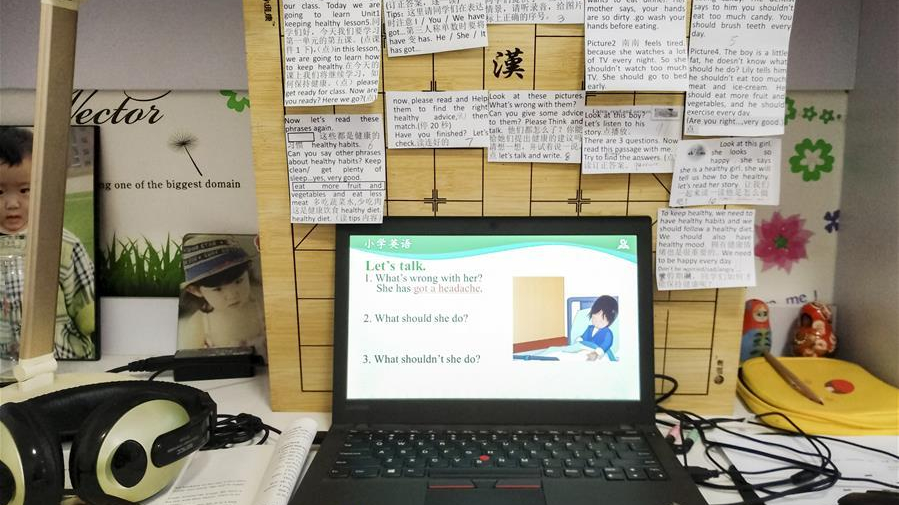
Online education becomes the norm. A record number of students in the world now rely on online education to continue their study due to COVID-19 quarantine and school closures. This is effective when national portals are available. Typically, China has created a national portal that can accommodate 50 million students learning online simultaneously. The outbreak has de facto accelerated the integration of technology and artificial intelligence in education. Nonetheless, lack of access to technology or good internet connectivity could also constrain access to learning for those from disadvantaged areas or families. The disparity and inequity is likely to enlarge.
Student mobility has been disrupted. The number of foreign students engaged in tertiary education programs worldwide has expanded massively in the past few decades, according to the OECD, rising from 2 million in 1998 to 5.3 million in 2017, of which, according to UNESCO, 2.5 million are studying outside their home region. Due to travel restrictions imposed by many governments, many students could not return to campus as scheduled, or they have to leave the campuses during the closure of universities and colleges. Online courses are offered for many students in many institutions, but not all.
Even for those with online learning opportunities, there remain the issues of assessment and accreditation of learning outcomes. Ideally, if competency standards and qualification frameworks are in place, students can translate their learning outcomes in spite of whenever or wherever they learned. But competency standards and qualification frameworks are still being developed in many countries.
Alternatively, one could learn at home and gain transferrable credits or even a degree recognized by another country or region with Global Convention on the Recognition of Higher Education Qualifications, endorsed by UNESCO last November. Right now, it is still too soon for many countries to adapt to and realize it.
How effectively students can learn depends on how schools and teachers can manage their learning. People were used to classroom-based lectures that have been critiqued as old mode for industrial society. Indeed the outbreak forced a leap into alternative approaches to learning with integration of technology and artificial intelligence. It demands new methods and strategies of learning assessment. The key to effective evaluation lies in cognitive and brain science that could identify solutions to effective learning. Learning science will play a larger role in future educational development.
Parent education levels pose a challenge to online teaching and learning. For many students who study online due to imposed social distancing, travel restriction or school closure, home turns into a classroom, and parents enter into the role of teaching assistant or learning partner whether they're prepared or not. Many parents struggle to perform this task, especially those with limited education and resources. On the other hand, working parents tend to leave children unattended, which may lead to varied quality of learning or even risky behavior. This warrants a close parent-school partnership as well as strong and supportive parental education, which have never been more important to the learning system than right now.
In addition, mental wellbeing counts. The outbreak, especially for those who have close contact with confirmed cases or experienced the death of a family member or friend, is a traumatic experience for children and young people. Stress and depression might increase as a result of a lack of social contact that used to occur through social activity and human interaction in schools. Social isolation, in the case of social distancing and school closure, might be compounded by anxiety arising from challenges with the new mode of online learning. Overall, the battle against coronavirus is a test of courage and perseverance for both individuals and nations. This has made mental wellbeing and mental consultancy one of the fundamental education elements in schools.
International cooperation counts. When China was first hit by coronavirus, people in many countries offered their help in various ways – in kind, in resource and in spirit. As those countries have fallen into crisis, China has reciprocated their support. Solidarity is the key to fight against the global pandemic, and education lies at its core by teaching the youth to value peace and solidarity rather than conflict and division. As the preamble of the UNESCO constitution states, "since wars begin in the minds of men, it is in the minds of men that the defenses of peace must be constructed."
With economic and social costs, and even a human toll, the outbreak has changed the global education landscape far beyond expectation. It has awakened people’s awareness of many under-addressed issues and pushed many things ahead of the agenda of many governments. Evidently, education that encompass physical, social and emotional wellbeing is key to sustainable development; technology and artificial intelligence have opened up new perspectives and strategies to education delivery, yet inequity will persist or even exacerbate without effective intervention by governments; and cognitive science could bring more positive changes to effective learning.
Above all, only when we educate children and youth to devote to peace and sustainable development, can human beings assure a sustainable future for themselves and the planet. Sweet are the uses of adversity. Hopefully, with all these lessons learned, we can embrace a better future for education and for mankind.





