GAMES PLANT SEEDS OF RECOVERY
Nine years on from the Fukushima disaster, the Tokyo Olympics are giving the crippled region fresh hope







Squatting among the eustoma flowers in his 4,000-square-kilometer greenhouse at Namie, Fukushima, Hiroshi Kawamura cannot take his eyes off the budding plants. In two weeks, his flowers will be sold in Tokyo shops and brighten thousands of the city's living rooms.
Kawamura has been in the flower business since 2014, three years after the earthquake, tsunami and nuclear disaster struck this town on March 11, 2011.
As the ninth anniversary of the tragedy approached, he learned that his flowers will be used in bouquets for medal ceremonies at the Tokyo Olympics.
"It is exciting news that our flowers will be presented to the Olympic medalists," the 64-year-old said. "It is a positive message for the reconstruction of Namie and other disaster-stricken regions."
The former welfare worker initially grew vegetables after becoming one of the first groups of locals to return home in 2013. But his produce could not be sold due to radiation concerns, so he began growing flowers.
With five people, including two disabled, working for him, Kawamura hopes that the Olympics will further help the area's recovery and encourage young people to return.
"For the Olympics, I have to increase the current harvest fourfold so I need to find more people to help me," he said.
But out of 18,000 people evacuated after the disaster, only 1,000 have returned home and the majority of those are elderly. Even Kawamura's children do not want to come back.
Abandoned houses ruined by the tsunami are everywhere, and although the government is trying to bulldoze them to make way for new ones, the rebuilding of the community is hindered by the lack of people. Wataru Izumi, a representative of Namie Farm, said: "There are so many ghost houses. You can't imagine what Namie will look like in another 10 years."
Concrete sea walls along the Pacific coast have been built to prevent another tsunami from wreaking havoc.
Two hundred meters off the newly built walls stands the wreckage of a school building. All 93 students from Ukedo Elementary School miraculously escaped the tsunami and the wreckage is an eerie reminder of the disaster.
Some of them went on to enroll at Futaba Future School, which was founded in 2015 for students from destroyed schools. World No 1 badminton player Kento Momota was among them. The world champion, then a student at nearby Tomioka Junior High School, was competing in Indonesia when the disaster struck. Now he is the pride of the school and an inspiration for its current students.
"I hope Japanese athletes can play an active part in the Olympics," said 15-year-old Hayao Matsuo, who plays badminton for the school team.
Vice-principal Nango Ippei said the terrifying memory of the disaster is still fresh in the hearts and minds of some students. He hopes the Olympic Games can "inspire them" for their studies and for life.
"We will hold a party to welcome the Olympic torch relay," he said. "We hope Momota can come back to his former school."
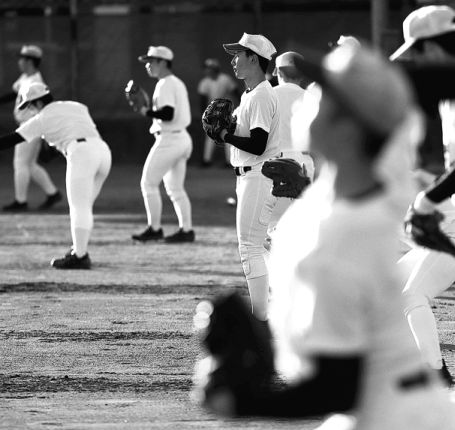
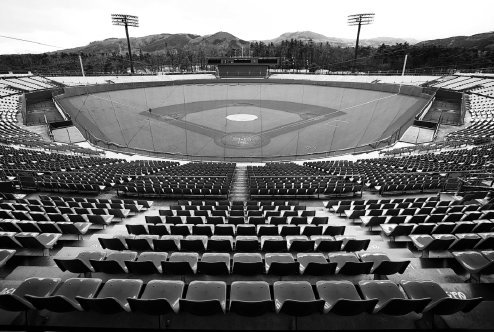
Tokyo organizers and the Japanese government have labeled this year's Games the "Recovery Olympics". The Olympic torch relay will start its journey on March 26 in J-Village, a venue used as an emergency evacuation center, which will also host the baseball and softball competitions.
Two students from the school have been selected to participate in the relay.
The Olympics have brought fresh hope to people in the town of Okuma, where the wrecked Fukushima Daiichi nuclear power plant is situated.
About 40 percent of Okuma was last year declared safe for residents to permanently return to after decontamination efforts significantly reduced radiation levels.
However, less than 100 people from Okuma's pre-disaster population of 10,341 have been enticed back, living in the newly built council houses in front of the town hall.
Yoshihiro Takada, executive director of public corporation for the development of Okuma, said the torch relay, which will pass the town hall, will increase the confidence of the people and show that Okuma is safe.
But Takada remains cautious about the effect of the Olympics, warning that the Games do not signal an end to the rejuvenation efforts.
"There are still a lot of challenges and difficulties for the reconstruction," he said. "It is a work-in-progress and will take a long time."
Concern over the possible health effects of exposure to radiation remains high among people from areas near the nuclear plant, particularly families with young children.
A poll by the Asahi newspaper and a local broadcaster found that almost two-thirds of evacuated residents felt anxious about radiation despite official claims that decontamination work has been a success.
Akihiro Yoshikawa, a former employee of TEPCO, the owner of the nuclear plant, gave up his job in 2014 to help the communities learn about nuclear power stations and the decommissioning process through presentations and interactive discussions. "If you are frightened, you need to listen to the experts," he said.
However, he is skeptical about just how much Tokyo 2020 can aid the healing process. "I used to stay up all night to watch the Olympics," he said. "After all the things we've experienced since 2011, it is difficult to say that I will enjoy the Games."



Today's Top News
- Xi meets British PM in Beijing
- China expects 9.5b passenger trips in upcoming travel rush
- 2025 border crossings hit record high
- Central SOEs key engines of 'AI Plus' industrial push
- China ramping up Nipah virus surveillance
- Green, high-tech sectors focus of increasing ODI