



Italy's virus affliction grim news for Europe







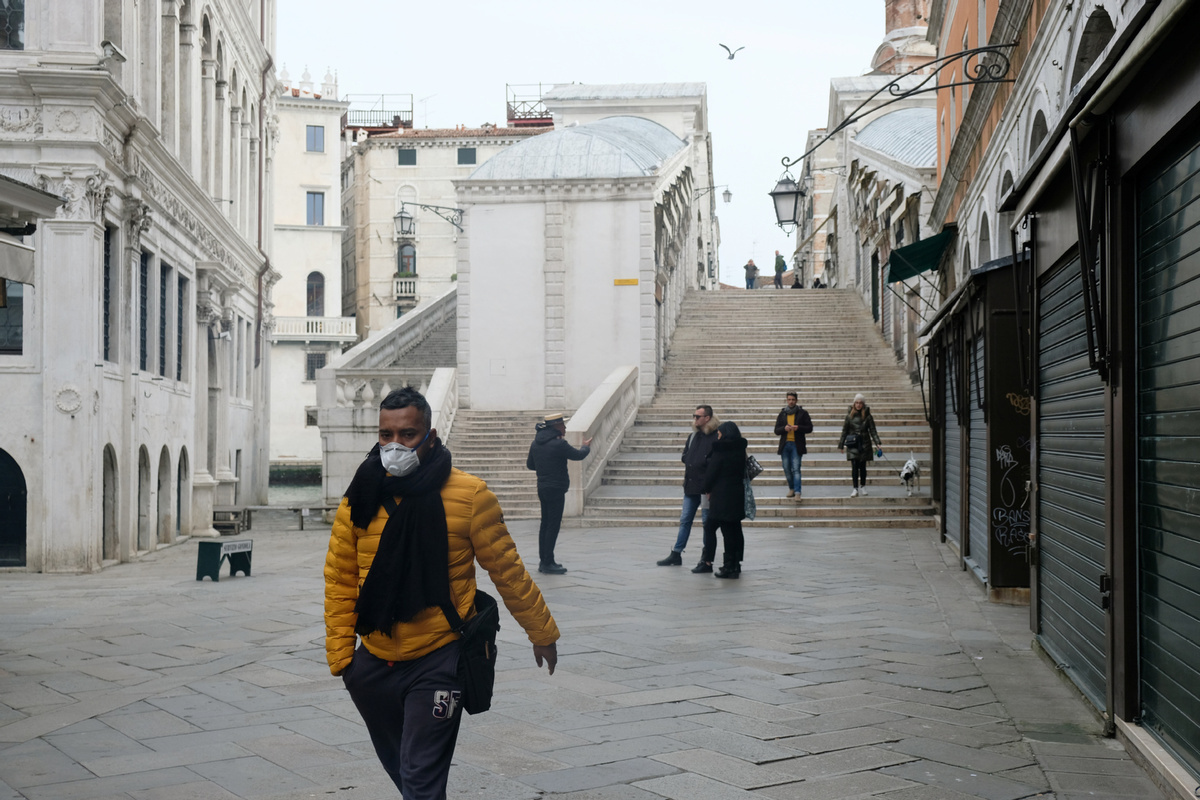
Northern Italy is the center of the novel coronavirus outbreak in Europe.
The last two days of the Venice Carnival, which attracts thousands of visitors every year, have been cancelled. And the area south of Milan, where Italy's first COVID-19 cases were reported, is under quarantine.
And on Monday night Italy announced to expand a travel ban to the entire country.
Epidemics are not new in northern Italy, which was at the center of trade routes throughout the Middle Ages and the Renaissance.
In fact, Venice was the first city to develop methods to contain and treat virulently contagious diseases.
Back then, the authorities isolated people with symptoms in lazarets (ships permanently at anchor and used for quarantine) on islands outside the city, and restricted the movements and interactions of healthy Venetians during a 40-day quarantine period.
Evidence is mixed as to whether these measures were effective. Milan lost almost half its population and Venice about 30 percent to the plague in 1630. But the mortality rate could have been much higher had the authorities not fought the contagion the way they did.
Modern medicine and healthier living standards have greatly reduced the frequency of epidemics, significantly slowed the pace of contagion, and slashed mortality rates.
The overall mortality rate from COVID-19 is around 34 per thousand. Epidemics in early modern northern Italy, by comparison, had mortality rates of 300-400 per thousand.
Managing critical risks and strengthening resilience are key public-policy objectives.
An outbreak of a highly contagious flu in a densely populated area needs to be contained even if the mortality rate is negligible, because an epidemic will cause hospitals and healthcare systems in many areas to collapse.
And, as with financial crises, it is always better to prevent a crisis than to confront one, because the latter entails huge economic, social and political costs.
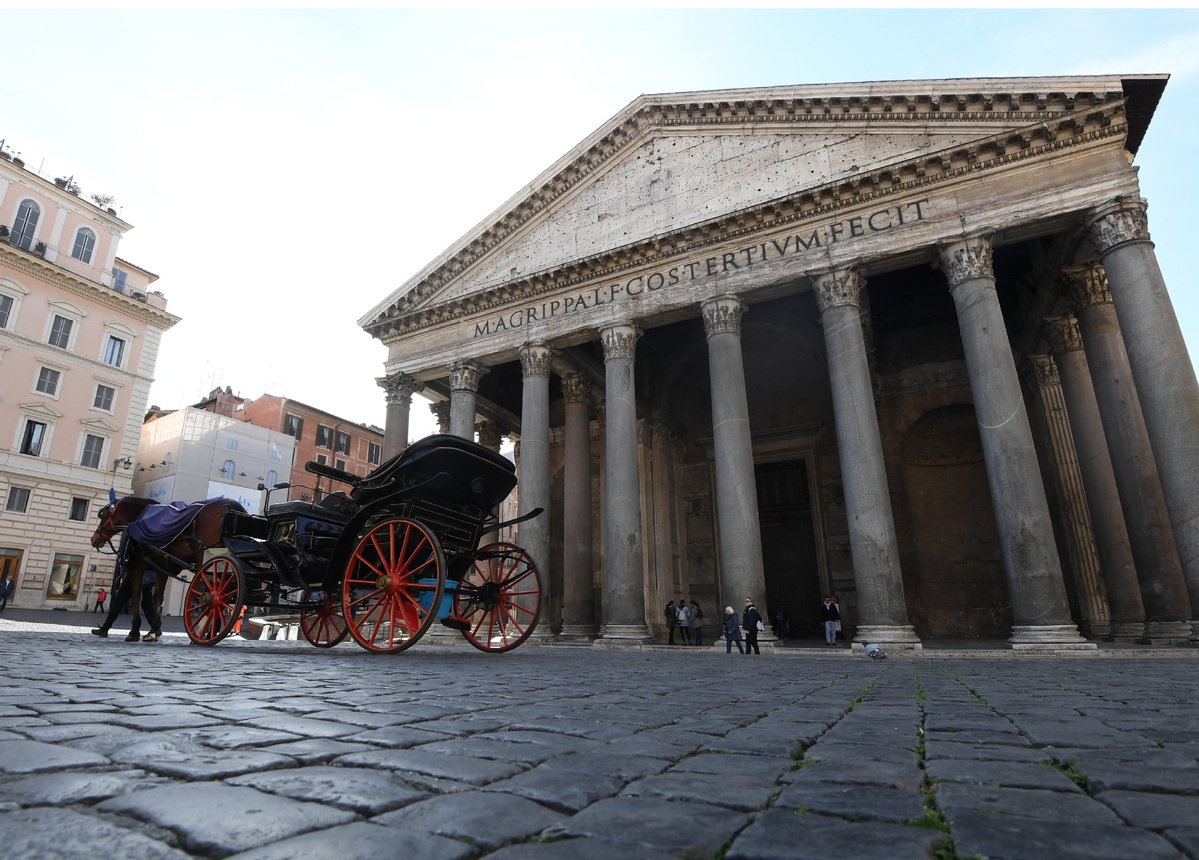
Ex post measures aimed at containing the spread of the epidemic, such as quarantines and travel bans, don't seem to work in the time of economic globalization.
After the United States announced at the end of January that it would temporarily refuse entry to foreign nationals who had recently visited China, the Italian government banned direct flights to and from China. But this measure will create tensions with China, a major trading partner.
Plus, the flight ban will not solve the problem of monitoring indirect arrivals to Italy from China.
The ban may rebound on Italy in other ways, too.
Its European neighbors, for example, may be tempted to impose entry bans on Italians in order to appease popular anxiety and anti-foreign sentiment.
Already, the French far-right leader Marine Le Pen has urged France's government to suspend the Schengen Agreement and introduce border controls with Italy.
Epidemics affect different countries in different ways, and national policymakers must tailor their responses accordingly.
Yet governments should coordinate measures aimed at protecting healthcare workers and vulnerable individuals and countries.
The lesson from Italy so far is that a lack of coordination among local governments, coupled with political fragmentation, puts all containment measures at risk by encouraging more people to leave the worst-affected areas.
Many university students, for example, have already returned home from northern Italy.
So, containment measures in one place may succeed only in shifting the problem elsewhere.
The virus is likely to continue spreading within Italy and throughout the rest of Europe. France, for example, has fewer confirmed cases — the panic level is high enough for some countries to impose potentially restrictive measures.
The outbreak will have a significant impact on the Italian economy, and it is likely to slip into recession.
Northern Italy is the country's economic engine with per capita GDP of about €35,000 ($38,000) — compared with the national figure of €28,000 — and a 67 percent employment rate (against 59 percent nationwide), yet major trade events such as the Milan Furniture Fair have been canceled or postponed and business trips scrapped, with uncertainty being high.
Virus-related cancellations have already hit Italy's tourism industry, which accounts for 14 percent of GDP.
Having long been saddled with a sluggish economy — real GDP grew by just 0.2 percent in 2019 — Italy now faces a recession.
Along with Germany's economic slowdown and the uncertainty of Brexit, Italy's virus affliction is further grim news for Europe.
The writer, a professor of International Economics at the University of London's Queen Mary Global Policy Institute, is the author of The Cost of Free Money.
Project Syndicate





