



Developing an open mindset toward foreigners







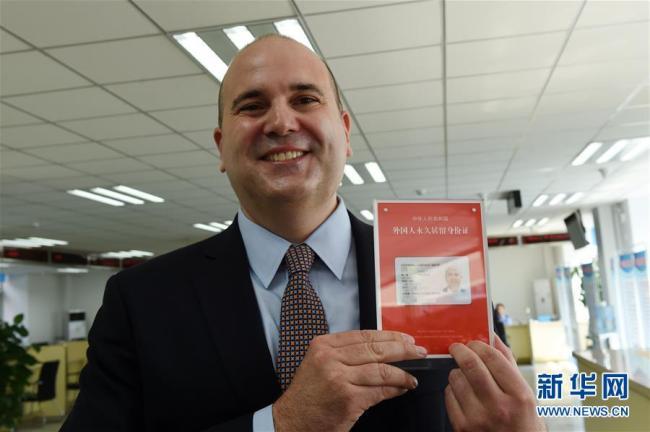
Editor's note: The draft rules on permanent residence for foreigners, for which public opinions are being solicited up to March 27, have sparked a fierce public debate. Three experts share their views on the issue with China Daily's Liu Jianna. Excerpts follow:
China needs to follow a more open policy
This may not be a good time to introduce such a draft, because the whole nation is still focused on fighting the novel coronavirus epidemic. The Chinese economy is under increasing pressure to maintain healthy economic growth, even though there is a pause in the havoc-wrecking China-US trade war.
That a number of enterprises are struggling to overcome the impact of the epidemic has exacerbated people's worries for employment. As such, the prospect of more foreigners settling down in China and competing for the seemingly limited resources and opportunities has sounded the alarm for some.
Yet many people seem to forget that what matters in the end is competitiveness, as only highly competitive foreigners that would be eligible to become permanent residents, which in turn will help improve the country's overall competitiveness. The key is to sharpen Chinese enterprises' and people's competitiveness so they can face the challenge of the times.
Some say China is yet to develop a mature enough social governance system to handle the expected large influx of foreigners. But if we refrain from absorbing more international talents and improving our innovation capability now, the pressure on our global competitiveness and economy could build up even more quickly.
To become a major global power, China needs to attract talents from across the world. And with the dividends of joining the World Trade Organization in 2001 declining, China needs to adapt to an even more competitive world by enhancing its competitiveness as the pressure builds up. So highly talented foreigners should be allowed to achieve their dreams in China.
Wang Yiwei, a professor of international relations at Renmin University of China
High bar needed to facilitate innovation
China is not suffering from a shortage of workers, and its working-age population will be more than 720 million even in 2050, as estimated by the United Nations, and the structural shortage could be reduced by measures including improving education, training and migration inside the country.
Besides, in this age of information technology and knowledge-based economy, China's demand for workers will decrease as its labor-intensive economy transforms into one driven by innovation. Not to mention that high-tech including artificial intelligence and robots have already reduced a certain percentage of manual labor.
Besides, with living quality significantly improved, China's large population may exert higher pressure on socioeconomic development, resources and the environment. China has long been facing challenges in providing employment to all college graduates, especially because about 8.5 million youths pass out of colleges every year. Also, with a number of enterprises closing due to the epidemic, the unemployment situation could be further aggravated, and less-skilled workers might find it hard to land a job.
In other words, it is too early to open the gate wider to foreigners.
And if the gate is opened wider, an extremely high bar should be set to grant foreigners permanent residence in China-similar to that in the United States. For instance, a targeted talents introduction policy should be worked out to bring in talents that could help expedite China's innovation-driven development and build a community with a shared future for mankind.
Yuan Xin, a professor of demography at Nankai University
Guard against both narrow nationalism and loopholes
The online backlash against the draft rules many not speak for all Chinese, but it reflects some deep-rooted social apprehension over favorable treatment to foreigners in China.
Partly because some foreign countries bullied China in the 19th and early 20th centuries, some Chinese people continue to view foreigners suspiciously. In fact, some Westerners still have a strong bias against China.
So the authorities should seriously reflect on the policy to grant preferential treatment to foreigners. One cannot help crying inequality when reading reports on foreign students in Wuhan getting eight facial masks a day while many ordinary Chinese are scratching their head thinking about how to get even one mask.
The fact that China is making greater efforts to build a foreigner-friendly image and seek more support from the international community is understandable. To be honest, the rules themselves are not so flawed, but those opposing them are just reflecting some people's dissatisfaction with preferential treatment to foreigners, while some have misunderstood the draft rules and believe that China will be ensnared into an immigrant trap like Germany.
Indeed, the rules are meant to attract talents, experts and elites, not refugees and asylum seekers. China needs to further open up and attract more talents, as history shows that a country can achieve profound development only when it is open and inclusive, just like the US was a few years ago and ancient China was during the Tang Dynasty (618-907).
The resistance against the rules can be attributed to conservatism and nationalism, against which we should stay vigilant, because only further opening-up can ensure China's long-term competitiveness.
The draft rules should not be held hostage by these ideological trends. Yet the rules should be made more detailed and specific and all their loopholes plugged.
Zhao Jun, a professor of law at Beijing Normal University
The views don't necessarily reflect those of China Daily.





