



Nation sets example in fighting virus







Epidemic reveals inadequacies in global governance; Beijing says it's ready to help
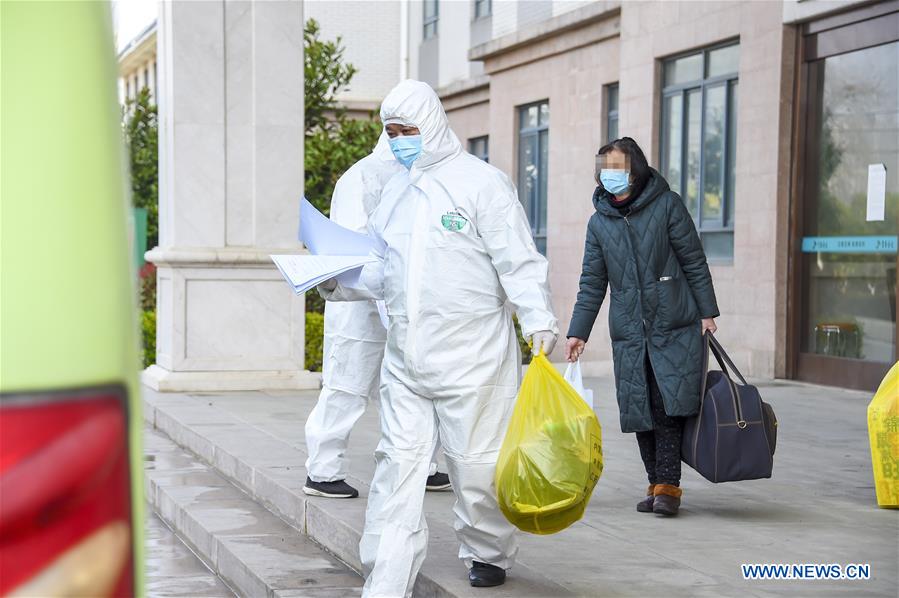
China's response to novel coronavirus pneumonia has set an example for the world in coping with the contagion and offered experience in advancing global public health governance, officials and experts said.
The COVID-19 outbreak has also raised the alarm about global public health security and reminded countries that cooperation and coordination are needed to deal with challenges as infectious diseases can rapidly escalate into global emergencies, they said.
There is a growing positive momentum in epidemic control nationwide thanks to the "comprehensive, thorough and rigorous" measures that China has taken to contain the virus, they said, noting that the daily number of new confirmed cases outside Hubei province has been declining for weeks.
President Xi Jinping has said on several occasions that China's efforts to curb the spread of the contagion not only aim to protect the safety and health of the Chinese people but also to contribute to global public health.
Calling public health emergencies a challenge for all countries, Xi called for international cooperation in upholding public health security to address the threats that mankind is facing.
With the virus spreading rapidly in other countries, the World Health Organization increased its assessment of the epidemic's risk from high to "very high" globally on Feb 28. WHO Director-General Tedros Adhanom Ghebreyesus said on March 2 that the spread of COVID-19 in South Korea, Italy, Iran and Japan has become the greatest concern.
The outbreak has revealed inadequacies in global public health governance and highlighted the urgent need to buttress the system, State Councilor and Foreign Minister Wang Yi said in a signed article published on March 1 by Qiushi Journal, flagship magazine of the Communist Party of China Central Committee.
"China is ready to work with the international community to address these challenges," Wang said.
"We support the core role of the United Nations and the WHO in responding to health emergencies and in improving the global public health governance system," he said.
He said that public health issues should be moved up on the international agenda, and major international health projects should be implemented, and a health Silk Road taken up.
Global emergency
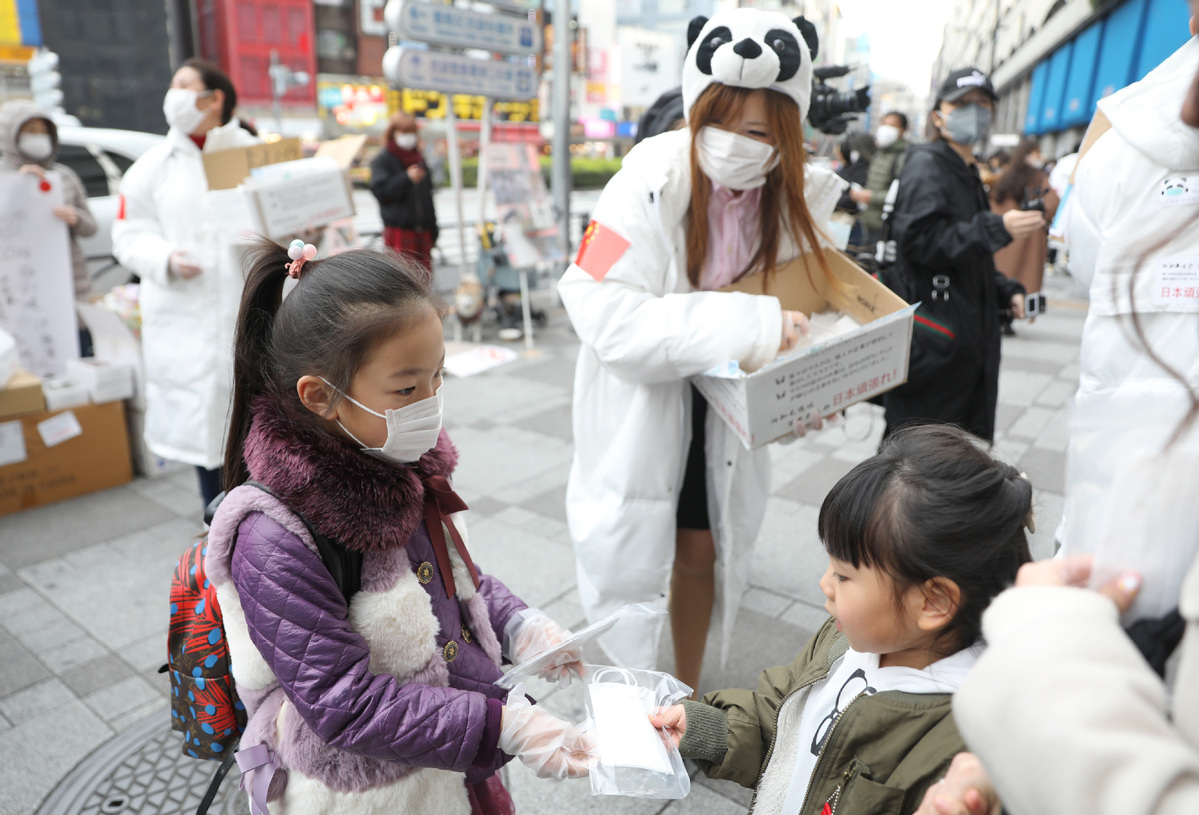
As the outbreak becomes a global emergency, experts warned that the disease can cause panic, disrupt economies, undermine political authority, spark discrimination and expose societal fault lines.
Getting the outbreak under control requires effective national and global governance across many areas — from detecting cases to countering misinformation, from scientific research to minimizing trade and travel restrictions, they said.
Suerie Moon, director of research at the Global Health Centre of the Graduate Institute of International and Development Studies in Geneva, Switzerland, said the international system has been strengthened considerably since the 2014 West African Ebola crisis, but it is still "thin and fragile".
"For example, we have no reliable system for financing the WHO or other international efforts that need to surge in times of crisis," Moon said in an email interview. "Three weeks ago, the WHO asked for $675 million to support its own work and help countries with weaker health systems, but this target has still not been met."
Moon said the world needs stronger and more resilient global governance to deal with outbreaks, adding that as a major global player, China has both the potential and the capacity to play a larger role in global governance processes affecting health.
"It can contribute financially today, for example, to global efforts to contain coronavirus in lower income countries, through the WHO or other bodies. It can contribute diplomatically in efforts to spearhead and negotiate fair, effective international rules on data sharing in emergencies, or pathogen and benefit-sharing.
"It can also encourage research collaboration with scientists from around the world, and identify ways of ensuring that new technologies developed to address outbreaks are available globally at an affordable price and in adequate volumes."
China announced on Saturday a donation of $20 million to the WHO. The Chinese government's decision aims to assist the WHO to bring its professional advantages into full play and work as a better coordinator in global efforts to combat the epidemic, Foreign Ministry spokesman Geng Shuang said on Monday.
Unprecedented response
Praising China's measures to contain the epidemic, WHO Director-General Tedros said, "In many ways, China is setting a new standard for outbreak response." He made the remark at a news conference in Geneva after a visit to China in February.
The Report of the WHO-China Joint Mission on COVID-19 released on Feb 29 credited the Chinese effort to combat the virus, stating, "China has rolled out perhaps the most ambitious, agile and aggressive disease containment effort in history."
Moon said a key message from China's experience is that it is possible to contain the virus's spread with a rigorous approach — an important message for government officials in other countries. "It is indeed encouraging that the number of new cases being reported from China has been decreasing — I do hope this trend continues," she added.
Robert Lawrence Kuhn, an international corporate strategist, said in an article published on the website of China Global Television Network that China's mobilization after the outbreak is unprecedented in global health history. "Nowhere could it work like it works in China. And the reason it works relates to how the Party system works," Kuhn said.
Future historians may well look upon China's fight against the coronavirus as a turning point in worldwide efforts to contain outbreaks of new diseases and stop their spread, which globalization and ubiquitous air travel have made vital, he said.
Since the start of the outbreak, leaders of more than 170 countries and over 40 international and regional organizations have extended their sympathies to the nation over the outbreak, commended China's efforts to fight the virus in an open, transparent and responsible manner, and voiced their support for China in the battle against the contagion.
International and regional cooperation should be expanded and good communication with the WHO and experience sharing among countries should be continued, Xi said at a recent meeting on epidemic control. He added that China will shoulder its responsibilities as a major country and provide necessary assistance to countries affected by COVID-19.
Ren Lin, a senior researcher at the Chinese Academy of Social Sciences' Institute of World Economics and Politics, said that cooperation is the best choice for countries to cope with the challenges posed by the epidemic.
The outbreak provides an opportunity for countries to reconsider the need to improve global governance in public health by enhancing cooperation and strengthening emergency response and risk prevention capacity, Ren said.
In terms of the priorities for international cooperation, Moon said all countries should share detailed and complete information with the WHO and other countries as quickly as possible as "there is still so much we don't understand about this virus".
She also called for pooling and sharing resources across countries, whether that is scarce supplies such as masks or other personal protective equipment for health workers, or mobilizing funds in countries that will struggle to do so domestically.


- Labubu lights up Shanghai lantern show
- Cherry blossom festival in Yongfu town celebrates agricultural innovation and cultural exchange
- China's first domestically built cruise ship welcomes its 1 millionth guest
- The Devil Still Dances: High Vigilance against Japanese Militarism's Infiltration in Sports and Culture Fields
- 189 historical artifacts of Japanese invasion donated to museum in NE China
- Death toll rises to 8 in North China factory explosion












