



Getting back to work







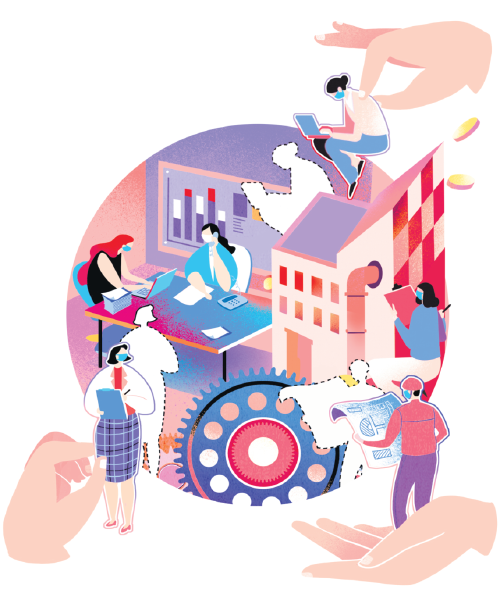
Further delays in resuming normal economic activities will not only compromise the epidemic response but also have undesirable knock-on effects
Until more people return to work, it will be hard to get the epidemic under control or to continue to produce, deliver and distribute medical supplies to those in need, and to make sure that people have access to groceries and other necessities.
Therefore, as the novel coronavirus epidemic continues to evolve, recovering economic normality is key to a speedy victory in the battle against the virus, as prevention and control capacities are closely related to how well the economy works. Further delays in getting people back to work will not only compromise the epidemic response and trigger knock-on effects, but also have negative lasting impacts on various economic indicators such as employment, debt and the supply chain, parts of which may end up moving elsewhere.
But when resuming normal economic activities rules and standards should be established to ensure effective infection prevention. Currently, it is particularly important to encourage the reopening of all companies in the production sector, especially manufacturing and construction.
To do this, three key steps must be taken. First of all, the highest level of protection must be embedded in all production and operation guidelines.
Second, companies should improve collective living, dining and hygiene conditions for their employees, such as reducing the density of employee accommodation arrangements. Some companies could consider renting budget hotel rooms for employees, which would also help accommodation providers get their business back on track. Third, it is necessary to carry out ongoing health monitoring of employees who have returned to work. In this regard, the government should roll out policies that encourage businesses to reopen by sharing the costs of prevention with employers. There should also be government commitments to cover these costs for companies that get their employees to return to work while abiding by the strictest epidemic prevention and control procedures should the outbreak worsen.
Having a set of robust management procedures for a safe return to work can offset the effects of a potential backslide in community and home prevention as the epidemic takes a turn for the better. This is particularly important, considering that many construction and manufacturing workers may have less access to information on effective prevention measures.
As the priority during the early stages of the outbreak has been to bring transmission under control, local governments across China have been focusing on preventing new cases. Healthcare providers and research institutes have reached a consensus on the routes of transmission and the case mortality rates. As emergency responses take effect, the central government may consider looking into changing the assessment metrics of local government performance in epidemic management. In other words, instead of only looking at the number of new cases, the focus could be the number of cases per hundred million yuan of GDP generated. This can help strike a balance between prevention and economic recovery.
Single-minded pursuit of zero tolerance of new cases will take a toll on the economy as governments hesitate to allow workers to return to their jobs. Worst, it could incentivize the underreporting of infections, which will hurt everyone in the fight against the epidemic. Therefore, we must make it clear to local governments and companies seeking to reopen, that they will not be held responsible for new cases after reopening as long as they have fully implemented prevention and control measures.
As a manufacturing powerhouse, China is known for its long supply chains and close international cooperation. In other words, if one supplier drops the ball, the effects will ripple through the entire supply chain, and it may ultimately hamstring the global competitiveness of the economy. Two problems have become prominent in this regard: some companies having resumed operations ended up underperforming or closing down because their vendors and clients are not there to keep the ball rolling, while others are looking to each other before deciding whether to reopen or not. As a result, delays in reopening are holding up entire industry supply chains.
Therefore, the government should review companies that play a key role in industry supply chains and act as a helper of last resort for key links to ensure there are none missing, as well as committing to subsidizing companies which are paying the price for idle capacity in order to stay open. Smooth communication should be maintained with companies and assistance provided to help those in need find alternatives. The government should prioritize two types of companies in providing assistance: those with export orders that must be filled and those embedded in supply chains of key global industries, namely those that provide inputs to foreign businesses to keep globalized production going. Ensuring that these two types of companies can produce at pre-outbreak levels to honor their commitments is key to helping our domestic companies maintain their credibility. If export-oriented Chinese businesses can fulfill their orders on time despite the epidemic, foreign investors will be more confident about the long-term growth and development prospects of the Chinese economy. This will in turn help Chinese companies to build resilience in their production, and contribute to the national crisis response capacity.
Finally, people need to be helped to overcome their worries about returning to work. The public needs to be given a clear picture of the epidemic, so that people can view the situation in a more rational and objective manner. For example, death rates could be broken down by age and health status, as knowing the extremely low death rate among the healthy young and middle-aged population will go a long way toward putting workers at ease.
Additionally, information on the efficacy of therapies for the population should be released in a timely manner.
Li Daokui is chief economist with the New Development Bank. Li Keaobo is executive vice-president of the Academic Center for Chinese Economics Practice and Thinking at Tsinghua University. The authors contributed this article to China Watch, a think tank powered by China Daily. The views do not necessarily reflect those of China Daily.





