



Emergency team plays key role in Wuhan battle







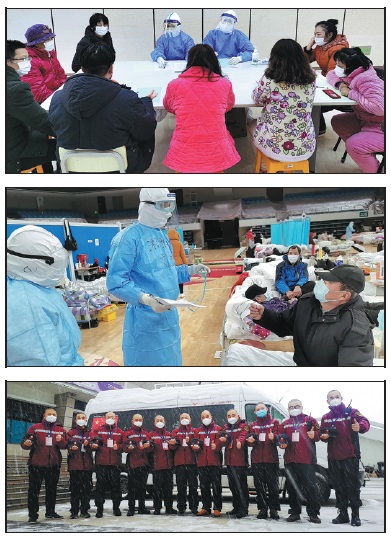
"Some of them will not contact their families on a regular basis, and when they do call home, they only state briefly 'I am good here', but not much more."
Liu spoke of one woman in her 30s, who had always been quiet and appeared to be worried, but with his help, she became more optimistic.
"I chatted with her a lot and found that she was the first in her family to be hospitalized. She was so worried that she might have infected her child, and it was constantly on her mind that she might end up losing the child."
Liu helped the woman to draw up a timetable of her daily activities and to join dancing and other activities organized by the hospital.
He also advised her to talk more with other patients, to spend less time in bed in the day and not to look at her phone too much. "She was reading too much news about the disease. She needs to read less," he said.


- Several hurt as bus carrying S. Korean tourists collides with car in Hunan
- Switzerland Tourism releases creative video ahead of Chinese New Year
- Doubling down on cooperation offers better payout for APEC economies: China Daily editorial
- Hong Kong's stability safeguarded by law: China Daily editorial
- Taiwan’s frontline weapon deployment plan sparks strong criticism
- Taicang hosts spring symposiums for foreign-funded and private enterprises













