



Idle caterers help online retailers with deliveries
E-commerce firms receiving booming orders as more consumers stay at home to avoid infection from virus







Gong Puming, the general manager of a Suning Appliance store in northern Beijing, started to invite his friends on WeChat last Tuesday into private chat groups where he posts about daily necessities and home appliances with sanitizing functions.
It is the first time the veteran retail manager of a brick-and-mortar store tried to sell things online. The 3,000-square meter store he manages is nearly empty at this time.
"The impact of the novel coronavirus outbreak on our business is severe," said Gong, adding revenue has been scaled down at least 75 percent to 90 percent compared to the same period of last year.
His latest post is a watermelon and a sanitizing washing machine. The search for a sanitizing machine on Suning.com has grown 205 percent year-on-year.
But slow logistics have acted as a drag on online sales due to a shortage in the delivery workforce, Gong said.
The delivery time is estimated two or three days longer than average. He said the situation could be eased when more colleagues came back from their hometowns after Feb 10.
Grocery retailers who have suffered from the labor shortage have been "renting" employees from the catering and hospitality sectors. Their employees have been left with no work due to the outbreak of the epidemic.
Wumart and Walmart, the two leading retail giants, have each issued notices since last week, inviting employees from the catering industry or other sectors affected by the outbreak to join their operations in stores or in the delivery service.
The goodwill move hopes to reduce the cost of restaurants owners in terms of idled labor.
By Sunday, about 2,000 employees from top chain restaurants including Xibei, a top chain restaurant, and Yunhaiyao, a leading southern-Yunnan ethnic cuisine chain in Beijing, have been offered jobs at Wumart's 800 stores, the food processing factory and logistics centers.
Alibaba Group rolled out a job sharing platform called Bluesea on Thursday, inviting employees at 100,000 restaurants to change their jobs as delivery and takeout food "riders." So far, about 4,000 catering employees are willing to work in the new positions.
Hema Fresh, a fresh food chain backed by Alibaba Group Holding Ltd, said they have started to work with Yunhaiyao on Monday. More than 400 employees from Yunhaiyao joined Hema Fresh stores and delivery services in cities such as Beijing, Shanghai and Hangzhou.
Hu Qiugen, general manager of operations at Hema Fresh, said their online orders have grown so quickly than their orders on average and their capacity is reaching a limit, with shortages of labor in stores, sorting and packaging at every single outlet.
With more than 200 stores in the country, each store has staffed about 100 employees. But the orders have increased by 50 percent in recent days, Hu was quoted by the Paper as saying.
In the following days, about 500 employees from South Memory, a leading Sichuan cuisine restaurant chain, and Shudaxia, a hotpot chain, will be in positions at Hema Fresh. More than 30 restaurants have been in talks with Hema.
The hit from the epidemic in the catering industry is severe and lasting, halting restaurant businesses nationwide.
Jia Guolong, head of the Xibei Ltd, said the epidemic has limited visitors from frequenting restaurants. Their current cash flow is only sufficient for three months of operations.
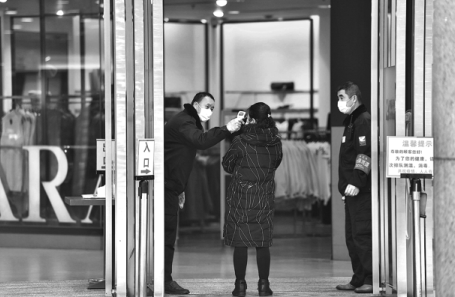
Limited outdoor activities have pushed up the online orders of retailers for daily necessities, resulting in the labor shortage.
"The ongoing epidemic has postponed the return of employees to their workplace at retail stores, creating shortages in labor for both online and offline retailers," said Jason Yu, general manager of Kantar Worldpanel China.
"Skillful employees from the catering industry joining retailers such as Hema and Wumart will greatly ease their delivery pressure. It also reduces the catering industry's costs."
A Kantar Worldpanel report said the outbreak of the fatal virus in January this year has caused a decline in retail traffic as well as forced store closures, which will negatively impact retail sales in the first quarter.
The epidemic will further strengthen the position of e-commerce and delivery services, especially in fresh foods, as consumers try to avoid traditional wet markets, the report said.
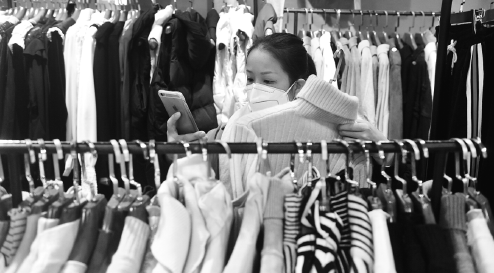
Compared to the booming online volumes for daily necessities in retail stores, apparel companies have claimed to suffer the most given the sudden drop in consumer desire to shop for clothes, as consumers placed limits on their outdoor activities.
"Offline traffic to our stores has been nearly zero while online sales is not optimistic," said Chloe Hou, public relations manager of Guangzhou-based Ban Xiaoxue, a Chinese designer brand. "The epidemic has curbed customers' desire to shop for clothes."
Most of Ban Xiaoxue's 73 stores have suspended operations or shortened their hours.
"The sudden outbreak of novel coronavirus brought short-term challenges, but will be followed with greater opportunities," said Hou.
With customers spending more time online, there would be increased chances for apparel brands to work on how to improve their customer relationship management, particularly in membership, content and experiences in the next two or three months.
When the customers come back after the outbreak is brought under control, the strong momentum gained from the improvement will make up for the offline losses during the past few days, she said.
Ban Xiaoxue has trained sales people to sell apparel from social applications online. "Our transactions are made completely away from brick-and-mortar stores," she said.
The brand has switched its priorities to customer relationship management. It is grouping their customers more specifically based on their interests and needs, and it is focusing on how to create better personalities for their sales people in the chat group, and on how to activate customers through recommendations from key influencers.
Lululemon, the leading yoga apparel brand, has closed most of its stores in China temporarily. The company has offered free yoga courses on major fitness applications and video sharing platforms such as Douyin. China is its third largest market after the United States and Canada.
Footwear retailer UGG, a brand of Deckers China, has also closed nearly six out of 10 of its directly operated stores for the moment. For stores that are still open, the brand has encouraged sales personnel to use WeChat to sell online, reducing risks for employees and customers.
Toy retailers that depend largely on offline sales have seen sales scaled down given the sluggish number of visitors.
Guo Xiao, marketing director of Beijing-based lifestyle retailer Pop Mart, said they have closed some of their stores, limited their working hours, and witnessed reduced rents from their landlord for a month.
"We have postponed a new product launch and focused on innovations for online marketing," he said. "We don't want our fans to take the risks to go into a shopping center."
But he said the disruptions in their inventory center and logistics brought on by the epidemic enable them to deliver more for customers who shop online.
"Hopefully the logistics will resume soon once the workers go back to work," Guo said.


Today's Top News
- Xi urges basic research push for original innovations
- Building of rare earth hub highlighted
- Seedance 2.0 signals big shift in AI sector
- United front work urged to pool strength
- Beijing refutes US nuclear test accusations
- Xi sends festive greetings to all service personnel







