



Catering firms hit by epidemic
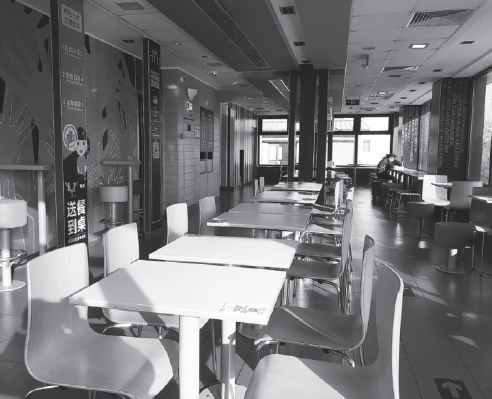
Concerns raised by outbreak keep diners away, but experts say impact may not last long







"I think this month (before and after the Spring Festival) should have brought in revenue of 700 to 800 million yuan ($99 million to $114 million), but it suddenly became zero," said Jia Guolong, chairman and founder of Xibei, a 32-year-old Chinese catering chain brand.
With its more than 400 restaurants in about 60 cities all closed and about 20,000 employees idle due to the novel coronavirus outbreak, Jia told Chinaventure.com in an interview that the company could survive three months even if they only rely on loans.
The Spring Festival holiday is a traditional peak season for the catering industry. But the hit from the unexpected epidemic has forced business executives to confront a crisis.
Zhang Tianyi, founder and CEO of Baman, a Chinese beef and rice noodle company, said 90 percent of his restaurants have closed since Jan 24, the eve of the Lunar New Year, due to prevention and control measures against the virus. He has asked his employees to stay in dormitories in Beijing and their salaries are being paid as usual.
He added the only meager income they currently get is from selling instant rice noodle products on e-commerce platforms. If the situation continues, the company will face great difficulty after three to four months.
Nationwide sales of retail and catering companies reached over 1 trillion yuan during last year's Spring Festival holiday. But catering sales were estimated to fall by 500 billion yuan during the same period this year, a report by Evergrande Research Institute said.
As most Chinese stayed home to prevent possible infection from exposure in public spaces or dense crowds, industries in offline services such as catering are facing a challenge.
The outbreak struck in late January when restaurants had completed full preparations for the holiday in the allocation of human resources and inventories of food.
The sluggish revenue, the costs in rental, raw materials and human resources are a significant challenge for a company's cash flow, said Chen Ke, a senior partner with global consultancy Roland Berger.
"Catering enterprises generally don't have much assets in stock-to reserve cash for two-and-a-half months at maximum. That's why continuous revenue plays an important role," he said, adding how long before circumstances improve would determine the survival of many companies in the sector, especially small- and medium-sized firms.
Jason Yu, general manager of consultancy Kantar Worldpanel in China, said the impact of the novel coronavirus outbreak in the restaurant sector would be noticeable, as consumers cut their travels and social activities substantially over the past two weeks.
"With concerns over infection, even consumers outside Hubei province (the epicenter of the outbreak) are trying to avoid eating out and cook at home instead. This will present severe challenges to the industry," Yu said.
Several catering brands have already announced the closure of offline restaurants or changed their service methods.
Hotpot chain Haidilao suspended the opening of all its restaurants in the Chinese mainland since Jan 26.Starbucks closed more than half of its stores in China, and strengthened hygiene security in the rest of its shops.
Yum China, the parent company of fast food service provider KFC and Pizza Hut, promoted "contactless" delivery to avoid direct contact with customers.
Yu added turning to online takeout services and offering pre-packaged products for consumers to purchase on-the-go is another way to utilize capacity and generate additional revenue.
Wang Yajun, founder and CEO of snack food brand Pashou, said that delivery service is a way out for restaurant operators. He said: "I've seen workers of Meizhoudongpo (a Chinese food restaurant chain) sell fresh vegetables at the door. They can also try to sell online."
Wang added it's a good time to develop the retail business on e-commerce platforms and enhance the brand's linkage with customers since people will spend more time on the internet.
The biggest cost for the catering industry though is in human resources, which comprise about 25 to 33 percent of its total costs. Rentals make up 8 to 13 percent so a reduction of tax or rental expenses can give owners a big help, Zhu Daneng, a food and beverage analyst, told National Business Daily.
Property operators such as Wanda and Longfor said they have reduced the rent or have given a month free to help companies pull through.
The China Banking and Insurance Regulatory Commission also gave support to industries suffering from the outbreak by encouraging a reduction in loan interest rates and increasing offerings of medium-and long-term loans. The industries which have been hit include those in the retail, catering, logistics, culture and tourism sectors.
Yu said the impact of the epidemic is expected to be felt in the first quarter of the year. "Once the virus is under control and consumer confidence recovers, the demand may bounce back soon."
Chen said the impact would only be in the short term, because the demand for catering among Chinese consumers is continuously growing."There is no need to be too pessimistic. In 2003, when the SARS outbreak hit the country, the catering sector saw steady growth for the whole year."
"The event will help companies to establish emergency response methods and emphasize food safety throughout the entire supply chain, which will benefit customers in return."
Li Pengfei, co-founder of Dreamfoods Studios, a Tianjin-based food chain, said: "If we take effective measures and make good use of new business models, the catering business will soon turn back to its path of prosperous development."
Liu Ning, a takeout store runner, plans to reopen on Feb 11. He said he would suspend selling of its specialty salad and promote hot food instead, such as sandwiches and burritos, to ease the concern of customers over food safety.


Today's Top News
- Stability, vitality and creativity appeal to all: China Daily editorial
- Xi attends Chinese New Year gathering with non-CPC personages
- Xi extends Spring Festival greetings to service personnel
- Nigeria and China at 55: a partnership for a new era
- 'Shopping in China' a broader economic repositioning
- China successfully conducts key flight test for manned lunar mission







