



Why we need gender equality in the fight against climate change







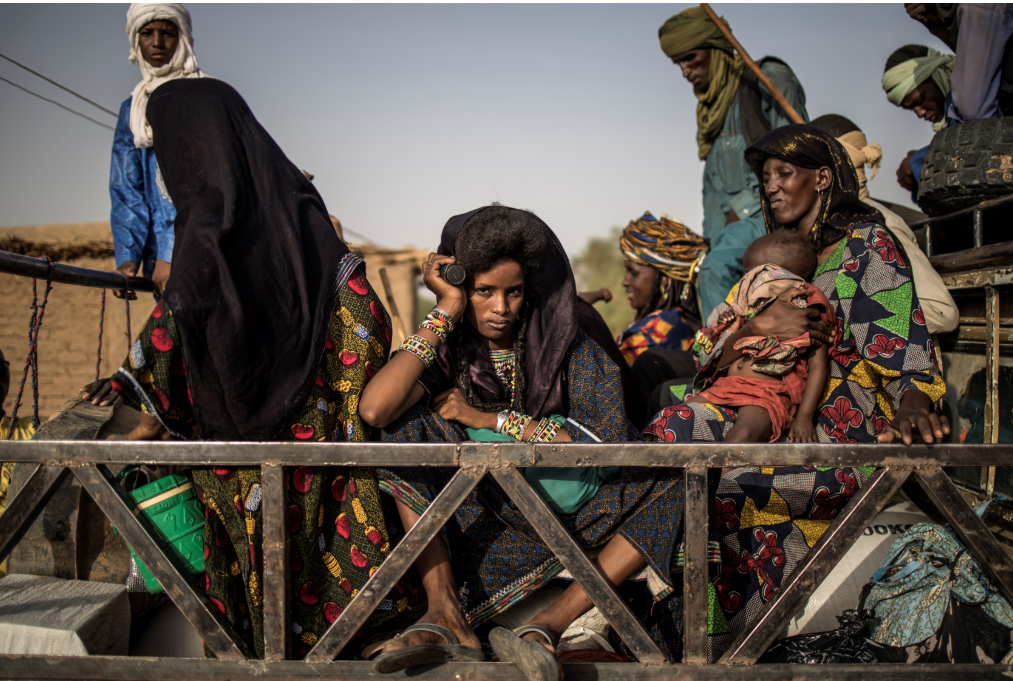
Climate change affects everyone globally, but its impact worsens in those sections of the population that are most vulnerable. Social, economic, political and historical factors all play a role in making some communities more exposed to climate-related extreme weather events and natural hazards than others.
Children, the elderly, indigenous communities, people on low incomes or with restricted mobility and especially women and girls are among the groups that suffer the greatest losses from climate-related disasters.
Why is climate change worse on women?
Women, especially in developing countries, are often the first caregivers - looking after children and the household often falls under their responsibility.
This means they are the most reliant on natural resources, because they are the ones who provide water, food and fuel for the family. According to a report by the European Parliament, women are responsible for more than 70 percent of water chores and management worldwide. And in the regions of the world most affected by climate change, 70 percent of all women work in the agricultural sector, which is the most heavily impacted.
Women are also the majority of the poor on the planet. The United Nations estimates that 70 percent of the 1.3 billion people living in poverty worldwide are women. The poor often live in the areas that are most vulnerable to floods, rising sea levels and storms, in houses that are not resilient to these kinds of extreme weather events. In the same situation, women and children are 14 times more likely to die than men.
Women have the least capacity to react to extreme weather events, whether that is because of unequal access to resources, education, or social and cultural norms.
Climate change and climate-related natural disasters are recognized to exacerbate gender inequalities in relation to discrimination, pose threats to women's health, cause the loss of livelihood with consequent food insecurity, aggravate poverty and induce displacement and migration, which often lead to human trafficking, violence and sexual exploitation.
The communities and networks that women rely on are disrupted by natural disasters, causing isolation and increased vulnerability to gender-based violence. Under the impact of climate-related extreme weather events, increased maternal mortality rates are reported, together with higher child marriage rates.
Climate change as an aggravator of gender-based violence
Christina, a young climate activist and eco-feminist from Madagascar, was invited to Madrid for COP25 to talk about the situation in her country.
She told the story of a young girl who was raped when she was five years old and endured regular sexual violence until she was 11. When she was 13 one of her aunts discovered what was happening and told her it was her fault for growing curves and attracting the attention of men. Christina was telling her own story: "I don't want to be seen as a victim and this is difficult to talk about for me."
She added: "I know it's a taboo everywhere, but I'm sure you've heard about this thing happening around the world. I felt the link between my body being raped and the planet being destroyed.
"This culture of patriarchy is destroying us and the planet. As many women, I'm trying to be strong enough and that's why I started many initiatives for women and climate change in my country."
For the more sceptical, Christina explained: "What does violence against women have to do with climate change? Let me give you an example of how climate change is affecting women in particular.
"In Senegal, I was in a village suffering from drought and where many girls were mutilated. These women, whose genitals were cut, were suffering from infections and because of the drought they couldn't find water. They had to walk miles to find water to wash, exposing them to more violence and potential assaults."
Christina had other examples: "I had the chance to work in the extreme south of Madagascar, the driest region of Madagascar and the most affected by climate change. In that region, child marriage is really a huge problem. In that region, because of climate change, for the past five years there was a severe drought and people didn't know what to do – they started selling all the stuff that they had."
She added: "I was there, so can you imagine, I was in the main city of that region and for more than one week there was no water at all. And for some families, they had no other solution and they decided to just sell their daughters.
"Of course this is awful but this is related to poverty and this poverty is related to the big impact of climate change, people don't know what to grow, they don't know what to fish anymore, they have no resources, so they do what they think is right, and in their tradition this is ok."
Other young women at COP25 shared their experience of sexual violence and how that inspired them to take action for the climate.
Leilani, a young indigenous woman from North America, said: "The issue of gender didn't come to me until I turned 18 and I was raped and I was in an abusive relationship, where my being indigenous was central to the abuse."
In Canada and the US, the issue of missing and murdered indigenous women and girls (MMIWG) has caused the Canadian government to declare a national genocide, and an offical report said that "state actions and inactions rooted in colonialism and colonial ideologies" caused the disappearance of more than 4,000 indigenous women over the past 30 years. According to data, females are disproportionately affected by all sort of violence.
But how does this link to climate change? Indigenous women, because of their close relation to nature and its products, are front line defenders in the fight against climate change, they protect nature and biodiversity, they have knowledge that contributes to preserve the environment.
According to a special report on land by the Intergovernmental Panel on Climate Change (IPCC), granting rights to indigenous people is a critical solution to the climate crisis.
What needs to be done
Despite the extreme impact of climate change on women, they are not generally represented in the spaces where decision-making processes regarding the environment and climate action take place. Systemic gender inequality prevents women from contributing to developing climate policies and sharing their crucial knowledge that could help communities adapt and mitigate the effects of this climate emergency.
Many activists at COP25 asked for more finance for women from the global south and communities affected by climate change, and for more participation and more visibility in the development of climate policies.
Indigenous women asked for their knowledge to be respected and recognized as valid for providing solutions to the climate crisis.
In the opinion of Titi, a climate activist from Indonesia, the current financial system is not fit to serve: "The Green Climate Fund is still not accessible to women affected by climate change."
"It's not that there are inadequate resources available, we have a systemic problem with the way resources are prioritized and distributed," said Bridget, another climate and gender activist from the US.
In the words of Nouhad, a young climate activist who works with women in Beirut for recycling waste in a sustainable way: "Many women in our society aren't able to go to work, because our society sees children and taking care of the home as a woman's priorities. We need as a civil society to work on human rights in general, gender roles and children rights."
The UN recognizes that women have a key role to play in adapting and mitigating the impact of climate change due to their local knowledge and roles within the community.
According to the data, women's participation in the development of climate policies results in increased cooperation across party and ethnic lines, and women's leadership has led to better outcomes of climate-related projects.
A report by Women Deliver, the global advocacy organization, notes that investing in women and girls creates a ripple effect on communities, making these more resilient to climate change. A study in the same report also finds that countries with more women in parliament are more likely to ratify international environmental treaties.
Women, because of their engagement in agricultural work and their role in the household, are also key to switching to more sustainable consumption through renewable energies.
Another brief produced by the UN reports that: "Women tend to share information related to community well-being, choose less polluting energy sources and adapt more easily to environmental changes when their family's survival is at stake."
In the words of Leilani: "We should look at climate change and gender as something holistic, not separate. We need to understand that women and indigenous women have a key role to play to save our planet."





