



Bay Area living circle will help solve family reunion problems







Recently, a policy suggestion put forward by a member of the Guangdong Chinese People’s Political Consultative Conference, who is also a Hong Kong property tycoon, sparked considerable public discussion. The report, which was submitted to the conference’s annual session, proposed that the daily quota for mainland residents relocating to Hong Kong under the One-Way Permits Scheme (OWPS) be halved from 150 to 75 to ease cross-boundary tensions amid ongoing social conflict in Hong Kong. The suggestion, which had been raised by “localists” in the past, was considered by some to be a bold statement. However, after some in-depth analysis, I believe the daily quota is not a matter to be concerned about.
The “150” quota is an upper limit instead of the actual number of daily migrants. In other words, the quota might not necessarily be used. For instance, the average daily number of mainland residents coming to Hong Kong via the OWPS was 129 and 116 in 2017 and 2018 respectively. Let’s look back at the original purpose of the OWPS. After approval by mainland authorities, mainland residents can relocate to Hong Kong for family reunions under the OWPS. The vast majority of applicants come to Hong Kong to reunite with their next of kin: parents, spouses, or children.
To meet the demand for family reunions as a result of the increasing number of cross-boundary marriages, it is suggested as a counterproposal that cross-boundary spouses be reunited in other cities in the Guangdong-Hong Kong-Macao Greater Bay Area. Some localist politicians even take advantage of this argument to discredit the OWPS and demand its abolition. However, they overlook a critical point when suggesting this counterproposal. When one proposes these cross-boundary families choose to reunite either in Hong Kong or in mainland cities, this implies there is not much difference between living in Hong Kong and in mainland cities in terms of social conditions. But such a scenario will only happen when Hong Kong and mainland cities have been highly integrated to form a living circle — which is the vision of the Bay Area plan.
It is interesting to note that some of these localists actually hold the same vision as the Bay Area plan. Although the primary goal of the Bay Area plan is to integrate and develop the nine mainland cities and two special administrative regions into an international innovation and technology center, building a “one-hour living circle” is also one of the main objectives.
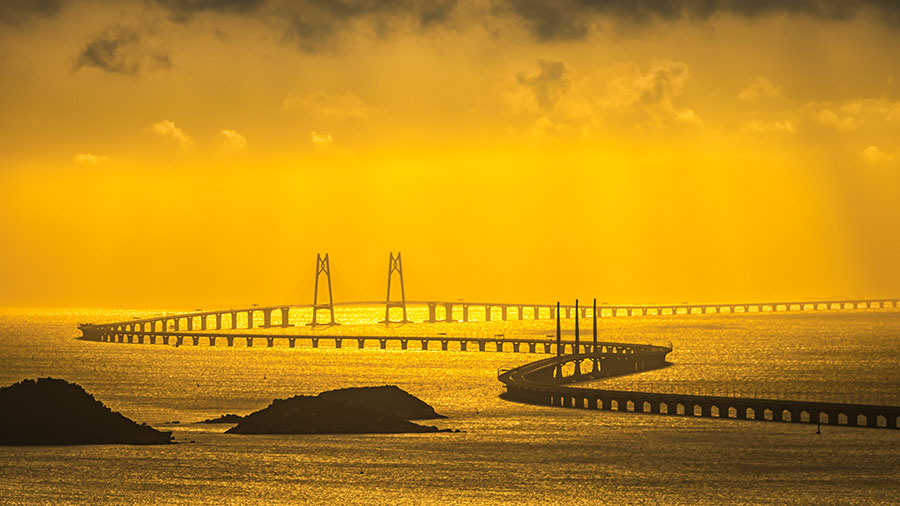
The hardware, such as the transportation infrastructure, has already been made available in the past few years. However, the software, which refers to comparable social benefits, is not yet ready. Residents on both sides enjoy different benefits due to the different social and economic systems in Hong Kong and the mainland. Citizenship and the associated entitlements are crucial when building a real living circle. For historical reasons, Hong Kong and Macao residents are not entitled to social welfare and other benefits when they are studying, working or living on the mainland. The introduction of the Regulations for Application of Residence Permit for Hong Kong, Macao and Taiwan Residents in 2018 did help settle the “entitlement” issue of Hong Kong and Macao residents living in the Bay Area. However, problems still remain when it comes to the provision of social services.
Medical services, elderly care and education services are three major areas that need to be reformed. If Hong Kong residents do not believe that social services and benefits they enjoy in those mainland cities are comparable with those in Hong Kong, it will be difficult for them to decide to move to mainland cities for family reunions. A strategic solution to this problem is to introduce Hong Kong service providers into the Bay Area. In this respect, the SAR government can provide incentives and support measures for Hong Kong service providers to set up branches in the nine mainland cities.
Because conditions for creating this living circle are still developing, the central and SAR governments are boosting efforts to reduce any incompatibilities between the two social systems. Meanwhile, Luo Huining, the new director of the Liaison Office of the Central People’s Government in the HKSAR, met with Guangdong province leaders earlier this week. This meeting was to discuss ways to advance the Bay Area plan and to promote regional cooperation and integration.
Su Shi, a great Chinese writer, taught us, “When water flows, a channel will be formed. There is no need to worry about it until then.” So as long as we maintain the momentum of integration, obstacles to creating a living circle in the Bay Area will eventually be removed. As for those who urge cross-boundary families to reunite on the mainland, they should join this undertaking by helping to create a living circle in the Bay Area.





