Lessons from Australian bushfire cost 480 million animal lives







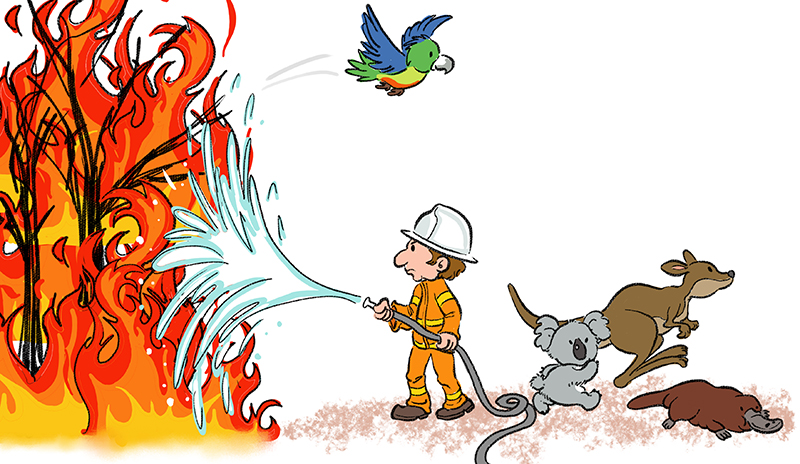
Australia is enduring the worst bushfires in history.
The fires that started in September have left 25 people dead, more than 1,000 homeless, and destroyed over 500 houses. It has also killed 480 million birds, reptiles and mammals, including 20,000 koalas, a protected species in Australia, according to a biodiversity expert.
The bushfires have been raging for more than four months now, but some people said on Twitter that bushfires tormented Australia all through 2019 and are still raging on.
It is important to find out what sparked the fires so measures can be taken to prevent them in the future. While there could be many causes, the main causes, according to the World Meteorological Organization, were dry weather and high temperatures.
The weather in Australia was extremely dry in 2019, particularly in November, which many experts say was "the driest of all the 120 Novembers since 1900".
According to available data, the average rainfall in Australia in 2019 was 277.63 millimeters, even lower than the 314.46 mm of 1902, considered "the driest year of the 20th century".
High temperatures, too, aggravated the situation. On Dec 19, the average temperature across Australia was 41.9 degrees Celsius, unbearable for humans and animals alike.
Such high temperatures can easily trigger fires in grasslands and forested areas. And the lower humidity level helped the fire to spread in a big way.
Scratch the surface further and one finds the other usual suspect-climate change. Australia, located in the Western Pacific, is one of the biggest victims of climate change, manifested in the dryness triggered by El Nino events. Consequently, its vast inland hardly gets much rain.
What's happening in Australia should send a warning to all countries. Dry weathers that trigger bushfires could affect one and all.
Experts warn that in 2020 the weather in Australia could be worse. And similar conditions could afflict other countries too. It's time people prepared for bigger disasters.