Canada’s cannabis legalization opens up pot of trouble







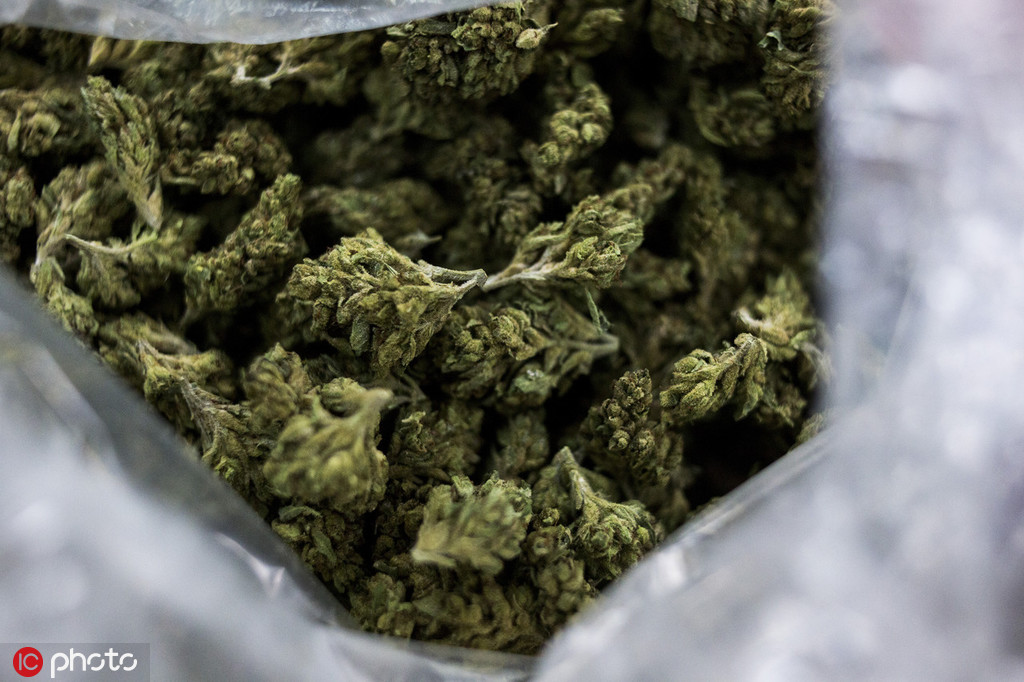
Starting Dec 17 cannabis edibles, extracts and topicals can be purchased online in British Columbia (BC), a province along Canada’s west coast. This marks a “l(fā)ogical” next step following Canada’s legalization of cannabis (also known as marijuana, pot or weed), a substance that could lead to addiction to more potent drugs like heroin, cocaine or opioids that have destroyed so many lives and families around the world.
Canada legalized marijuana on Oct 17, 2018, through Bill C-45, a legislative proposal sponsored by the federal Liberal Party, thus fulfilling a campaign promise the Liberals made to voters who wanted to see marijuana legalized and the stigma associated with past use removed. Cannabis legalization was also touted as a public health cure of the problem of drug addiction, an effective way to protect youth, and a silver bullet to end organized crime’s control of the illicit drug trade and the profits derived from it.
Despite all the hype surrounding legalization, things have not turned out the way the Liberals expected. Although baby boomers now have a legal source, other demographics continue to buy dope from illegal vendors. The overdose crisis persists. While mainstream media were quick to report a 32 percent drop in illicit-drug fatalities in the first 10 months, this does not change the fact that BC’s death toll will exceed 1,000 for the year, or the fact that overdoses in general remain alarming (over 20,000 overdose emergency calls in BC alone). Canada simply gets better in keeping the death tolls down by spending more on first responders and naloxone kits. Cannabis use among youth continues unabated. Any parent who helps out on graduation night will tell you how administrators, staff and parents guard entrances, side doors and exits throughout the night to stop contraband including drugs from entering the school premises. Because legal supply has not caught up, the illicit market is still going strong. Legalization has not stamped out the illegal trade, nor deprived participants of their profits.
Such a dismal record should have prompted a reality check. But that is not how the Canadian media or drug policy advocacy groups – the two big opinion influencers on drug policy here – see it. Instead, they tirelessly fill us in on how “informed Canadians” are taking a leadership stance in combating drug and reorienting policy. Almost every time the Canadian Broadcasting Corporation (CBC) radio service covers the overdose crisis, it will interview an “overworked” first responder, a grieved family member, a sympathetic doctor or a drug addict, all agreeing that addiction is a medical condition, that the overdose crisis is a public health emergency, that the government should relax laws regarding possession of illicit drugs and prosecution, and that it provide safe drugs (heroin and other opioids, cocaine and marijuana) free of charge to stave off the tide of drug overdoses – in short, government should be “creative” in tackling drug addiction and overdoses by accepting bad choices for medical conditions, decriminalizing law-breaking and turning itself into an accomplice in crime. Every now and then the CBC gives listeners an update on marijuana legalization, during which listeners can count on hearing a representative from advocacy groups or industry raving about how Canada is a world leader in shaping public perception of cannabis use and taking advantage of a multibillion-dollar industry that is growing into several hundred billion dollars. In a country where the media are supposed to be neutral and independent, such biased coverage is indeed a rarity. One wonders why.
A look at the dynamics driving marijuana legalization helps unravel some of the mystery. Statistics Canada estimates that close to half of all Canadians have used, or are actively using, marijuana. Legalization therefore has grassroots support: Users of cannabis for recreational purposes stand to gain by being assured of quality-controlled dope from government-approved vendors, hopefully cheaper than from street gangs; those convicted of cannabis possession or trafficking offenses in the past benefit by having such history removed from their police records; and people who have been taking dope on the sly now can do it openly. Politicians see marijuana legalization as a ticket to election wins. Given the size of the pot-smoking voting bloc, whoever takes it seriously is assured a leg up on his competition, which is exactly what the incumbent prime minister did in 2015 and 2019. Businesses like Canopy Growth and Hexo look to legalization as an opportunity to take market share from the illicit trade and expand into new product lines such as edibles (including beverages), extracts (concentrates like shatter, dabs or wax) and topicals (lotions, balms and creams). The progressives, who do not necessarily consume weed but believe in private rights and choice, tend to support legalization. With so many interests aligned in favor of legalization, it is no surprise that cannabis became legal without so much as a hiccup.
However, just because something is legal does not necessarily mean it is right. Slavery was legal for a century but was ultimately abolished because it was wrong from day one. In Canada, residential schools were once legal but eventually closed because they amounted to cultural genocide, a term the Truth and Reconciliation Commission used to describe the atrocity Canada committed against its First Nations. Furthermore, one person’s right to do drugs is not a license to infringe upon another’s rights. With pot-smoking parents, their children’s right to grow up in a drug-free home is simply nonexistent. When a young girl was hospitalized after mistakenly ingesting marijuana-infused gummy bear candies somebody else left in a vehicle in 2018, her right to live a safe and trauma-free life was compromised. With schools struggling to contain drug abuse among students, where is parents’ right to peace of mind that their children will not be tempted by peers who peddle pot as a part-time job? Yet to the legal cannabis lobby, their rights are more important than others. And the media assent by lending them a free platform.
Thus with a skewed moral compass, self-interest and expediency carry the day, warnings go unheeded, and hard facts are left to contend with false information. According to Canadian Paediatric Society, “Canadian youth ranked first for cannabis use among 43 countries and regions across Europe and North America, with one-third of youth (regardless of gender) having tried cannabis at least once by the age of 15.” Such “distinction” means Canada had a lot of soul-searching and backlog of work to do, yet many Canadians were convinced that legalization would do the trick for them. Neither cannabis producers’ losses in the first year of legalization nor the Ontario government’s loss of $42 million selling pot deter the country from embracing Cannabis 2.0, the second phase of legalization. While bets are placed and temper reigns, evidence of cannabis being used as a “gateway drug” to prepare youth for harder drugs is either eschewed or countered by advocacy groups’ claim that the dope is nonaddictive, a claim that the media make sure gets to the public “uncensored”.
The involvement of powerful interest groups in the cannabis legalization process calls the Liberal government’s integrity into question. People still recall last year’s SNC Lavalin scandal in which the Liberals were found to have accepted large sums of campaign contributions from a Canadian firm in exchange of promising not to prosecute it for corruption in its overseas operations. Given the multibillion-dollar stake in the pot business, can anyone be sure the Liberal government was not vulnerable to similar pressures from the cannabis industry? Why does it make legal cannabis such a priority when a host of more pressing issues cry for its attention: climate change, reconciliation with First Nations, trade relations with other countries, and a real plan for long-term, sustainable growth for Canada?
That many powerful interests contend to shape Canada’s drug policy in their favor, that nonsmoking citizens’ rights are being abridged to accommodate pot smokers, and that the country is still in the throes of an opioid overdose crisis that had cost it 12,000 lives, counsel caution in the search of solutions. Yet for reasons identified above, Canada opted for legalization as a cure for its drug problem. The courage is admirable, but it is no ground for the country to be complacent or to set itself up as a role model – the future is far from clear. Besides, Canada’s past leadership in pursuing growth at the expense of the environment and in pillaging First Nations’ land and resources in the name of freedom and progress does little to buttress its assertion of leadership this time, just as the Canadian press’ complicity in the history of residential schools lends little credibility to the media’s pretence of independence today in reporting the overdose crisis or drug policy.
Fortunately, while certain quarters in Canada and its media have trouble learning from history and consider leadership their birthright in defining drug policies as they see fit, the rest of the world does not have to follow suit. We wish Canada the best of luck as it experiments with Cannabis 2.0 or Cannabis 3.0. As a country heavily dependent on infusions of immigrants and refugees to keep its population from declining, Canada certainly needs it as it battles to reduce overdose fatalities.
The author is a teacher in British Columbia, Canada.
The opinions expressed here are those of the writer and do not necessarily represent the views of China Daily and China Daily website.