Macao should bet on Greater Bay Area







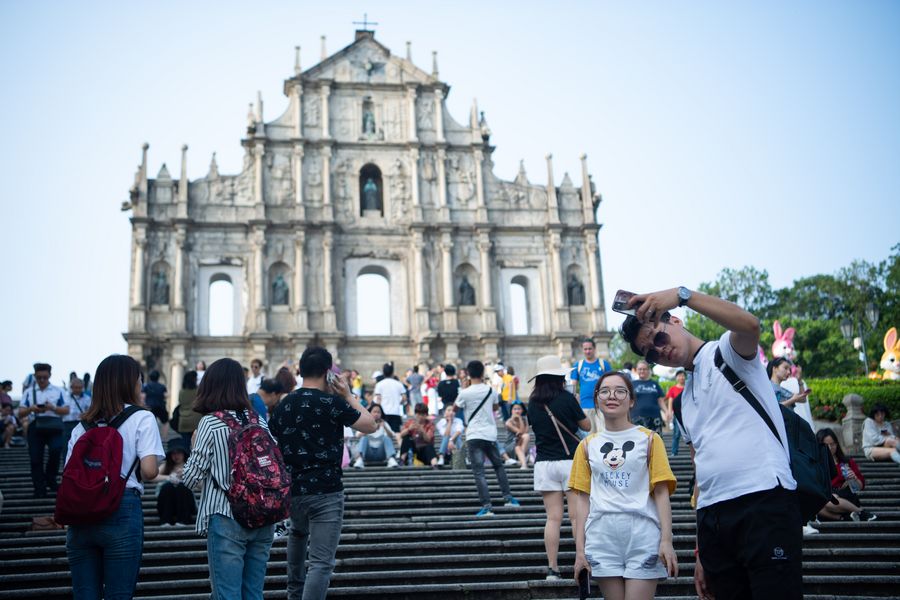
While experiencing tremendous growth since its return to China, Macao's reliance on gaming puts it in a vulnerable position. Accordingly, the central government has actively promoted the diversification of Macao's economy as a priority goal. Macao has always been susceptible to short-term shocks, suffering declining growth during the outbreak of the H1N1 virus and the 2008 financial crisis.
When China launched its anti-corruption campaign, gaming revenue in Macao fell to a five-year low, indicating part of Macao's revenues came at the expense of the rest of mainland. More recently, relaxation of gambling regulations in Japan, Singapore and the Philippines suggests the end of Macao's monopoly position as a gaming hub. These facts make diversification an urgent task.
With only 30 square kilometers and 650,000 people, the task of diversification is a difficult one. To accomplish this, Macao must utilize its geographical and historical advantages. Macao has natural synergies with the Guangdong-Hong Kong-Macau Greater Bay Area (Greater Bay Area), and its efforts at diversification can be best realized by integrating within mainland's national development plan.
Macao's historical relationship with the Portuguese-speaking countries allows it to be a platform between China and the Portuguese-speaking world. Its role was highlighted by the opening of the headquarters of the China and Portuguese-Speaking Countries Cooperation and Development Fund in 2017. Macao is uniquely positioned to link mainland to the Portuguese-speaking world, developing trade and investment ties based on shared prosperity.
The role of finance in Macao has been steadily increasing, but much of this is unhelpful real estate speculation. For Macao to truly become a financial hub, requires its integration with the productive sectors of the national economy. The creation of a stock exchange denominated by the renminbi would be a significant step in this direction, helping Macao to diversify its economy, and reducing mainland's political exposure by further diminishing its reliance on Hong Kong as a conduit of foreign investment.
With a population bigger than the United Kingdom, and more than 12 percent of China's GDP and 1 percent of China's landmass, the Greater Bay Area is an immensely significant space. Macao needs to find its identity and define its contribution within the Greater Bay Area to realize the benefits of its potential. Macao's biggest advantages come from its unique history, allowing it to provide opportunities for leisure, tourism and learning.
In leisure and tourism, Macao's greatest complementarity is with the neighboring city of Zhuhai, particularly through the development of Hengqin Island. While Macao has experience and expertise with tourism, at roughly 96 square kilometers, Hengqin has the space Macao desperately lacks. Linking these regions as a space of leisure and tourism, but also as a cultural and educational centre, can be a major step toward Macao's diversification and can be its contribution to the Greater Bay Area.
In higher education, Macao can learn a lesson from the Australian experience. Australia enjoyed the benefits of opening up its universities to internationalization, in particular to students from the Chinese mainland. As a result, Australia swiftly transformed from an underfunded, domestically focused education provider to the third-largest education exporter in the world and a trillion-dollar industry.
Macao could quickly achieve significant growth in its higher education industry, in fact, the infrastructure already exists. The University of Macau has Asia's most extensive residential college system and the university can accommodate up to 15,000 students, and yet it runs significantly under capacity at about 10,000 students per year. The reason for this is the quota system which caps enrollment of students from mainland at 18 percent of the total, meaning total enrollment is determined by the number of Macao residents enrolled.
Due to Macau's ageing demographics, the result is either a reduction in total enrollment, a drop in acceptance standards or both. If the university's extra enrollment capacity could be utilized by treating students from the Greater Bay Area, as "locals", it would increase revenues, bring economic activity to Macao and facilitate more interaction between Macao and mainland, deepening Macao's identity with the mainland.
Students from mainland do not take up employment in the Macao labor market. This means they would instead be bringing significant economic activity to Macao, boosting demand for services and increasing the quality of jobs. If Macao is going to play a vital role in developing the Hengqin region, an expanded higher education cluster would be a great way of doing it.
The challenge remaining is for Macao to have the courage and foresight to diversify despite its recent success. During President Xi's speech commemorating the 20th anniversary of Macao's return to China, he emphasized the need to "break new ground while the going is good". Macao would do well to heed this advice and broaden its horizons.
The author is an assistant professor at the Department of Government and Public Administration at the University of Macao.
The opinions expressed here are those of the writer and do not represent the views of China Daily and China Daily website.