Climate discrimination and the case for reparations: how the West is avoiding real responsibility







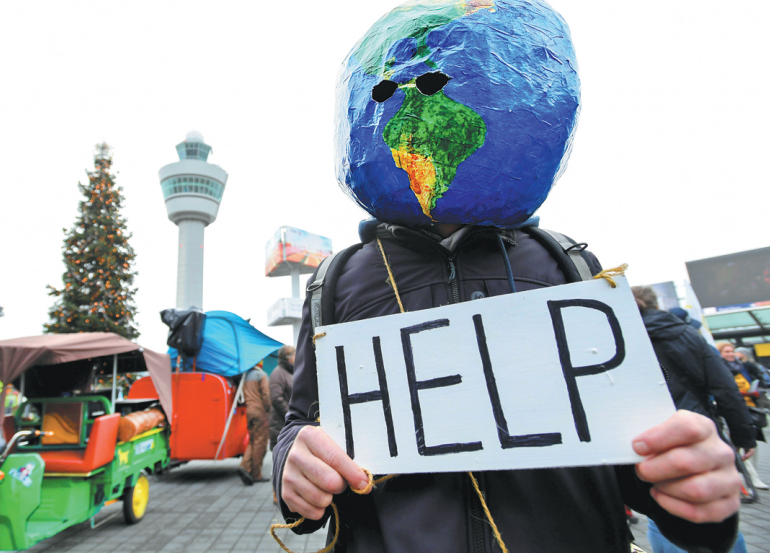
Why has progress seems to be stalled again at the UN climate talks in Madrid? There often seems to be a failure to reach agreements, primarily due to a difference in opinions especially between the West and developing and threshold countries. This time, above all the US was reluctant to agree on mechanisms of compensations for losses suffered by developing countries as a result of effects of global warming, such as intense storms, rising seas and droughts.
The reasons for disagreements are not simple, since the climate issue cannot be observed isolated from global political and power structures. For Western citizens, the issue often seems straightforward and easy: cut emissions. For citizens of developing countries, it is not so simple: they are facing multiple issues, all connected with each other. Finding a solution is complicated. This article makes a case for climate reparations.
Why climate reparations are necessary
The root of the failure to reach agreements lie in the reluctance of the West, above all the US, to accept real responsibility for the climate crisis and act in a matter that puts other interests aside. The idea of climate reparations goes back to the Copenhagen climate conference in 2009, where leaders from more than a 100 nations proposed a transfer of funds from developed countries to the developing world, in order to help deal them with the consequences of climate change. The proposal was called "reparations" for the damage caused by fossil fuels in the developed world. Again, at the Warsaw climate conference in 2013, the proposal was brought up. However, under the instruction of Obama, it was opposed:
"It's our sense that the longer countries look at issues like compensation and liability, the more they will realize this isn't a productive avenue for the [UN Framework Convention on Climate Change] to go down," the State Department said.
The argument "We have to act now, what does it matter" either misses the bigger context or is a deliberate measure against developing countries. In reality, blanket enforcement of climate regulations and a complete change of industrial structures in developing countries would stall the progress of the developing world and maintain old world power structures and domination. Also: developing countries simply do not have the resources to completely and all of a sudden change the structure of their whole industry, while at the same time ensuring the wellbeing and living standards of their citizens. The ones benefitting from climate measures are therefore primarily the developed countries, which have industrial development stages and reliance on industrial output already behind them.
The developing countries however will be hit even harder, since they partly still rely more on sectors such as heavy industry and manufacturing, something that has higher emissions that Western service industries. Furthermore, the West needs therefore comparably less effort to reach emission goals although they have more resources to their disposal - it is a double discrimination which in the worst case doesn't only recreate old power structures but even exacerbates them, making the developing world unable to ever catch up. Previous power structures, based on colonialism and exploitation, have allowed the West to develop and industrialize faster, and are therefore one of the root causes for the climate situation today, giving these Western countries a responsibility to compensate. When talking about climate change, its roots in colonialism, which fueled industrialization in the West, cannot be ignored. Therefore, cases for "climate reparations" have been made by the developing world, in which the West must at least in part compensate the cost of damages caused by climate change and the move to regenerative energies in developing countries.
The need to address compensation for past pollution
However, we can see opposite views being shared today, especially by the West. China is blamed for being the top polluter in the world, and there are talks of climate sanctions against China and other threshold or industrializing countries, isolating them from world economy until they meet certain climate goals. The intention is already exposed in the wording of this narrative: China, for example, is framed as the worldwide overall top polluter, often leaving out that the main reason for its comparable high overall emissions output is just because it is the most populous country. If we look at CO2 emissions per capita China is only ranked at 47th, with 7.5 metric tons per capita, while the US is ranked 11th, at 16.5 tons per capita - mostly followed by other Western countries and rich Gulf states. However, if we count total CO2 emissions for the period 1970 to 2017, the US tops the list by a large margin, making it the most polluting country in history.
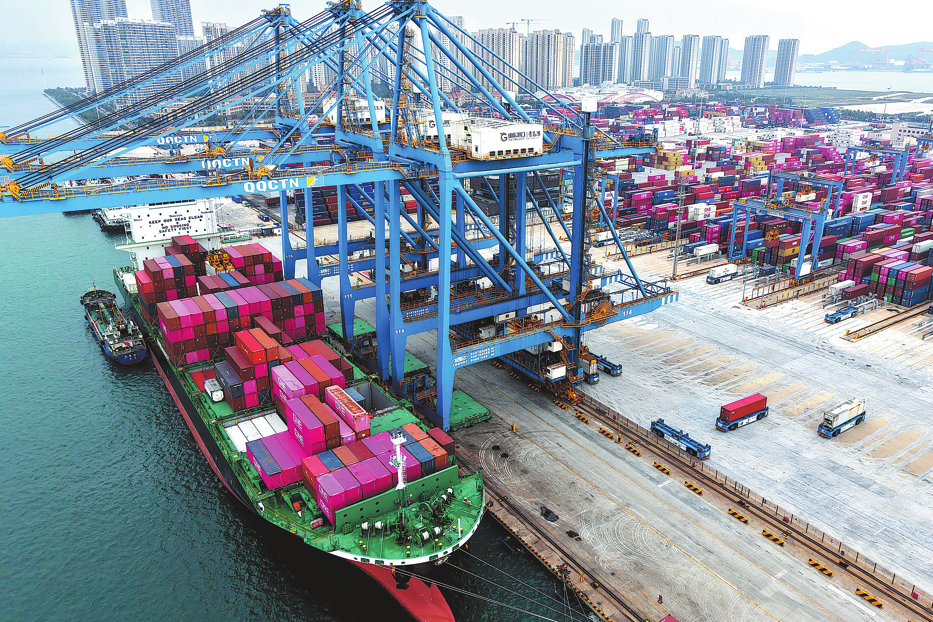
Meanwhile, Western countries are completely dependent on the manufacturing and industry - being the top consumers of commercial goods per capita by far - as well as fossil fuels in the developing world – one could call it a kind of "pollution outsourcing". In this context, the idea of "beneficiary pays principle" (BPP) instead of "polluter pays principle" (PPP) was introduced. Simultaneously, America being at the forefront, the West is engaging in wars that further stall the progress of developing countries and maintain old power structures.
To make it clear: If we take a look in the past, there have been serious incidents of pollution in certain industrial development stages of Western countries as well, such as the London smog crisis in 1952 or decades of air pollution in Los Angeles, etc. Taking developing countries at these industrial stages accountable now, without addressing similar damages done in the past seems disingenuous and employing a double standard.
Here is an interesting fact: the US military and its bases around the world are a bigger polluter than 140 countries combined. If it were a country, it would be the 47th largest emitter of greenhouse gases in the world. Why is there almost never a talk about cutting emissions here? Considering this, it is no wonder the US pulled out of the Paris Accord, which included the obligation of reporting military emissions. War is a real climate killer too: Total emissions from war related activities in Afghanistan, Iraq, Pakistan and Syria are estimated above 400 million metric tons of CO2. Another example is the highly pollutant Vietnam war, where toxic byproducts of Agent Orange are still polluting the environment today, 50 years later, affecting the food supply of Vietnam. Considering this, a case could be made for climate reparations compensating for damages caused by wars.
Analysis: not about justice, but efficiency
The "climate reparations" should however not form the sole purpose of compensating for inflicted damages because of climate change, rather they should provide the resources to developing countries so that they can change their industries to adapt to environment-friendly, pollution free structures - which they otherwise simply would not be able to or at most at a huge economic and human cost, deepening their disadvantages they have towards the developed world.
The argument that renewable energies are economically more efficient, so developing countries would actually benefit, is short-sighted. In short: if it was this easy, they already would have. The problem is however that while it might be economically efficient in the long term, a certain amount of seed capital is needed to construct this sustainable energy infrastructure. Since many developing countries do not have ownership of these technologies themselves, due to low development standards and problems in education, exploitation, war etc., they would have to take out a loan to buy these technologies from developed countries, further creating economic dependencies. On the one hand, countries such as China are accused of "intellectual property and technology theft", and on the other hand it is expected from them to cut emissions. The Western hypocrisy shows here, when it propagates environmental protection before anything else on the one hand, on the other hand however initiates any measures to retain economic dominance instead of encouraging and supporting other countries' development.
The "It's only about the money" argument exposes a colonialist attitude and shows how the West is still used to the exploitation of developing nations, and its unwillingness to realize that a zero-emissions world cannot be achieved under present power structures.
To make it clear: climate change has to be tackled now, otherwise it is too late. To efficiently and quickly achieve this goal however, resources must be allocated equally throughout the world, wherever they are needed most. Here the same argument can be thrown back against the critics: what does it matter? If we don't act now, there will be a global catastrophe that affects all of us. No, this is not about justice. It is about tackling a global issue the most effective way. If Western countries, especially the US which pulled out of the Paris climate accords, stand in the way of cooperative effort, no solution will ever be reached. This time, it is the West which should be held accountable.
The author is a masters' degree student in Economy and Society of East Asia at the University of Vienna.
The opinions expressed here are those of the writer and do not represent the views of China Daily and China Daily website.