



The US should fix its Afghanistan impasse rather than confine China







Editor's note: Azhar Azam works in a private organization as a market & business analyst and writes about geopolitical issues and regional conflicts. The article reflects the author's opinions and not necessarily the views of CGTN.
On December 11, 2019, the Democratic-dominated US House of Representatives passed a gargantuan 738 billion US dollars defense bill with bipartisan support for the fiscal year 2020 and sent the conference report on the National Defense Authorization Act (NDAA) to the Republican-controlled Senate where it is expected to pass within next seven days.
The passage of the defense bill whipped up the US President Donald Trump, who urged Congress "don't delay this anymore!" and stated he would "sign this historic defense legislation immediately." It encompassed 71.5 billion US dollars for Overseas Contingency Operations (OCO), including Operation Freedom's Sentinel (OFS) in Afghanistan.
In the 2019 fiscal year, the ongoing OFS or war in Afghanistan was the most expensive US foreign operation, extracting 37.2 US dollars from the pockets of American taxpayers. It was also the largest US spend on overseas military campaigns, accounting for 77 percent of total international operations' spending. With some 579.4 billion US dollars spent on Operation Enduring Freedom (OEF) in Afghanistan, the cost of the Afghan war reached 755.7 billion US dollars in March 2019. The US defense bill deliberately obscured these stunning facts in the act.
The NDAA also sought several reports on China's investments abroad: transportation, energy and technology projects, growing military capabilities, ending dependency on Chinese rare earth materials and the ambition to make the country a manufacturing power by 2025.
Obscuring the massive defense spending in the Afghan war and underscoring Chinese development, the act gave the impression that the US was regretting the day it invaded Afghanistan and afterward grimly violated the sovereignty of several other countries around the globe.
More than 18 years of its offensives in Afghanistan, Washington is making the world believe that molesting Kabul was its biggest mistake, which allowed Beijing to make trouble-free progress in the fields of economy, technology and defense. By centering on China, the act strove to modify its future plan of action.
But Washington fails to comprehend that, with or without US impediments, Beijing's growth was unstoppable with the meticulous implementation of its decades-old economic reforms and opening up. The advancement China made across the multiple sectors was never intended to compete with any nation and just focused on expanding its economic and technological growth, lift millions of people out of extreme poverty and protect its national defense.
Being an important member of the United Nations, China unconditionally supported the US war on terror following the 9/11 terrorist attacks. Once terror nudged the US, China strongly condemned the September 11 attacks and pledged to cooperate with the global community in fighting terrorism.
Likewise, when the Trump administration commenced on the path of political dialogue with the Afghan Taliban, Beijing again welcomed the Afghan peace process and stressed an Afghan-owned and Afghan-led peace solution for a durable and stable Afghanistan. China additionally exerted deep efforts to facilitate intra-Afghan dialogue.
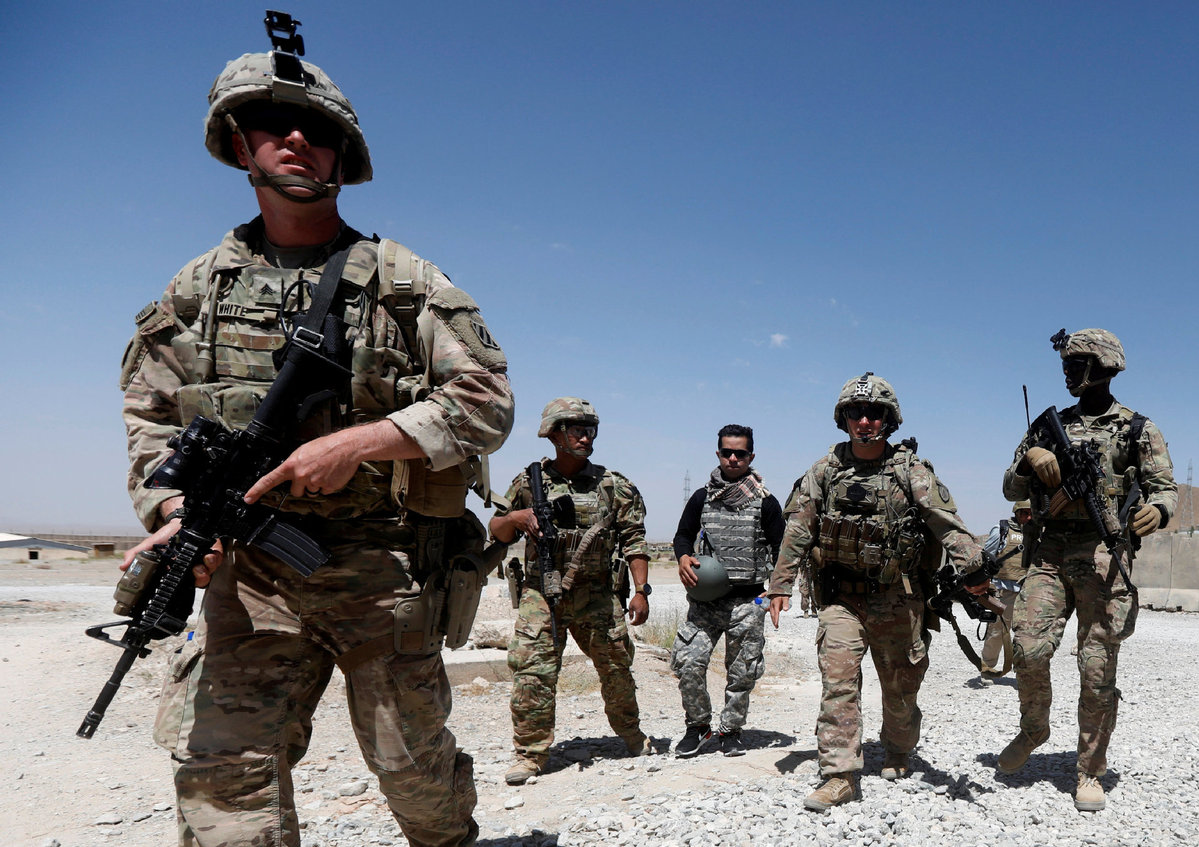
Washington needs to carefully revisit its hostile attitude in Afghanistan, which brought about the deaths of 2,300 US troops and saw another 20,590 wounded. The fatalities of the American military have not stopped, even after the Former US President Barrack Obama announced the end of the longest war in American history in December 2014.
In place of targeting or profligately containing China, the US should iron out the grievances of its armed personnel who are still not sure what they were doing in the nearly two decades old Afghanistan war and are increasingly wary of US officials' "rosy" pronouncements of winning the unwinnable war.
It is an irrefutable fact that despite numerous troop casualties and massive spending of around 1 trillion US dollars by a number of trusted estimates, the Afghanistan war continues to grip the United States, and there are no signs of it ending anytime soon. Yet, Washington wants to keep a military footprint in Afghanistan.
The Afghanistan Papers are a caveat to Washington. They caused the US and its establishment to reconsider its aggressive policies and corrupt practices, which drove hundreds of billions of dollars in Afghanistan to foster corruption and wire kleptocracy, apart from bleeding the US economy.
Instead of resolving the longstanding Afghan crisis, the Trump administration is trying to deter China's growth from economy to defense. The US president's belief that his tariff barrage can quell and kink Beijing to Washington's illegitimate and detrimental demands is terribly misdirected.
As Trump entered into the final year of his presidential tenure, Chinese economic data and independent worldwide studies demonstrate the country's increased pliability to absorb the US import tariffs in a prolonging trade war.
China abjures any moves that might spark tensions between the two largest economies of the world. But if the US remains committed to its paranoid behavior to pursue the covert American agenda to hurt China on various fronts, Beijing could hit back at Washington with more burly countermeasures that would be tumorous for the international peace efforts and global trade system.





