



With Xinjiang Bill, US Congress drops the ball in war on terror







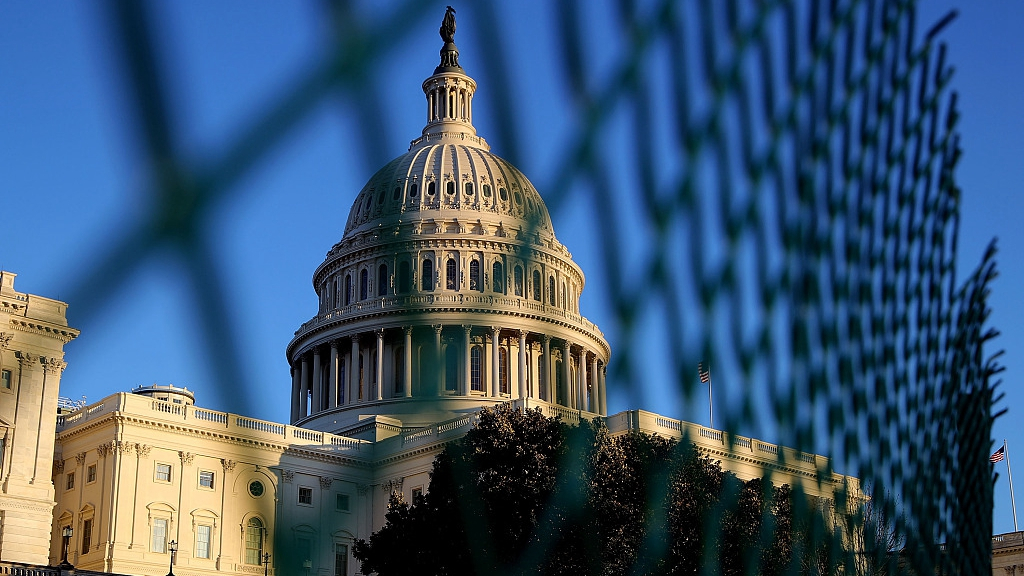
The US Congress is really going overboard these days in its China-bashing fervor. With the obsession on foreign policy issues these days, with Russia, China and Ukraine seemingly topping their agenda, they seem to have little time for the issues of importance to the American people.
While congressmen's posturing about alleged Chinese technology theft or Russian interference in US elections will win them kudos from the foreign policy "wonks" in the Washington think-tanks, they will not gain much traction among their constituents, waiting eagerly for an infrastructure bill, a jobs bill, or medical insurance reform.
The latest China-bashing measure, the alleged Uygur Intervention and Global Humanitarian Unified Response Act of 2019, which has flown through both Houses without a tad of opposition, is a ludicrous measure that could have a deleterious effect on the still-ongoing war on terror.
The bill would allow Congress to sanction those Chinese officials who are purported to be involved in the so-called "detention camps" in Xinjiang and calls on the President to call on the Chinese Government to close the camps. A measure added by the House would also prevent the sale of goods to Chinese state entities operating in Xinjiang.
While the measure directly targets China, it also targets the President of the United States in his attempt to achieve a trade deal with China and to reestablish a working relationship between the US and China. But also in this instance, the measure may very well provide "aid and comfort" to some groups the U.S. has been fighting in its "war on terror".
The measures that the Chinese government have taken in Xinjiang, which don't include, as the media claims, preventing people from practicing their religion or speaking their native language (there are tens of ethnic groups in Xinjiang with their own languages), or practicing their culture.
Anyone who has traveled to Xinjiang recently would have a hard time not seeing, or even participating in, some native dances or hearing the native music that is the common heritage among the various ethnic groups in Xinjiang, things that would be banned by Islamic fundamentalists.
And, for a long time, Xinjiang was, according to people who had the opportunity to spend their vacation time in some beautiful spots in Xinjiang, there was relative harmony between the Han people and Uygur and other ethnic groups in the region. There was much of what can be called a real "dialogue of cultures."
But as the Middle East began to blow up in the 1990s, particularly after the disastrous Iraq War, the growing radicalism among the Muslim groups in that region and in South Asia, quickly began to spread to Xinjiang, with its borders to Pakistan, Afghanistan and the dangerous Fergana valley.
And while Chinese authorities have been dealing with the problems since the 1990s, the attack in Urumqi in 2009 really set off the alarm bells. This was a concerted and coordinated attack in various parts of the city that resulted in 197 dead, both Uygur and Han people, and 1,700 wounded, indicating a growing capability of the terrorists and control from abroad. And like 911 in the United States, it required a heightening of the alert level and increased measures in order to deal with the danger.
Similar to what other countries, including the United States, have had to deal with, the source lay in the concerted efforts by the fundamentalists to utilize the network of mosques, more extensive in Xinjiang with its large Muslim population than in the United States, to educate people, including children, in radical Islam, turning them into zealots prepared to conduct violent attacks.
In addition, increased surveillance was needed to prevent people, who traveled abroad for training or indoctrination in radical Islamic fundamentalism, from coming back and plying their deadly trade on the streets of Kashgar or Urumqi.
And the model of these devotees to the creation of a Caliphate follows the same format as those deployed against the U.S.: a rejection of all attempts at modernization of Islamic society, the subjugation of women, the abolition of all music and entertainment, and strict adherence to a fundamentalist interpretation of the Koran.
If this ever acquired a foothold in Xinjiang or anywhere else, it would be a nightmare for the world. And many countries have increased their awareness of this problem with the defeat of ISIL in Syria. Thousands of violent terrorists are now looking for other areas of activities in Europe and Asia and the United States to ply their deadly trade.
This also represents a dilemma for China with the thousands of Uygur who have been involved in the fighting in Syria. And as American observers who visited Syria have attested, the Uygur contingents that have been active in Syria have been among the most zealot of the ISIL fighters. The only difference being that their "Great Satan" is not the United States but China.
And the purpose of what the Western media has labeled "detention camps" in Xinjiang is to help integrate people who have shown an inclination toward the fundamentalist cause back into society, with job training, language training, etc., a society which is being rapidly modernized and developed, as is the case in Xinjiang, now becoming a major development center in the Belt and Road Initiative.
The measures taken by the Chinese government have in fact prevented major terrorist attacks over the last several years. And while there may be things to criticize about the rigorous nature of some of them, one must always keep in mind the situation that China, and indeed, the world, is facing now that "victory" over ISIL has been declared in Syria, with the migration of thousands of ISIL followers to other parts of the world.





