No resting on laurels after eliminating poverty







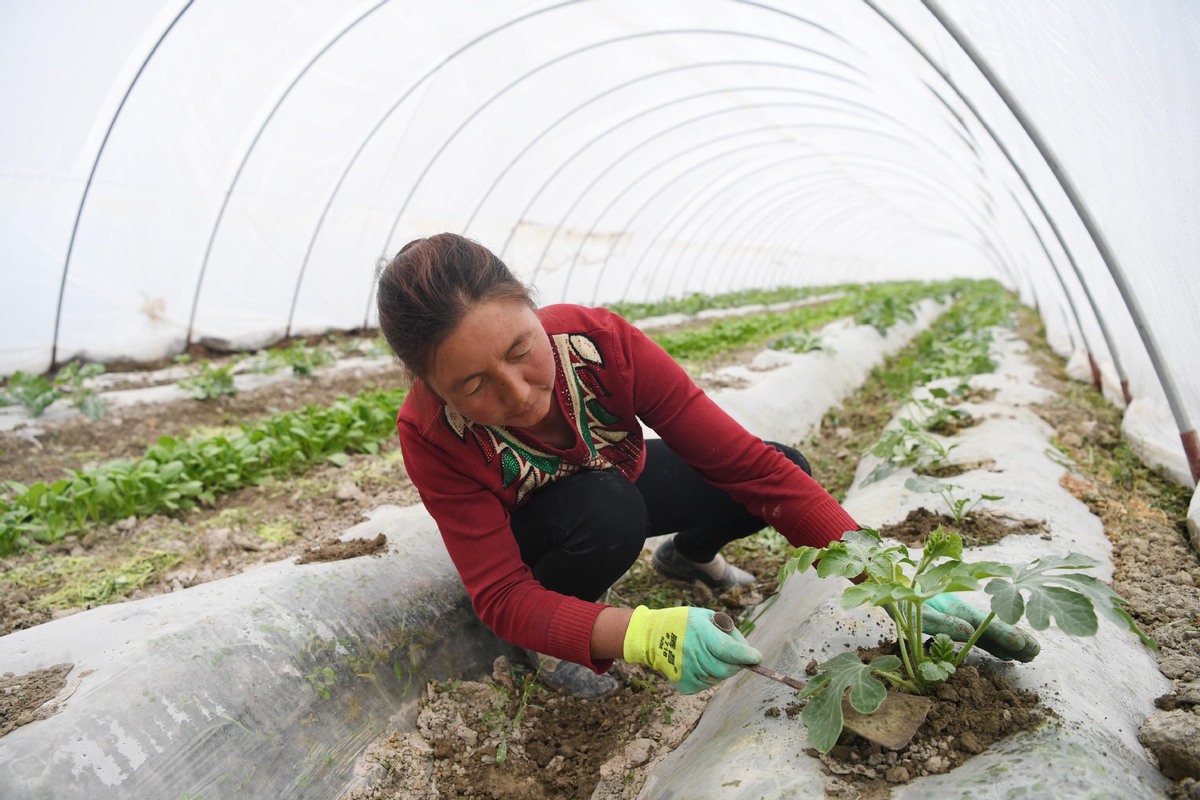
Next year, China will celebrate the end of poverty. This will mark the accomplishment of over 40 years of continuous and consistent efforts, policies, and programs aimed at lifting the whole rural population in China out of poverty.
While China will rightly celebrate the achievement, the goal of building a moderately prosperous society in an all-around way, xiǎo kāng shè huì, is far from being completed.
There are five challenges that China will still need to face after 2020.
From absolute to relative poverty
By 2020, it is expected that no one in China will live in absolute poverty under the country's present poverty line. However, according to the Commission on Global Poverty, if a $3.2 per day poverty line is adopted (the typical poverty line in lower-middle-income countries), 96 million people-or 7 percent of the population-would still live below this threshold in China. If a poverty line of $5.5 per day is adopted (the typical poverty line in upper-middle-income countries), 373 million people-or 27 percent of the population-would still live in poverty. This represents a significant portion of the population.
Bringing these people above these thresholds represents the first challenge for China in the years after 2020.
Shock-proofing achievements
Although the people that were living below the poverty line before 2020 will be brought out of poverty by 2020, they will still remain vulnerable to shocks. Serious diseases or other unforeseen events, the loss of a job or long periods of unemployment, the costs of children's education, unfavourable weather events or fluctuations in price commodities-particularly for those households engaged in agriculture, may easily push this segment of the population back into poverty. Although above the poverty line, these people are at risk of falling back into poverty.
Similarly, those people that were just above the poverty line before 2020, and as such were not the target of the extensive poverty reduction programs that were implemented in the country in the past years, may be equally vulnerable to the same shocks.
Making these two categories of people-those that were below, and those that were just above the poverty line-more resilient to shocks, ensuring that those that were out of poverty prior to 2020 remain out of poverty, and preventing those that were brought out of poverty from falling back into poverty-or, in other words, ensuring the long-term sustainability of the poverty reduction achievements-is the second challenge that the country will need to deal with in the next few years.
Reducing inequalities
Although absolute poverty will be eliminated, inequality (between urban and rural areas, between the western and coastal provinces and-within the same province-between the better-off and worst-off counties, and between different groups within the society-with women, the elderly, the children, and ethnic minorities being the most vulnerable groups) will still persist after 2020.
Despite the rapid growth of farmers' incomes, according to last year's Statistics Bulletin on National Economic and Social Development, the average urban income is still almost three-times higher than the average rural income. According to the National Bureau of Statistics, the average income in the eastern region of China is still almost two-times higher than in the western region, and the average income in the "nationally defined poor counties" is more than 30 percent lower than the average national rural income. Data from the Chinese Household Income Project suggest that average income of women is 20 percent lower than that of men.
Although the GINI coefficient in China (the coefficient that measures inequality in a society) has been decreasing since 2010, according to the World Bank, suggesting some improvements as far as equality in the society is concerned, its value remains relatively high-confirming that inequality remains a major issue in China today.
Significantly reducing these inequalities will be the third challenge for China after 2020.
Easing financial burden
The financial burden of poverty reduction efforts on public finance has been tremendous.
According to the Ministry of Finance, it is estimated that the government has spent over 1 trillion yuan on poverty reduction programs over the past 3 years, and that the percentage of fiscal expenditure for poverty reduction reached 2.2 percent in 2018(about half of the annual military expenditure).
This was certainly justified by the pursuit of the highest social goal-but it made poverty reduction extremely demanding on public resources. A similar effort is certainly not sustainable over time.
Making poverty reduction achievements financially sustainable, that is to say sustainable without heavily depending on the injection of public resources, is the fourth challenge for China after 2020.
Developing rural areas
Last, addressing rural poverty and providing the entire rural population with the minimum income necessary to meet the minimum living requirements was a moral imperative for China. However, addressing rural poverty should not be the ultimate goal of a society.
The next challenge for China is to further develop the rural areas, both economically and socially, making them attractive for people to live in.
This should be the medium-to long-term objective that Chinese society should set in 2020 for the decades to come.
Addressing extreme poverty is the first, important step toward achieving a moderately prosperous society-but it is not the last. A society that is not poor is not necessarily wealthy. The path toward a moderately prosperous society is still long, and several challenges still have to be addressed in order to fulfill the Chinese dream. However, the direction is clear, and so are the challenges ahead. With vision, commitment and determination there is no doubt China will succeed in achieving that goal, as it succeeded in eradicating poverty.
The author is country director and representative for China, International Fund for Agricultural Development. The views don't necessarily represent those of China Daily.