<tt id="6hsgl"><pre id="6hsgl"><pre id="6hsgl"></pre></pre></tt>
          <nav id="6hsgl"><th id="6hsgl"></th></nav>
          国产免费网站看v片元遮挡,一亚洲一区二区中文字幕,波多野结衣一区二区免费视频,天天色综网,久久综合给合久久狠狠狠,男人的天堂av一二三区,午夜福利看片在线观看,亚洲中文字幕在线无码一区二区
          Global EditionASIA 中文雙語Fran?ais
          Business
          Home / Business / Policies

          China, India will regain economic glory

          By Subramanian Swamy | China Daily | Updated: 2019-10-21 10:07
          Share
          Share - WeChat
          Cai Meng/China Daily

          That China is a leading country in the world should not surprise anyone because since 1680, it had been the No 1 economy, till imperialism attacked it.

          Before that, India was in the lead. India, too, suffered very severely from foreign invasions and imperialism. Such factors affected both China and India.

          By the year 2010, China had achieved a record double-digit growth in GDP. Several structural changes, particularly the decline in the share of agriculture, the rise in the share of manufacturing, and the rise in the share of services, with respect to the years before, were remarkable. So was the lower level of unemployment.

          In the first few years after 1980, when modernization, reform and opening-up were introduced, the Gini Coefficient had gone up because higher incomes rose much faster than the middle incomes. (Gini Coefficient is defined as a measure of statistical dispersion intended to represent the income or wealth distribution of a nation's residents, and is the most commonly used measurement of inequality.) But by 2010, even it had come to decline.

          China had accumulated huge foreign exchange reserves in US dollars, achieved a massive level of exports and a magnificent infrastructure. When Indians visit China, they say after their return: "Why can't India be like China?"

          China's economic growth since the 1980s, which is visible in every corner of the country, is an amazing achievement indeed, and deserves an 'A+' for development, at least up to 2010. After 2010, the story changed a bit.

          According to data from the International Monetary Fund, of which China is a member, GDP growth rate in 2010 was 10.63 percent. Then, it started declining. In 2018, it was 6.6 percent. In the first half of this year, it was at 6.3 percent.

          The latest IMF forecast suggests China's GDP growth rate in 2024 will be 5.5 percent. Now, is this projection a cause for alarm? The answer is, it depends, because the old strategy of increasing growth has now outlived its purpose. China needs a new strategy now.

          The rate of investment, however, had been going up till 2010. In 2010, it was at 47.71 percent of GDP. Now, it has declined to 44.38 percent, but is still very high, and probably higher than any other country's.

          The net flows of foreign direct investment as a percentage of GDP had also declined over the years, from 3.47 in 2004 to about 1.36 in 2018. The household savings rate, however, has surprisingly gone up, from 28.24 in 2000 to 38.46 in 2013, and then moderated a bit to 36.14 in 2018, according to IMF data.

          What is interesting is the incremental factor of the ratio. It was 4.62 in 2010, which climbed to 6.5 this year, suggesting the new policy lays emphasis on high efficiency in the use of capital.

          A Renmin University of China study shows that the total factor productivity in growth of China's GDP was 4.3 in 2010, and then it declined to 3.6, which squares with the past inefficiency in the use of capital. Unemployment has also been declining - the rate was 4.5 in 2010, now it is 4.4. The Gini Coefficient was down to less than 38 in 2015.

          The Chinese growth from 1980 onwards, especially after 1996, has been largely a story of more capital, more labor, suggesting longer-term focus, which is bound to bring diminishing returns. That's why, the GDP growth rate has been going down.

          It is a correct strategy that China should now focus on innovation, which will take China from one curve to another, upward. That means, China can have higher growth rates for a longer time.

          My new book Reset: Regaining India's Economic Legacy charts India's annual economic growth, which was 3.5 percent to 4 percent between 1950 and 1980, more or less the same as China's. But, after China introduced reform and opening-up, India's economic growth started accelerating.

          But, in the past, adoption of a certain economic model did not yield the expected results. Comparisons clearly show a command economy, or a government-directed economy, does not run successfully to deliver high growth.

          India suffered till 1991 when the Congress party-led coalition government headed by Narasimha Rao initiated major economic reforms, which increased growth from 3.5 percent to around 7 to 8 percent over the next five years.

          Such high growth rates were sustained over the next several years. But after 2016, growth has decelerated. Now, it's down to around 5.5 percent. This had nothing to do with economic strategy but bad economic policies and questionable experiments that backfired badly. But India recovered, and high growth rate has returned.

          Until recent decades, China's strategy has been what economists refer to as "switch trade". China imported semi-processed goods from East Asia, added value to them, and then exported them to Europe and the United States.

          Data shows China had a negative balance of trade, or deficit, with East Asia. But it almost reached a surplus in trade with Europe and the US. That's how China made its progress and accumulated foreign exchange reserves.

          The labor in East Asia had become quite expensive. So, it became cheaper for East Asia to send semi-processed goods to China. Now, countries like India and Bangladesh are competitors for China. So, China needs to rebalance its trade and change its foreign trade strategy.

          China's labor is becoming expensive too, and more skilled. So, China needs to move away from setting up industries that basically service imports from East Asia. Instead, China should set up industries that are indigenous and can use innovation to produce new products. The country is already doing this quite well. China has beaten the US in 5G, and leads in artificial intelligence.

          In the past, China went in for liberal financing. Infrastructure received money from banks that were supported by the government. But the private sector was not a big beneficiary. This needs to change now, and more financing should flow toward the private sector as well, to give impetus to innovation.

          Lessons need to be learned from countries like Brazil and Argentina that were seen in the 1960s as economies that could become developed like the US and Europe, but were plagued by one crisis or another, and have not been able to realize their potential till now.

          The experience of East Asia, which includes Japan, is also relevant. In 1995-96, the World Bank published a report called The Economic Miracle of East Asia, advising countries like India that were seeking growth to follow the basic principles of economic growth as pursued by East Asia.

          But, in 1997, there was the Asian financial crisis. It was found later that the East Asian economic tigers were going to the market and giving short-term loans and investing in, or building up, long-term assets. The World Bank produced a sequel that reconsidered the "miracle". That should not happen to China.

          The significance of the financial system cannot be overemphasized. One key aspect to note is that unlike the US and Europe, East Asian economies' financial system was not ready for the kind of high economic growth they witnessed.

          Besides rising labor costs and outdated switch trade, China has to contend with high tariff walls that are being built around it, particularly by the US. China's infrastructure is nearing saturation point, and it's no more going to be the way to generate employment and higher skills. Even housing seems to be a bit saturated.

          So, rebalancing of trade, combined with the Belt and Road Initiative, is going to be the key to future growth. China may want to consider giving higher rates of interest on savings and continue underlining innovation.

          It is possible for China and India to learn lessons from their past that witnessed colonialism, imperialism, reparations for combat, monarchy. It is possible for the two nations to discover mutual areas of cooperation, particularly in research and development that can produce great value in the form of more innovation. One more area of cooperation could be mutual exchange of intellectuals.

          This process has accelerated over the last four to five years. History is in cyclical mode. Two nations that were the world's economic leaders will regain lost glory. It's just a matter of time.

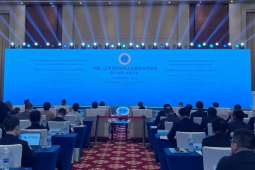
          The writer is India's former commerce, industry and law minister; member of the ruling Bharatiya Janata Party; and member of the upper house of parliament. The article is adapted from his address to the international conference on China's 70 years as a republic, organized by Tsinghua University on Sept 22 in Beijing.

          Top
          BACK TO THE TOP
          English
          Copyright 1994 - . All rights reserved. The content (including but not limited to text, photo, multimedia information, etc) published in this site belongs to China Daily Information Co (CDIC). Without written authorization from CDIC, such content shall not be republished or used in any form. Note: Browsers with 1024*768 or higher resolution are suggested for this site.
          License for publishing multimedia online 0108263

          Registration Number: 130349
          FOLLOW US
          CLOSE
           
          主站蜘蛛池模板: 欧美国产日韩在线三区| 国内自拍偷拍一区二区三区| 久久久久成人精品无码中文字幕| 激情综合网激情综合网激情| 国产成人午夜福利在线播放| 久久久国产精品樱花网站| 樱桃熟了a级毛片| 18禁黄无遮挡网站免费| 国产精品无圣光一区二区| 国产成人拍精品免费视频| 一本加勒比hezyo无码人妻| 黑人巨大亚洲一区二区久| 日韩人妻精品中文字幕专区| 亚洲成av人片无码天堂下载| 国产盗摄xxxx视频xxxx| 国产毛片基地| 国产精品.com| 亚洲综合另类小说专区| 熟女精品视频一区二区三区| 亚亚洲视频一区二区三区| 国产成人AV国语在线观看| 亚洲婷婷六月的婷婷| 日韩 欧美 动漫 国产 制服| 国产精品毛片一区二区| 亚洲av国产成人精品区| 日本欧美一区二区三区在线播放 | 亚洲精品无amm毛片| 99热亚洲人色精品国产88| 国产在线午夜不卡精品影院| 国产成人综合色视频精品| 国产av丝袜熟女一二三| 制服 丝袜 亚洲 中文 综合| 亚洲人成电影网站 久久影视| 成人无码视频97免费| 国产精品人成视频免| 92自拍偷拍精品视频| 亚洲暴爽av天天爽日日碰| 国产国拍亚洲精品永久软件| 精品视频一区二区| 久久精品国产亚洲AV高清y w| 国产久免费热视频在线观看|