



Belt and Road bearing fruit around globe
Rebirth of steel plant in Serbia provides one example of initiative's wide success







Editor's note: Xi Jinping Thought on Diplomacy is the fundamental guideline for China's diplomatic work in the new era. China Daily is publishing a series of stories to examine how Xi's proposals have become internationally accepted and contributed to world peace and human progress.
When President Xi Jinping visited the Smederevo steel plant in Serbia in June 2016, he received a warm welcome from the workers, who held up large portraits of him in greeting.
Their jobs had been at risk earlier, as the former state-owned steel plant, founded in 1913 and once the epitome of Serbia's industrial success, was on the brink of bankruptcy.
Light dawned during Xi's visit, however. The plant was purchased by Chinese steel giant HBIS, and all its 5,000 Serbian employees kept their jobs.
Renamed Hesteel Serbia after the takeover, the company was profitable by the following December. Last year, it produced 1.77 million metric tons of steel, the most in its centurylong history.
The rebirth of the Smederevo steel plant is "a story about changes, a story about success and story about progress", Serbian President Aleksandar Vucic said during an inspection of the steel mill in July last year.
The success of the company is a vivid example of how China's Belt and Road Initiative has benefited people around the world.
In a speech delivered at Nazarbayev University in Kazakhstan in September 2013, Xi unveiled his flagship Silk Road Economic Belt concept, which he hailed as "a great cause that will bring benefits to the people along the routes."
The following month, Xi proposed the 21st Century Maritime Silk Road in a speech to the Indonesian parliament. The Belt and Road Initiative has blossomed ever since.
After six years of development, the BRI has been translated from a visionary proposal to concrete practices. Some 136 countries and 30 international organizations had signed BRI cooperation agreements with China as of the end of August.
From 2013 to 2018, trade between China and other BRI countries surpassed $6 trillion, and China's investment in those countries exceeded $90 billion.
Last year, Chinese companies invested $15.64 billion in countries cooperating in the BRI, a year-on-year increase of 8.9 percent, according to the Ministry of Commerce.
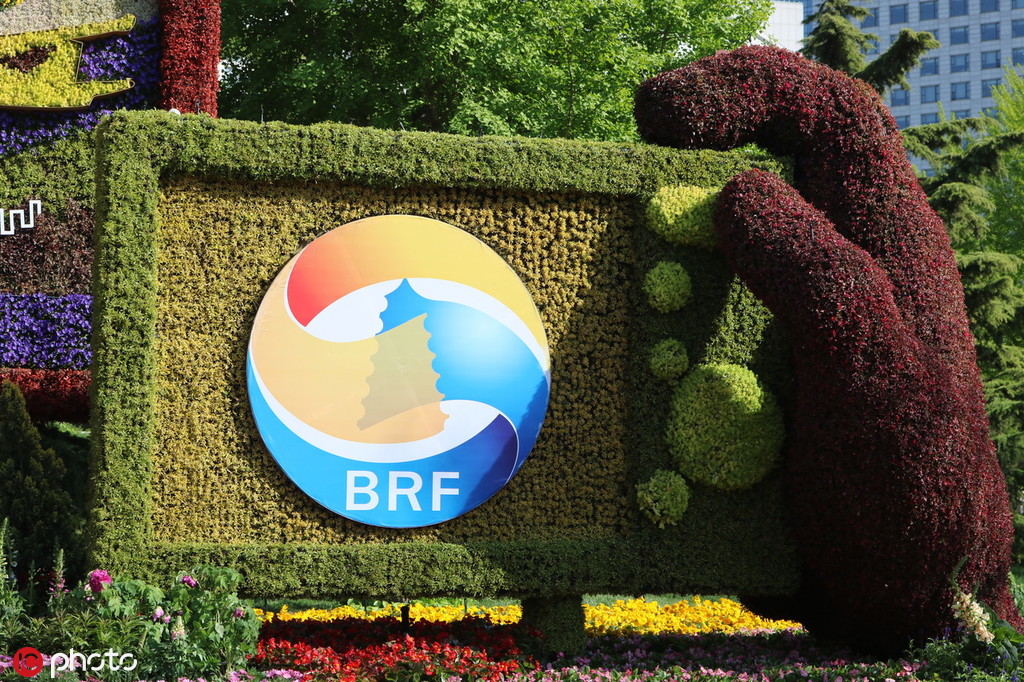
In April, China hosted the Second Belt and Road Forum for International Cooperation, which was attended by about 6,000 participants from 150 countries and 92 international organizations.
"We should forge a global connectivity partnership to achieve common development and prosperity," Xi said at the forum. "As long as we work together to help each other, even if thousands of miles apart, we will certainly be able to find a mutually beneficial and win-win road."
Since putting forward the BRI six years ago, Xi has frequently promoted it on multiple international occasions.
"Wherever President Xi went, he took the Belt and Road and produced a harvest of practical cooperation there," State Councilor and Foreign Minister Wang Yi said in March after Xi wrapped up a visit to Italy, Monaco and France.
The trip took Xi to the western end of the ancient Silk Road and boosted Eurasian interconnectivity through the BRI, Wang said.
Witnessed by Xi and Italian Prime Minister Giuseppe Conte, the two countries signed a memorandum of understanding on jointly developing the Belt and Road.
Italy was the first G7 country to sign such an agreement with China. France and Germany also showed interest in boosting BRI-related cooperation through third-party markets to improve infrastructure in Africa.
It's pragmatic and visionary for Italy to make the strategic decision to join the Belt and Road, as it could inject new momentum into infrastructure construction there, said Jin Yong, a professor of international relations at Communication University of China.
There is great potential for China to enhance Belt and Road cooperation with the rest of the world in such areas as artificial intelligence, big data and 5G technologies, he said.
Juan Carlos Capunay, Peru's former ambassador to China, said the BRI is the best solution for countries that want to embrace open business environments and build up their economies by joining global groups like the Asia-Pacific Economic Cooperation organization, or APEC.
The BRI was put forward at a time when anti-globalization movements were rising, and it advocates cultural dialogue and economic openness, which is crucial for the development of the world economy, he said.
"The BRI and its interconnectivity is helpful to promote the development of Peru's trade, investment and tourism, and it will connect Peru with countries in Central Asia and Southeast Asia, bringing huge benefits for Peru," Capunay told China Daily.
Since the start of the year, Xi has made five overseas visits and attended four multilateral gatherings in eight countries to forge a broader consensus and closer partnerships. Enhancing BRI cooperation is a major topic on his agenda.
During his state visit to Russia in early June, Xi said the two countries should proactively push forward the connection between the Belt and Road and the Eurasia Economic Union and dedicate themselves to promoting the integration of the regional economy.
In Xi's talks with Kyrgyzstan's President Sooronbay Jeenbekov and Tajikistan's President Emomali Rahmon in Bishkek and Dushanbe, the leaders agreed to implement the outcomes of the Second Belt and Road Forum for International Cooperation and bring high quality to the Belt and Road.
In his speech delivered at the G20 summit in Osaka, Japan, Xi told global leaders that the BRI aims to mobilize more resources, boost interconnectivity, release the driving forces of the economy and encourage the integration of more countries and regions into a global economic network.
A study by the World Bank found that fully implementing deeper policy reforms related to the BRI would lift 32 million people out of moderate poverty, increase global trade by up to 6.2 percent and increase global income by as much as 2.9 percent.
Ruan Zongze, executive vice-president of the China Institute of International Studies, said the BRI, which focuses on promoting development, is capable of promoting not only the opening-up of China but also bringing more benefits to the whole world.
Facing such challenges as anti-globalization movements, geopolitical risks and rising trade protectionism, the BRI has also encountered some problems, Ruan said, noting that some countries have accused China of setting a debt trap by promoting BRI projects.
In March, State Councilor and Foreign Minister Wang Yi said at a news conference that the BRI does not involve debt traps but "pies" that could bring benefits to people. It's not a geopolitical tool but an opportunity for common development, he said.
Through participation in the Belt and Road, countries have sped up their development process and improved the livelihoods of their people, he said.
At the Malaysia-China Belt and Road Economic Cooperation Forum held in Kuala Lumpur last month, Malaysian Finance Minister Lim Guan Eng said that Malaysia supports the BRI to encourage sustainable development throughout Asia and bring the region closer together.
"We will continue to facilitate Chinese investment in Malaysia — particularly the high-tech industries and innovation-based services," he said
Aleksandar Duncevic, an electrician at Hesteel Serbia, said that after the Chinese company bought the factory, the biggest change is that he feels "more certainty and security".
"Every one of my colleagues is happy with the new management. We no longer feel stressed," he said.
Xinhua contributed to this story.


- Top political adviser urges deeper cross-Strait integration, people-to-people ties
- Guangdong police prevent and recover billions from telecom fraud
- Chongqing rolls out late-night trains for Spring Festival travel
- Chinese healthcare innovations debut at World Health Expo Dubai 2026
- Senior CPC official stresses advancing peaceful relations across Taiwan Strait
- Shanghai hosts Spring Festival reception for intl media












