



Stability still watchword for policymakers in H2







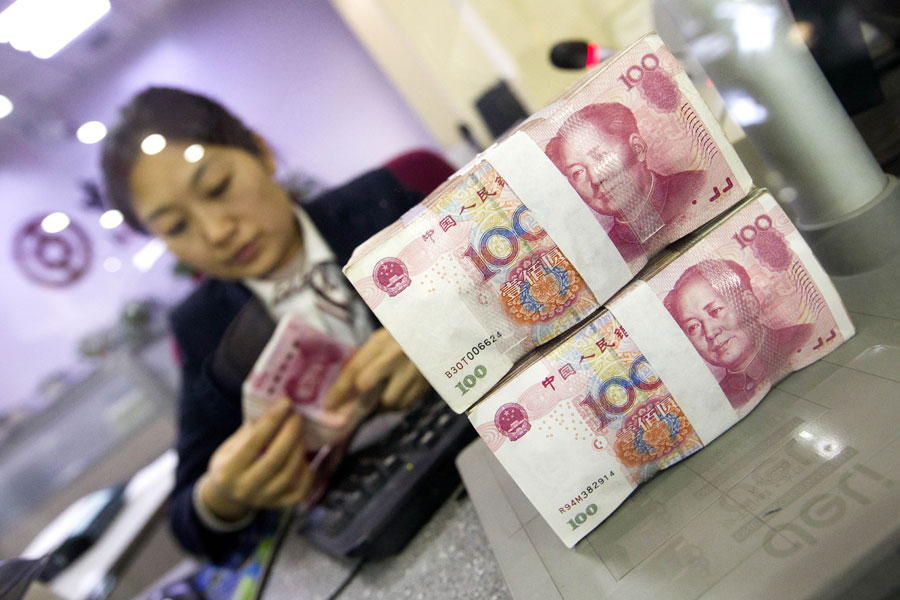
Moves can be expected from the Chinese monetary authority, if the upcoming economic data disappoint the market, as analysts said economic stability remains the policymakers' priority in the second half of this year.
Major economic indicators will be published over the next week, including second quarter GDP, industrial output and fixed-asset investment growth. Some economists predicted a slightly moderate growth in the April-to-June period, compared with 6.4 percent in the first three months.
In face of even more uncertainties related to US-China trade tensions, once the first half economic report slips off the policymakers' expected zone, a series of policies, especially in terms of monetary and fiscal policies, will debut later this month to stabilize growth and ease market sentiment, analysts said.
"Currently, the priority target of monetary policy is to curb further slowing in the growth of the economy," said Yu Yongding, a senior economist at the Chinese Academy of Social Sciences.
"For the next step, China's monetary and fiscal policy needs to remain loose. Monetary easing is to lower interest rates and to coordinate with treasury bond issuance by the Ministry of Finance. The bonds will raise money for infrastructure construction, a major driving force of economic growth," said Yu.
The People's Bank of China, the central bank, will probably encourage bank lending to the small and private sector in the second half, coupled with targeted easing measures, such as reserve requirement ratio cuts and targeted Medium-term Lending Facility (MLF). The targeted easing aims to keep lower financing costs, according to economists.
The PBOC paused cash injections via reverse repo for 12 consecutive days as of Tuesday, as the current banking liquidity is at "a relatively high level", said a statement on the bank's website.
The overnight repo rate, a rate to show the interbank borrowing costs, declined to a historically low level on July 2, to 0.7 percent, compared with the 10-year bottom of 0.72 percent in July, 2009, according to data from the Wind Info. The borrowing costs usually increase when liquidity is tight.
Although the current ample liquidity gives the central bank a break, the interest rate cut still stands at the top of the PBOC's policy list, especially if the worst-case scenario happens or the US imposes more tariffs on $300 billion of Chinese goods, said Qu Hongbin, an economist with HSBC.
If Sino-US trade tensions escalate, the Chinese authorities can respond to the more pronounced negative economic impact by providing policy support, said a research note from Moody's Investors Service.
The PBOC is considering kicking off reform of the existing interest rate regime. The possible step is to replace the one-year benchmark leading rate with a more sensitive and market-driven rate. Experts expect the loan prime rate, or LPR, may become the next benchmark.
LPR is the lending rate offered by 10 major commercial banks to their most favorable customers. Currently, the National Interbank Funding Center publishes LPR of one-year maturity. The average LPR in July was 4.31 percent by Tuesday, compared with the one-year benchmark lending rate at 4.35 percent.
Moody's affirmed a "stable" outlook of China's economy last week, maintaining the "A1" rating. From Moody's projection, the leveraging level may continually rise, although at a moderate pace, as policy emphasis tends to shift between deleveraging and support to growth over the medium term. The public sector debt is likely to rise towards 160 percent of GDP in 2025 from 137 percent in 2018.
Policymakers may have less room for policy stimulus, due to a rapid accumulation of debt, falling return on investment and falling current account surplus. Inflation is not a big concern despite surging pork prices, said Lu Ting, chief economist in China with Nomura Securities.
"Domestic policies will, to a large extent, be dependent on the China-US trade tensions," he added.




















