Public awareness key to curbing pollution








As economic opportunities and the lure of modern lifestyle draw people to cities, the global trend of urbanization continues unabated even though the systems to support the consumption patterns of today's urban dwellers are strained by overburdened infrastructure and fiscal limitations. The result: traffic congestions, degraded waterways and air pollution. And Asian countries, especially China and India, face immense challenges to solve these problems and provide clean air to their citizens.
In 2018, India had 22 of the world's 30 most polluted cities and China five, with Bangladesh and Pakistan accounting for the other three. Which shows urban air pollution is primarily an Asian problem, and the challenges are regionally widespread.
With sufficient resources and nationwide policy coordination, China can set an example for the region. Like all rapidly growing countries, China has struggled to balance environmental sustainability with economic growth. In May this year, China intensified its anti-pollution efforts by deploying almost 1,000 inspectors to 25 cities, targeting violations of water quality and waste management norms.
Anti-pollution campaign strengthened nationwide
In fact, President Xi Jinping has made anti-pollution campaign one of his signature national policy priorities. But despite evidence of some progress, challenges remain. For example, last winter, many cities in northern China missed their smog-mitigating targets, with PM2.5 rising by 13 percent over a five-month period beginning in late 2018.
The World Health Organization says 7 million premature deaths, and one-third of all deaths from strokes, lung cancer and heart diseases per year worldwide are attributable to outdoor and household air pollution. Roughly one-third of these deaths occur in Asia, where indoor pollution is particularly severe in less developed areas due to the use of highly polluting fuels for cooking and heating.
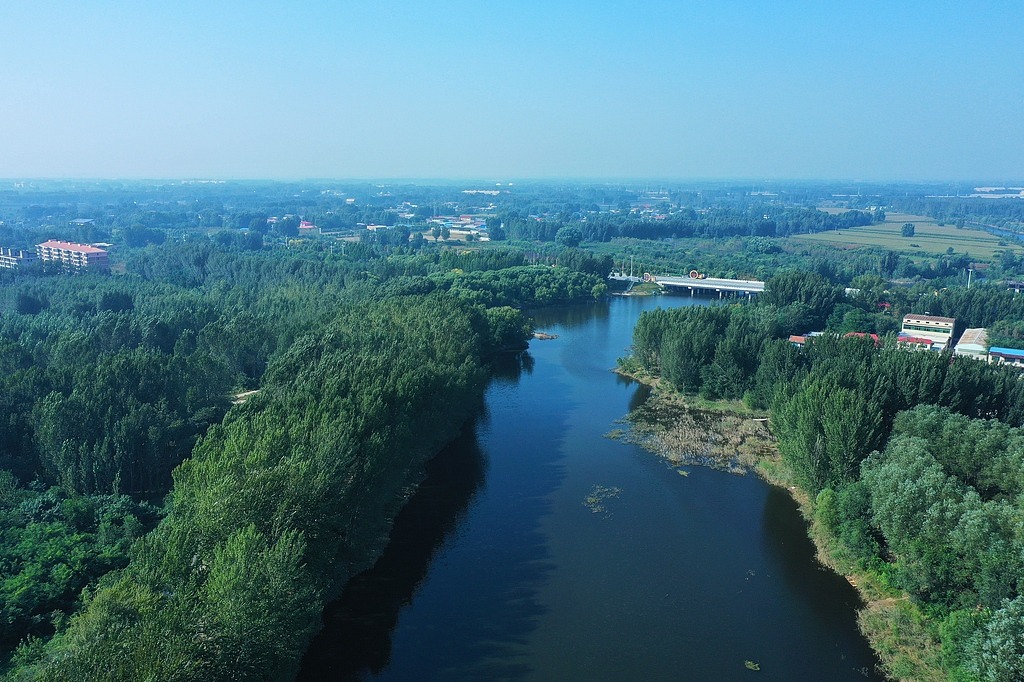
Pollution is not limited to what can be seen and breathed but also includes what lurks under the surface-contamination from soil and groundwater making its way into household taps and the food chain. Over-extraction of already depleted aquifers, along with untreated runoff from burgeoning industries and farmlands, are especially alarming in water-stressed regions such as northern China.
Addressing pollution through policy and innovation
Yet a combination of the right policy, innovation and awareness can address the air pollution problem. First, China can rapidly enact and enforce policies and regulations nationwide. However, sometimes well-intentioned measures produce unintended consequences. For instance, the relocation of high-polluting industries outside of major urban centers shifts the pollution burden elsewhere rather than offering a durable solution. This approach reduces pollution in densely populated areas but fails to reduce the total volume of pollution.
Recent studies show localized anti-pollution regulations prompt industries to move to adjacent areas where regulations are less stringent. But airborne particulates can blow across long distances and back into the areas from where the polluting industries have been shifted.
Nevertheless, China's array of other policy initiatives is impressive. For years, it has sought to regulate car ownership to alleviate traffic congestion and clear smog. Recently, it imposed stricter emission-reduction targets for the steel industry, after a similar multi-year campaign targeting coal production. And the electrification of China's urban bus system has earned global praise.
Pursuing pollution-reduction targets on multiple fronts
According to the South China Morning Post, the Ministry of Ecology and Environment is pursuing action on a variety of fronts, restricting the import of high-polluting vehicles, restructuring the supply chains of lower-emission transport modes, and boosting pollution monitoring capacity through satellite technology. Such policies have played an important role in making incremental gains from pollution mitigation.
But durable changes are possible only through a structural transformation of energy systems and demand patterns. Incremental gains do not excuse China from this difficult task.
Second, innovation is key to improving air quality. For example, Shenzhen's urban air mobility project-on-demand helicopter transport-leverages the city's well-known innovation capacity while addressing traffic problems in a region enjoying an economic boom for decades. While such solutions can bring attention to the air pollution issue by piquing popular curiosity in advanced technology, fiscal constraints limit what other cities can achieve through leapfrog technologies, stressing the need for national subsidies.
And third, one of the most crucial steps for reducing air pollution is simply raising awareness. It is not enough for studies to be published and circulated by the media. People should also be made aware of how air pollution impairs their health instead of just what impact it has on their city.
There are numerous online resources that people can use to know the air quality in their cities-for example, the Beijing-based World Air Quality Index and the United States-based State of Global Air. Broad in coverage, AQI provides as many as five air quality measures, and people can check daily pollution forecasts just as they do weather conditions.
Polluters, too, should be made to realize the consequences of their actions. According to Ministry of Ecology and Environment's reports, efforts to hide regulatory infractions are endemic, with frequent collusion between local governments and private enterprises to fabricate data, interfere with monitoring equipment, and falsify documentation. In this regard, the central government has rightly added environmental protection to its economic growth evaluation portfolio for local and provincial leaders' promotion. But the tension between growth and environmental protection may tempt some to game the monitoring systems.
Important to monitor and prosecute polluters
Until China's industries make sincere efforts to invest in sustainability-oriented upgrades (irrespective of their payback periods), malfeasance is likely to continue. So the government has to continue strengthening monitoring and prosecution, something it has already done under the anti-corruption campaign. This approach is costly, but most of all a distressing reminder that enterprises often prioritize profit over public health.
According to WHO, a staggering 91 percent of the world's population is exposed to dangerous levels of air pollution. Warnings about imminent climate crises, such as the recent report of the Intergovernmental Panel on Climate Change, predict catastrophic eventualities by as early as 2030. With some traditional global powers such as the US and Australia embracing a policy of climate skepticism, there is a growing leadership void in global environmental issues.
China can apply its resources, technologies and innovation capability to solve its pollution problems. But real progress can be achieved only when the rule of law is upheld and society genuinely expects and demands improvements.
Asit K. Biswas is a distinguished visiting professor of engineering at the University of Glasgow, and chairman of Water Management International Pte Ltd, Singapore. And Kris Hartley is an assistant professor of public policy at Education University of Hong Kong. The views don't necessarily reflect that of China Daily.