



Shanghai's a global financial hub







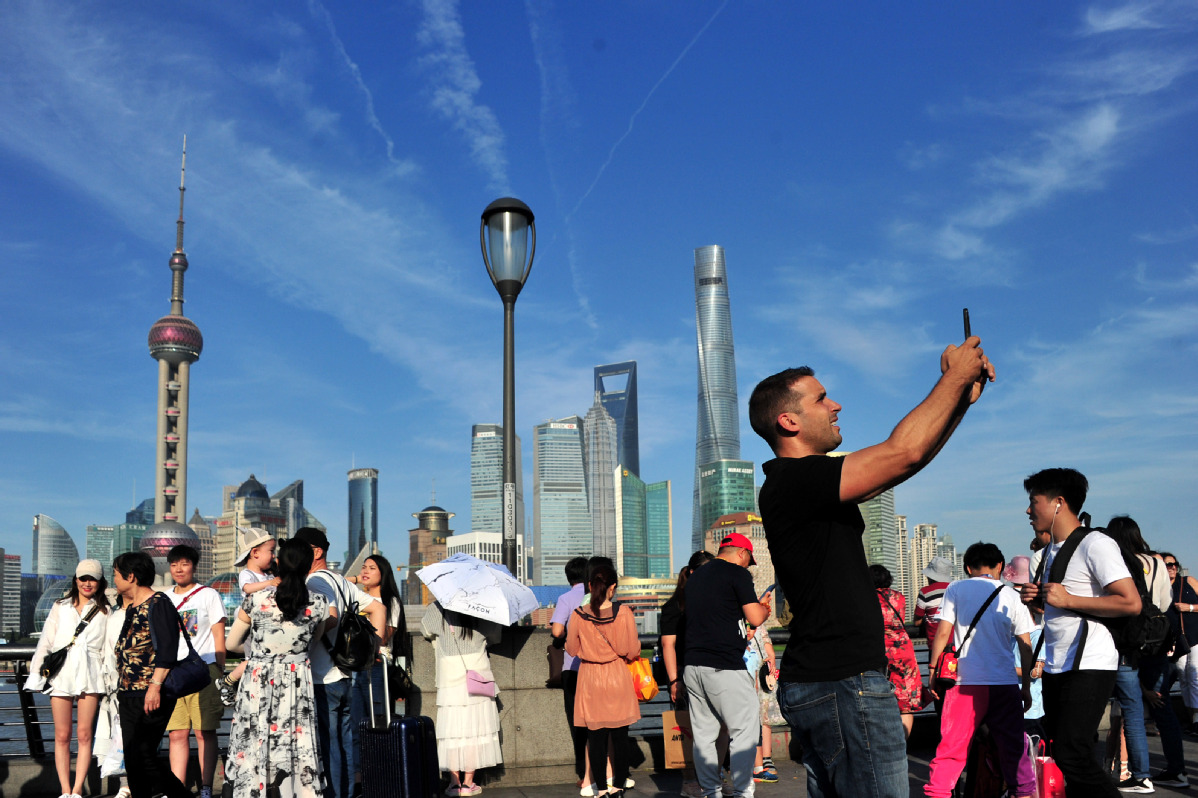
STAR Market is the latest achievement after stock and bond connects, renminbi-priced products, futures, big banks, ETF link and fintech to burnish the city's pioneering role in China's opening-up
The launch of technology-focused STAR Market by the Shanghai Stock Exchange on June 13 marked yet another step of the metropolis toward transforming itself into an international financial hub.
On June 19, Suzhou-based automatic detection equipment maker HYC Technology became the first company to make its initial public offering on the Nasdaq-like STAR Market.
The tech board, whose launch was highly anticipated, also marks the advent of a pilot registration-based IPO system. It is one of the three decisions that President Xi Jinping highlighted in his keynote speech at the opening ceremony of the China International Import Expo in Shanghai in November last year.
Shanghai's Party secretary Li Qiang said at the Lujiazui Forum last month that the launch of the STAR Market has not only brought together financial capital and technological innovation but provided a key opportunity to build the city into an international financial center.
Efforts in that direction started early this year. Approved by the State Council, eight regulatory bodies led by the People's Bank of China issued an action plan in late January. The gist of their plan was to build Shanghai into a global financial market leader and a go-to market for renminbi trading by 2020.
A legal, innovative, transparent, open and highly efficient financial system is expected to be in place by that time.
The presence of foreign financial institutions in Shanghai speaks volumes of the municipality's increasing importance as a financial hub, market mavens said.
Data from the Shanghai Financial Services Office showed 1,605 licensed financial institutions were registered in Shanghai by the end of last year, more than double the number a decade ago. Among these FIs, 501 were financial service providers from other countries and regions.
By March 31, there were 21 Shanghai-registered legal person banks, more than half of the country's total. There were 227 profit-making foreign banking institutions with a solid base in Shanghai, a figure that more than quadrupled since 2001.
Nicolas Aguzin, chairman and CEO of JP Morgan Asia-Pacific, said the financial services industry in Shanghai developed rapidly over the past five years, which has encouraged more and more foreign financial institutions to consider setting up shop quickly in the metropolis.
What heightened the positive mood were the bond connect program, which launched in mid-2017, and the stock connect mechanism that began operations from Shanghai in 2014. The China-Japan ETF Connectivity scheme was launched on June 25, allowing investors in both countries to invest in each other's exchange traded funds market.
The STAR Market now promises to improve the operational efficiency of the capital market in Shanghai and make China more attractive to international investors, according to Aguzin.
JP Morgan, he said, will continue to invest in China, and in Shanghai especially, given the huge room for development in the city.
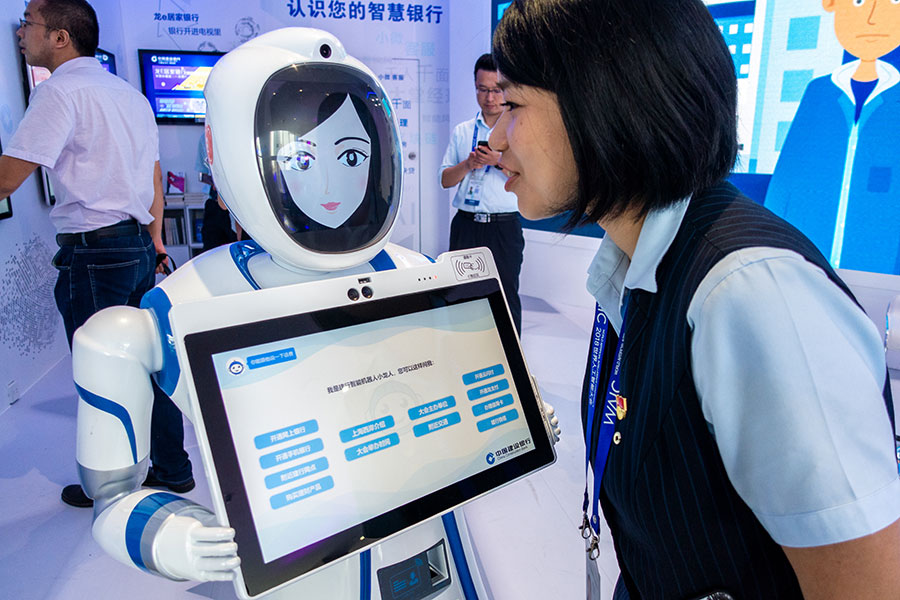
In a developed economy, the size of its stock market is usually 1.5 times or double the country's GDP. In JP Morgan's estimates, the size of China's stock market, or its fixed income market, is likely to be triple the size of the GDP in the next 15 years, if China maintains the speed of the ongoing opening-up. By then, the size of Shanghai's capital market could reach up to $100 trillion, which will be unprecedented all over the world.
Trading in Shanghai is as open and transparent as in any other developed country's markets, said Aguzin. The adoption of global benchmarks in Shanghai is a positive message to international investors and FIs, he said.
Shanghai has pioneered China's opening-up of the financial sector. In November last year, German insurer Allianz was approved by the China Banking and Insurance Regulatory Commission to set up the country's first foreign-controlled insurance company in Shanghai.
The joint venture insurance company ICBC-AXA set up its asset management company in Shanghai last May, the first of its kind in China.
At the same time, a large number of international FIs have set up their global or regional headquarters in Shanghai. For instance, the New Development Bank, which was conceptualized during the fourth BRICS Summit in 2012, is headquartered in Shanghai. The NDB became fully operational in 2016, and serves the BRICS members of Brazil, Russia, India, China and South Africa.
K. V. Kamath, president of the NDB, said it is much easier now for Shanghai to attain the goal of an international financial hub than it was 10 years ago, for the city has fully embraced the latest technologies and built up an infrastructure required for top-notch providers of financial services.
Shanghai has also strengthened its capabilities in the fields of investments and financing. Data from the Shanghai Financial Services Office showed that the city's total amount of direct financing surged 25.8 percent year-on-year to reach 9.6 trillion yuan ($1.4 trillion) in 2018, suggesting the figure quadrupled from the level 10 years ago. What's more, Shanghai accounted for over 85 percent of China's total direct financing last year.
Fittingly, the international community has shown its appreciation of Shanghai's achievements. The global financial centers index compiled by UK's independent think tank Z/Yen has given fifth place to Shanghai for the second time in running this year. The think tank's director Mark Yeandle said Shanghai's strong positioning worldwide is a result of the city's booming fintech service providers.
Zheng Yang, director of the Shanghai Financial Services Office, said as an international financial center, the city has enviable capabilities in the area of renminbi pricing. Apart from the overnight Shanghai Interbank Offered Rate, better known as Shibor, which has been used for 12 years now, a number of products priced in renminbi have been introduced in the city, exerting greater influence on the global market.
The cross-border interbank payment system, which was launched in Shanghai in 2015, saw an updated second phase put into use in May last year, with its daily transaction capability topping 100 billion yuan.
In April 2017, the Dubai Gold and Commodities Exchange became the first foreign exchange to list Shanghai Gold Futures outside China. Yi Gang, governor of China's central bank, said at the Lujiazui Forum that the PBOC will support the launch of derivatives at the Chicago Mercantile Exchange based on the pricing contracts provided by the Shanghai Gold Exchange.
The yuan-denominated crude oil futures contracts were unveiled in Shanghai in March last year, which was the first of its kind open to overseas investors. Jonty Rushforth, senior director of the energy price group at S&P Global Platts information service, said that it could consolidate renminbi's position in the international oil market as more traders from outside China choose to trade on the Shanghai Futures Exchange.
"The internationalization of renminbi is essential when it comes to Shanghai's goal of becoming a world-class international financial center. To that end, more trading of capital projects should be opened and the circulation range of renminbi should be further expanded, especially in the countries and regions participating in the Belt and Road Initiative," said Yasuhiro Sato, chairman of Mizuho Financial Group.




















