



Several issues that need to be further clarified about Sino-US trade frictions








8. Are additional tariffs in the interest of the American people?
When the US government escalated economic and trade frictions, a ridiculous argument of self-deception was floated by some in the US. It was claimed that "additional tariffs were good for the US." From last year's "trade war is very good", it is has now come down to that China is paying huge tariffs to the US ... These huge taxes will be directly handed over to the US Treasury, and tariffs will bring more wealth to the US, even more than traditional trading. This claim goes completely against the common sense of economics. It is just the rhetoric of some in the US to hide the dangers of trade wars and fool people.
As far as the essence of trade protectionism in capitalist countries goes, a great economist has revealed that the protective tariff system that the capitalist class implements in the name of the state and the nation is merely a means of artificially "creating factory owners, exploiting independent workers and capitalizing the production materials and living materials of the people". In fact, while trade protectionism harms the interests of other countries, it also harms the interests of the American people. It is a redistribution of interests that benefits only a few large monopoly capitals in the US.
Trade frictions harm the interests of ordinary American consumers. A large part of China's exports to the US are ordinary consumer goods, and the price elasticity of demand is small. Therefore, according to the tax-transfer principle, when the US imposes tariffs on Chinese goods, most of them will eventually be passed on to US consumers. A study from Goldman Sachs, a famed investment bank, believes that after the US government imposed tariffs on Chinese goods last year, Chinese exporters did not lower their prices somewhat "to compete in the US market." Therefore, tariff costs were mainly passed on to American companies and households, resulting in the rise in consumer prices. It has pushed up the core inflation rate in the US.
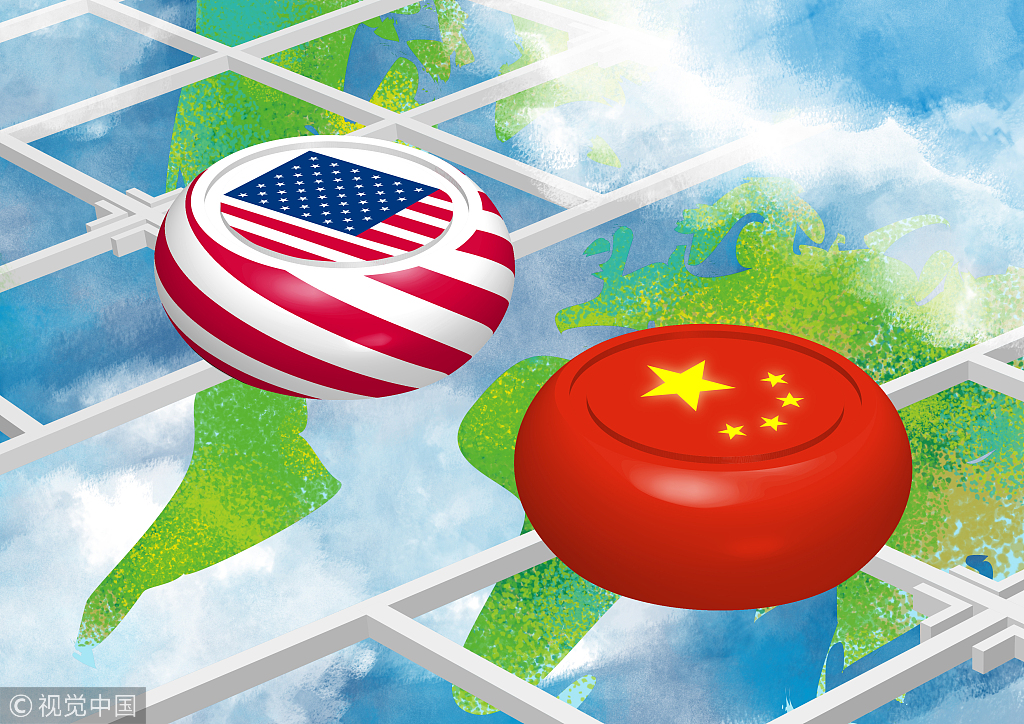
Economic and trade frictions are not conducive to the employment of American workers. Adding tariffs will lead to an increase in the reproduction cost of labor for American workers, restricting the demand on labor for enterprises, thus restricting the growth of employment. US companies also will have to bear higher raw material prices. The resource allocation efficiency will drop as some of the resources in the economy shift to taxable areas. Well-known American economist Paul Krugman's commentary in The New York Times pointed out that the US administration has no strategy behind the trade war, and the additional tariff burden will be mainly passed on to the downstream producers in the US, which will eventually make the US lose the trade war.
But one man's loss is another man's gain, there will always be some people who could benefit from raising tariffs and become supporters of tariff increase. Who are these people? Of course, they cannot be ordinary Americans, but the minority of monopoly capitals in the US. Professor Jeffrey Sachs, a renowned American economist, sharply points out in an opinion article that China is not the source of American economic problems, US corporate greed is. The real battle is not with China but with America's own giant companies. American business leaders and wealthy groups are actively promoting tax cuts, expanding monopolies, and outsourcing manufacturing to countries with low labor costs. They do so in order to increase profits, but they are very opposed to policies that help promote fairness in American society.
The ultimate consequence of economic and trade frictions is that only a handful of Americans will benefit, and most Americans will suffer.




















