



Bank economist: Who loses most in a trade war?







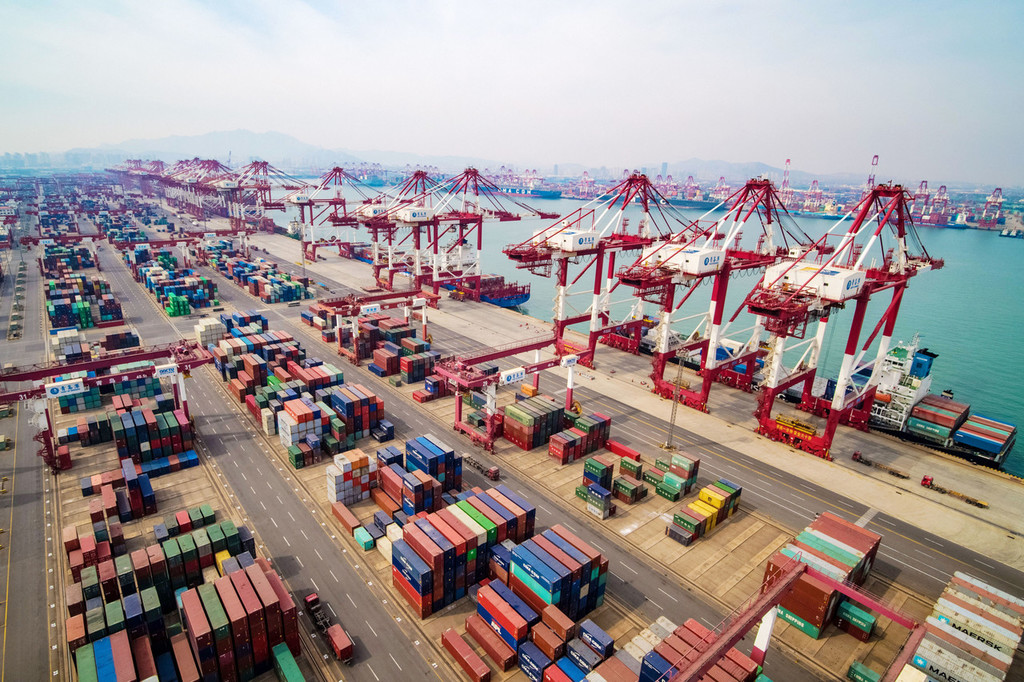
Existing US tariffs that were recently imposed on goods from China do not make for good economic policy, as it is clearly not great for growth anywhere, said Royal Bank of Canada senior economist Nathan Janzen.
Looking at trade figures and the products targeted by the trade dispute, there is greater potential in China's ability to shift trade relationships around and look elsewhere for trade, according to Janzen, who spoke at a business forum in Toronto recently.
Janzen said some people believe China has more to lose from the ongoing trade war unleashed by the Trump administration because US-China trade is imbalanced, with China exporting a lot more. But tariffs are paid by domestic producers and consumers not by foreigners.
"So who loses the most from a trade war? The key point is that every country loses from a trade war," he said. "We also have to remember that import tariffs the US is able to put are on their own producers and consumers. From that perspective, it's not entirely clear whether China will be hurt more by this trade war."
Both the US and China have bilaterally increased tariffs by about US$335 billion worth of trade over the last year and a half, and that represents a huge number and it's having a significant impact on global businesses, according to Janzen.
"If you include all the tariffs that the US has imposed, not just on China, but all countries, the average US rates have increased about 1 percent over the last year. So it's not a good economic policy, and it is not good for economic growth," he argued.
There were also new tariffs introduced recently, with the US increasing rates on US$200 billion worth of Chinese exports, and it thus added another three-quarter percent or so to the average US tariff rates.
Out of that total US$200 billion in tariffs imposed on China, the share includes electrical machinery and industrial machinery, and furniture, with a big chunk of the tariff targeting the industrial sector.
"The US has tried to avoid a direct impact on consumer products because it is politically unpopular, but that means you end up putting tariffs on war, industrial machinery and equipment, which is not good for the US industrial sector," he said.
Comparing the top three lists of the US' $200 billion in tariffs on products targeted, 40 percent are sourced from China. China's $60 billion retaliatory import tariffs slapped on US products represents only about 7 percent sourced from the US.
"So, there is greater potential in China's ability to shift the trade relationship around," he pointed out, adding that the options for China include finding another foreign source, buy domestically and pay more and/or buy less when tariffs are imposed.
According to Janzen, the escalating US-China trade conflict could have serious consequences for Canada. Direct Canada-China economic links might be limited, as China receives only 5 percent of Canada's exports, and Canada takes in 6.5 percent of China's imports, but secondary spillovers are possible, and some industries are more vulnerable than others.
"Canada's exposure to the US-China trade war from escalation of the bilateral China-Canada dispute — any spillover from a softening US industrial sector or any negative impact on commodity prices — and Canadian export drivers falter in the crossfire," he said.




















