US universities should resist Red Scare on campuses







Recent cases of persecuting Chinese and Chinese American scientists for alleged China ties show that the Red Scare has been spreading fast in US institutions of higher education, places that should be totally free of the government's political interference.
In April, MD Anderson Cancer Center based in Texas fired three ethnic Chinese researchers for violating grant agency policies, such as confidentiality of peer review and disclosure of connections to foreign countries.
On May 16, Emory University in Atlanta, Georgia, dismissed two Chinese American biology professors for failing to "fully disclose" overseas sources of research funding and their professional ties to China.
While those researchers have contested the charges, it is clear the charges have been labeled largely because of their ethnicity. If they were linked to Japan, the Republic of Korea, Saudi Arabia or Mexico, it may not have become an issue at all.
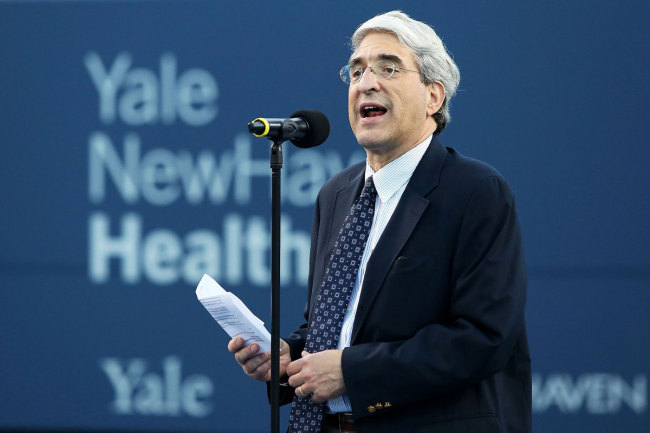
Such racial profiling has alarmed many. In a statement on May 23, Yale University President Peter Salovey pledged Yale's steadfast commitment to its international students and scholars.
Noting that the tensions in US-China relations and increased scrutiny of academic exchanges have added to a sense of unease among many international students and scholars at Yale and other universities across the country, Salovey said the faculty members from around the world create knowledge, teach and mentor students, and add immeasurably to Yale's intellectual community.
Salovey said he is working with his presidential colleagues in the Association of American Universities to urge federal agencies to address concerns they have about international academic exchanges. He also said that he will continue to advocate for government policies that support the ability of international students and scholars to study and work in the United States.
I am not surprised at Salovey's words, because he expressed the same courageous views when I interviewed him during the World Economic Forum in Davos, Switzerland, in January.
During the interview, Salovey said he was proud of the long academic exchange between Yale and China. It all started with Yung Wing, better known as Rong Hong to most Chinese, the first Chinese to earn a degree from a US college or university when he graduated from Yale College in 1854.
I hope more US university presidents will follow Salovey to resist the Red Scare created on US campuses by government agencies such as the Federal Bureau of Investigation, whose director Christopher Wray has been a champion of fear-mongering China.
Cancer research and gene editing, which the sacked Chinese American scientists have engaged in, are projects that save human lives. China and the US have long engaged in collaborative medical research. The fact that China and the US joined hands in fighting Ebola in West Africa in 2014 means the two sides should cooperate more in medical science to tackle the common challenges facing the world.
Academic exchanges between China and the US have come a long way since former US president Richard Nixon made the ice-breaking trip to China in early 1972. In the 2017-18 academic year, more than 363,000 Chinese students were studying in US colleges and universities, representing 33.2 percent of all international students, according to the Institute of International Education. On the other hand, tens of thousands of US students study in China each year.
Such exchanges have benefited both China and the US in terms of not only tuition incomes for each other's schools, but also vital people-to-people exchanges that were non-existent before 1972.
Therefore, we should not allow those people, using their fear tactics, to undo what has been achieved in bilateral academic exchanges in the past four plus decades.
The author is chief of China Daily EU Bureau based in Brussels.
chenweihua@chinadaily.com.cn