



US consumers could face brunt of tariff hikes







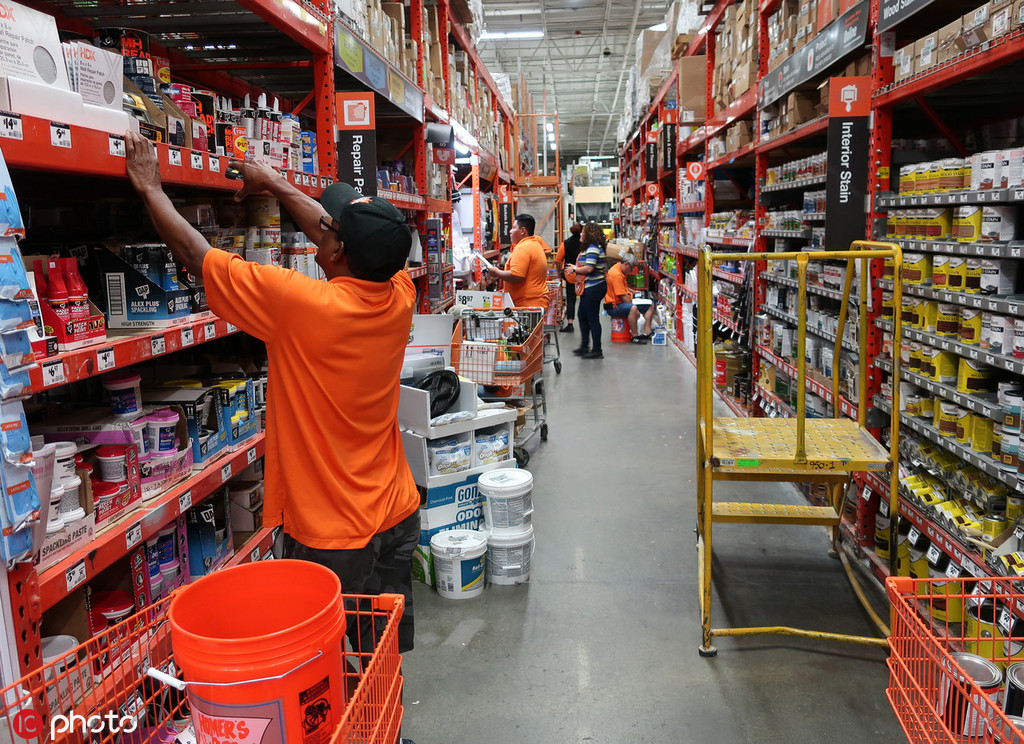
Retailers fear US President Donald Trump's proposal to impose a new round of tariffs on Chinese products will raise prices for consumers, depress sales and disrupt the global supply chain.
Wall Street analysts believe mass merchants such as Dollar Tree, Home Depot and Lowe's could be hit hard as soon as this summer.
Footwear retailers, for example, would face higher prices if tariffs as high as 25 percent are imposed. In 2018, the US imported footwear valued at $11.3 billion from China. And the price of an iPhone XS could rise.
"This is something we have feared," Tom Cove, chief executive officer of the Sports and Fitness Industry Association, a suburban Washington trade group, said in a statement. "This action is the farthest-reaching and most damaging trade policy our industry and our consumers have ever faced."
Macy's, a major chain of department stores with 2018 sales of $24.97 billion, expects to take a hit if higher tariffs are imposed.
"That will have an impact on both our private and national brands," Jeff Gennette, Macy's CEO, told analysts last week during an earnings call. "We would work with our manufacturing and brand partners to minimize the impact on our customers."
There is a grace period for items already shipped from China. Goods exported before May 10 that enter the US by June 1 will be subject to a 10 percent tariff. The 25 percent rate will take effect after June 1. This has led some retailers to stock warehouses to avoid the higher tariffs, but that's an expensive option and space is limited.
Those paying the tariffs may not bear their full burden. If the tariff is passed on to the importer, US retailers or consumers will ante up.
If US retailers import goods from other countries, there will be no tariff, but China would be hit with job losses and US consumers might pay more. Or, US retailers could absorb a portion of the tariff and squeeze profits to maintain market share.
Furthermore, they say, while affluent shoppers would hardly notice higher prices, the tariffs would hit lower-income shoppers harder because they spend a large portion of their income on low-priced items imported from China, including clothes and footwear. Upscale shoppers may spend a larger dollar amount on premium consumer electronics, but it's a smaller percentage of their higher incomes.
US trade organizations hope a new trade deal will be reached quickly to avoid higher tariffs.
"This is a self-inflicted wound that will be catastrophic for the nation's economy," Rick Helfenbein, president and CEO of the American Apparel & Footwear Association in Washington, said in a statement. "By tightening the noose and pulling more consumer items into the trade war, the president has shown that he is not concerned with American families."
Matthew Shay, CEO of the National Retail Federation, said his group supported Trump's effort to reach a fair deal with China, but in a statement added: "The latest tariff escalation is far too great a gamble for the US economy. Slapping tariffs on everything US companies import from China — goods that support US manufacturing and provide consumers with affordable products — will jeopardize American jobs and increase costs for consumers."
Goldman Sachs Group said in a research report that US businesses and consumers have shouldered the cost of tariffs because Chinese exporters have not cut prices.
Nevertheless, some analysts expect tariffs to have a "modest" negative effect or 0.1 to 0.2 percent on the US GDP by the end of 2019.
But further tariff increases could lift inflation above 2 percent next year and that could slightly increase the likelihood that the Federal Reserve would hike interest rates, the report said, adding that such a move would increase the cost of credit and could reduce consumer spending
"Our baseline expectation is that the US and China will strike a deal later this year," according to the research report.




















