



Use of technology must be responsible, benefit the people







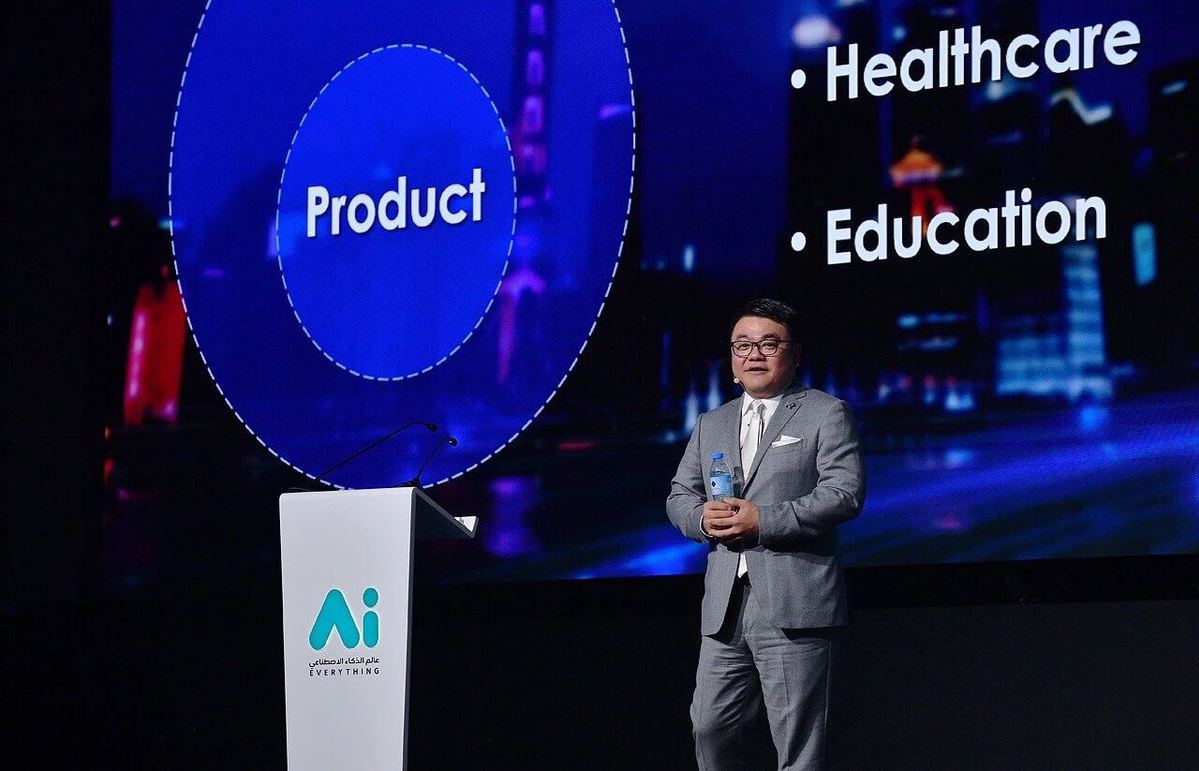
From April 30 to May 1, the 2019 AI Everything Summit was held in Dubai. Seng Yee Lau, senior executive vice president and chairman of group marketing and global brands at Tencent, attended the summit and delivered a keynote speech on behalf of the company.
At the summit, Seng Yee Lau proposed the concept of "AI for Good", which reflects Tencent's "Technology for Good" mission statement in the field of AI. He said in the era of AI, the "humans" behind the technology are more important. Guided by the goodness of humanity, "AI for Good" will help humans improve quality of life and create new possibilities for social development.
Here is the full text of Mr. Lau's speech:
Responsible AI: Empowering Technology for Good in China
I'm honored to be invited by His Excellency Omar Sultan Al-Olama to visit Dubai and share the story of China's AI Experience with you. It's fascinating to see this amazing city embracing artificial intelligence, as both the United Arab Emirates and China are pushing the envelope on AI. From enhancing transport schemes and innovating in healthcare to expanding educational opportunities, the two countries are utilizing AI to address issues touching people's daily lives. Our mutual purpose? To dramatically improve our people's quality of life.
This concern is not new. In September of 2015 at a UN summit, the 2030 Agenda for Sustainable Development was unanimously adopted by the world's leaders, establishing 17 goals for global sustainable development.
The question of how sustainable development enhances people's lives is crucial in determining the development, even the survival, of human society. Governments, organizations and individuals have pondered over this question since reaching a consensus on the concept of "sustainable development".
When Tencent, a technology company, scrutinizes our experiences over the past, we find technology will play a significant role in the realization of sustainable development within human society. In particular, AI's as yet untapped potential will lead us into a future of imagination and hope.
However, one complication can't be ignored; while AI creates opportunities for sustainable development, it also poses philosophical, ethical and practical challenges. We are unleashing a technology so dynamic and unpredictable that unintended consequences may follow. As Stephen Hawking put it, "The rise of powerful AI will be either the best or the worst thing ever to happen to humanity. We do not yet know which."
To minimize AI's adverse ramifications on the path to sustainable development, we need not seek out "Neutral technology", but instead "Technology for Good" and what I call "Responsible AI".
During the recent UNESCO AI Summit I remarked that when the tide of technological optimism inevitably ebbs, we should be aware that the pivotal word in Artificial Intelligence is not "Intelligence”, but "Artificial". By this I mean the key component of "Responsible AI" is human reflection and intervention. Our objective is to guarantee the overall advancement of humanity, not technological innovation for technology's sake.
While AI is a powerful tool and ally, it must be directed by human responsibility and a human touch. Only then will AI reach its full potential for driving sustainability.
How has Tencent been implementing "Responsible AI" to better people’s lives? Based on years of practice, we focus on employing these concepts on a product-wide, countrywide and planetary scale.
Compared with previous technological revolutions, the information gap due to digitalization and AI in particular may further divide society, deepening imparity and presenting a huge challenge. This is unthinkable and unacceptable, as our product reaches hundreds of millions of people. In order to overcome this challenge, we must ensure "Universal Information Accessibility".
Therefore, since its inception, Tencent has promoted and enacted the principle of "Leave No One Behind" and "Information Accessibility". I should also mention we were extremely honored to have received the UNESCO/Emir Jaber Al Ahmad Al Jaber Al Sabah Prize for Digital Empowerment of Persons with Disabilities last December.
https://v.qq.com/x/page/b0024v059qg.html
Video:Hope never dies
In addition, corporate responsibility also compels us to ensure "algorithmic equality" in product development and to make our AI products available to preserve and repair ancient cultural heritages. For example, by digitally repairing and restoring corroded artwork in the Mogao Caves, a UNESCO World Heritage Site.
These are just some examples on how we utilize the power of AI for the greater good.
In addition to products, we realize we must find better ways to address major issues confronting society. One pressing concern has to do with China's supercharged rate of urbanization, the highest in the world. Since 1982 over 500 million Chinese have left rural areas to move into cities, exerting tremendous pressure on urban infrastructure and resources while greatly complicating city governance.
Additionally, inadequate medical and educational resources are challenges currently facing China. When considering our country's sustainable development goals, focusing on these areas will have great impact on people's overall sense of well-being. Poverty and social inequality are major obstacles facing all humanity. China, like many countries in the world, has major concerns regarding education and healthcare for the underprivileged.
In response to these important social issues, Tencent utilizes technologies, and our AI strategy focuses heavily on these areas.
Like Dubai, China and Tencent have placed emphasis on developing smart cities. As of 2017, Tencent has connected public services of more than 360 Chinese cities to WeChat, thereby allowing citizens access through what we call a smart public services account.
In the academic arena, AI places educational resources once only accessible to urban areas within the reach of all outlying regions. Among users of Tencent's "Penguin Tutoring", 40 percent are students in third- or fourth-tier cities. These cities are quite remote, and may not have top-level teaching resources when compared to first-tier cities like Beijing or Shanghai.
AI is bringing a new level of inclusiveness to healthcare. In villages and grassroots areas where medical resources are relatively scarce, artificial intelligence can learn from the expertise of highly qualified doctors and pass on their knowledge and experience to rural physicians. AI may bring villages access to medical resources on par with those found in Tier A hospitals in larger cities.
AI has the potential to be the "great equalizer" in the quality of healthcare within China. It now allows doctors nationwide to improve the accuracy and efficiency of clinical diagnosis. Our real-time procedure for locating colorectal polyps is 96.93 percent accurate, and AI-assisted diagnosis of glandular cancer has an accuracy of 97.20 percent. AI is also being used to improve the efficacy of treatment and enhance the quality of life of Parkinson's sufferers throughout China.
https://v.qq.com/x/page/c085944k2yq.html
Video: Tencent Health Care
Moving beyond any particular country and focusing on the whole world, Tencent aspires to be a "global citizen", creating greater good worldwide. We believe technology must be used to tackle the largest challenges facing the planet. At Tencent, we refer to them as "FEW": Food, Energy, Water. These are the fundamental issues humanity will face in the future.
Take food for example. Phytech, a digital farming company in which Tencent has invested, utilizes data to optimize cultivation of agricultural products. Last December at the Autonomous Greenhouse Challenge hosted by Wageningen University, Team iGrow, made up of Tencent AI Lab and agricultural experts, won second place with its "AI cucumbers". This is a huge breakthrough, as it paves the way to further research on food production. The UN has said in order to eradicate global hunger by 2030, we need to look at ways to improve the supply chain of food.
Ladies and gentlemen. I have just shared with you Tencent's philosophy and practice of AI in China. We believe that this is only the first light of dawn.
We are now at the cusp of the "Digital Civilization". If our industrialized civilization resulted from human mastery of machines, then the digital civilization will open a new era in which mankind, nature and artificial intelligence will enable a community of shared future.
The era of zero-sum games is ending, giving birth to an age where cooperation and harmonious relationships are of utmost importance. Winning should no longer be at the expense of others losing. Making "Responsible AI" a reality requires more than the efforts of one region or nation, but the joint action of all human society.
Policymakers around the world need to come together to embrace the idea of a community of a shared future. The tragedy of the commons must be boldly confronted head-on; there is no room for hesitation. There is no Plan B here, just as there is no Planet B.
Implementing such principles on a global scale is complicated, requiring consistent effort and readjustment. However, the primary principle remains the same: a mindset of a community with a shared future, an ecosystem governed by the many and interactive multi-party engagement, especially among companies.
Here's a key lesson from our experience in China: the most effective way to develop an inclusive AI is via an ecosystem governed by the many. China has created an open AI ecosystem that involves all stakeholders, including the government, tech companies, academic institutions and users. All actively play a critical role in establishing a flourishing AI industry.
That issue is "Tech for Good"— the power of the entire industry leveraging its resources for the good of human society. This March, China's lianghui, the meetings of the country's two top-level national political bodies, were held. Our founder, Pony Ma, made seven motions as a delegate, the most important among them calling for "promoting technology ethics and following the path of Tech for Good". He noted "only when technology ethics plays its part as a regulator for technological innovation and development can we be sure technological advances will benefit the human race."
"Tech for Good" should not only anchor Tencent's mission and code of conduct, but should become the driving force directing the conduct of the entire industry. Only after every enterprise in the technology sector and the individuals that staff them accept and adhere to this principle can technology truly fulfill its enormous potential to benefit society.
This is not only about MY world or OUR world — it is about THE world. When you see the inevitable waves of digitalization defining the next phase of our civilization, perhaps what we are doing today is not a heroic attempt to change the world. But instead, we are establishing a safeguard to ensure you and I are not changed by this new world.
This is where Responsible AI comes in.
This is where the mission of Tech for Good begins.
The author is senior executive vice president and chairman of group marketing and global branding at Tencent.
The opinions expressed here are those of the writer and do not necessarily represent the views of China Daily and China Daily website.





