Using social funds to propel BRI forward







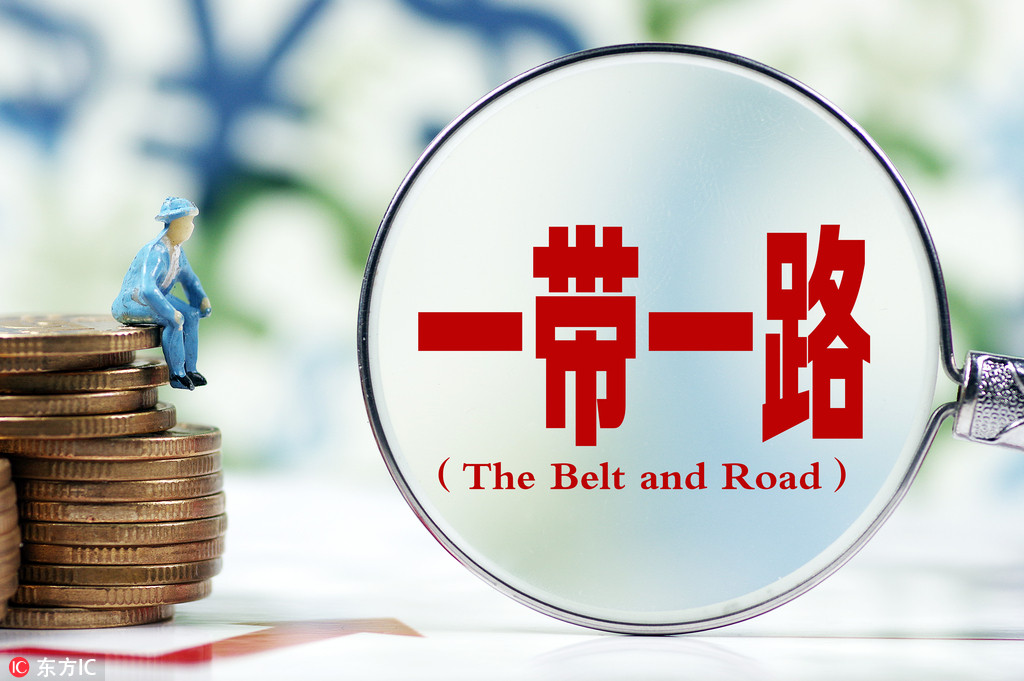
Encouraging public and social welfare funds to take part in the Belt and Road Initiative by setting up a comprehensive financial service mechanism comprising social, development and commercial financing can not only provide more capital for Belt and Road projects, but also will help make the initiative more socially beneficial.
Social financing has developed in recent years, and seeks social and environmental benefits more than profit. An increasing number of wealthy people and profitable enterprises in the West have donated to charities in order to help the less fortunate improve their lives and livelihoods-and thus boosted public and social welfare financing.
According to data from Morningstar, a global financial services company, environmental, social and governance (ESG) funds increased from $655 billion in 2012 to $1.05 trillion in 2018. And a report issued by the State Street Global Advisors, an investment management company, in July 2018 said more than 80 percent of institutional investors believe the scale of ESG funds would increase drastically in the next five years.
But since developed countries are yet to fully recover from the 2008 global financial crisis, the scale of donations has slightly declined, although social financing continues to increase. Therefore, social financing could become a significant source of capital in the future.
The international community, barring some countries, has welcomed the Belt and Road Initiative, because it is meant to allow an increasing number of countries to benefit from economic development. Some countries, however, are worried that the massive infrastructure projects could become "debt traps" for some Belt and Road countries.
If China introduces public and social welfare financing to Belt and Road projects, it could clear such misgivings over the initiative, and, in the process, increase its soft power. For example, according to China's philanthropy development report for 2018, the total donation in the country increased from 121.5 billion yuan ($18.11 billion) in 2015 to 145.8 billion yuan in 2016 and 155.8 billion yuan in 2017.
Furthermore, the development of internet financing platforms has made it easier for China's charity NGOs to provide financing for Belt and Road projects. And the Charity Law, which took effect on Sept 1, 2016, has paved the way for charity NGOs to take part in Belt and Road projects.
But to encourage more people and enterprises to donate to charity, and public and social welfare funds, and to channel those funds into Belt and Road projects, the government should devise a series of regulations, including favorable policies for donors, as well as strengthen supervision.
If the Chinese government establishes mechanisms to facilitate coordinated development in Belt and Road countries, and sets up a comprehensive financial service system, it can better promote globalization and improve people's well-being with the help of Chinese charity NGOs.
For instance, the Amity Foundation based in Jiangsu province has begun to take part in charity programs in Africa and some other regions.
But since using charity NGOs and public and social welfare funds to finance Belt and Road projects could face some legal impediments and market risks, the Chinese government should establish effective communication mechanisms with other countries and international organizations to overcome the possible impediments and risks, as well as to win the support of the international community for China's endeavors. A sound international cooperation mechanism will help charity NGOs and social welfare funds to better perform their roles as catalysts propelling the Belt and Road Initiative while reducing the risks for them and strengthening all-round supervision.
The author is a researcher at the Institute of World Economics and Politics, Chinese Academy of Social Sciences. The views don't necessarily represent those of China Daily.