



Birthrate's continued fall triggers search for ways to grow families







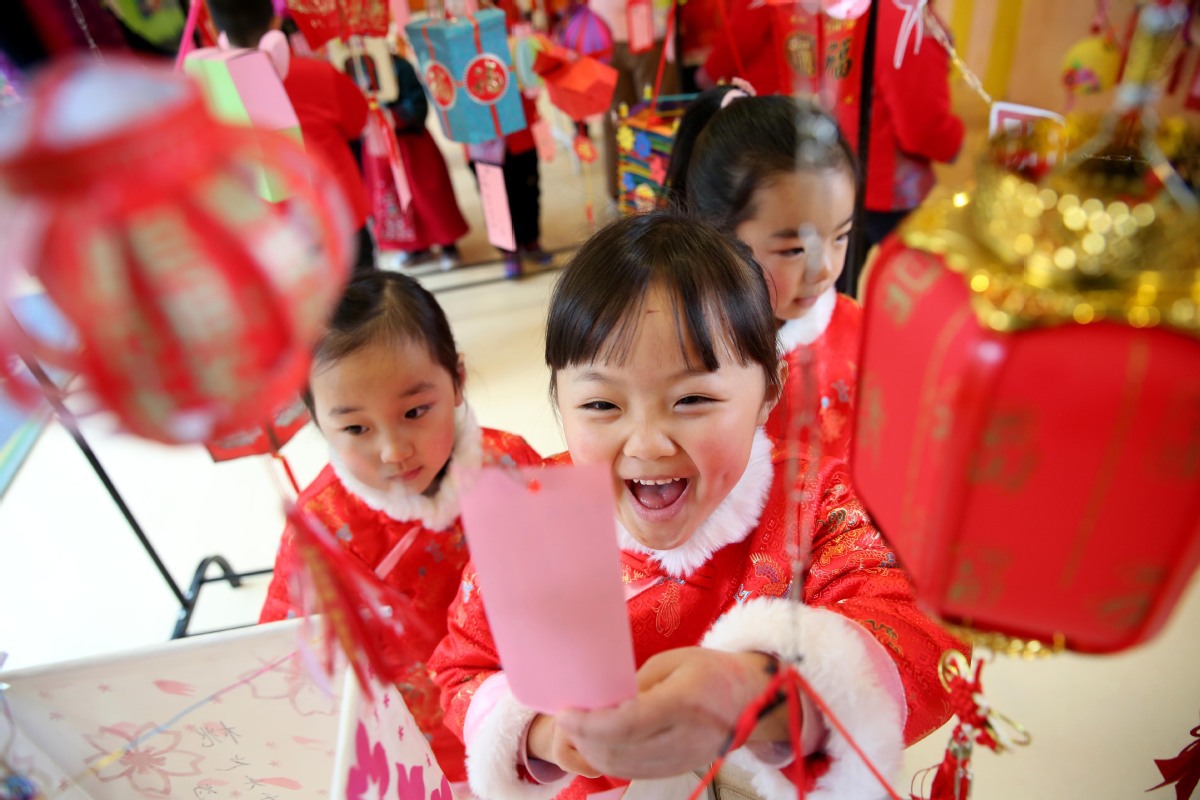
Declining birthrates in China were a top concern for some national legislators and political advisers attending the annual two sessions, which concluded last week, and they called for various measures to encourage couples to have children.
There is no question that a sustained low birthrate will have a negative impact on Chinese society, including a shortage of labor and increased average age, and hurt economic development, Yao Jinbo, a deputy to the National People's Congress, China's top legislative body, said during its session in Beijing.
Various measures should be taken to encourage the implementation of the universal second-child policy that allows all parents to have two children - including further tax cuts for couples who have had a second child - to reduce financial burdens and increase the number of preschool education facilities such as kindergartens, said Yao, who is also CEO of 58.com, a major online marketplace.
Unlike primary and middle school education, which are mandatory in China, preschool education has a severe shortage of resources, making it difficult for parents to find a kindergarten for their children in some places, he said.
"I suggest the government increase its efforts to build public kindergartens, and encourage private investment in the sector to improve the supply of preschool education resources," he said. "Preschool education should be included as mandatory education, and it should be promoted and popularized step by step."
Despite a further relaxation of the family planning policy in China in 2016 to allow all couples to have two children, the number of births in China has fallen for two years in a row since 2017.
Last year, there were 15.23 million births on the Chinese mainland, a drop of 2 million from 2017, according to the National Bureau of Statistics. The birthrate last year on the Chinese mainland was 10.94 per 1,000 population, compared with 12.95 per 1,000 in 2016, according to the NBS.
Zhai Zhenwu, a population studies professor at Renmin University of China, said the number of births in China will continue to fall over the long term because the number of women of childbearing age is decreasing.
"It is inevitable that with development of society and the economy, people will have fewer children," he said, adding that even with further relaxation of the family planning policy, the number of births in China will continue to decline due to lack of willingness by young couples.
According to a survey by the National Health Commission, worries about the financial burden of raising children and having no one to take care of them when their parents are at work are the two major reasons couples are reluctant to have children.
Huang Yuguang, a member of the National Committee of the Chinese People's Political Consultative Conference, China's top political advisory body, who is also head of Peking Union Medical College Hospital's anesthesia department, said during the CPPCC's recent annual session that multiple measures must be employed to encourage couples to have a second child, including government support to assist institutions and companies where more women of childbearing age work to help them create their own day care facilities. There is a dire shortage of such facilities in big cities, Huang said.
In China, about 70 percent of working-age women are employed, and many women hesitate to have a second child because they fear it may affect their careers, he said. Such a measure would ease such worries, he said.
Meanwhile, the government may consider extending maternal leave for mothers of second children, he said. Other measures such as providing subsidies for families having a second child could also be considered, he said.
Lin Yong, an NPC deputy and an economics professor at South China Normal University, suggested allowing fathers of second children to have parental leave so they can share the burden of mothers in taking care of their offspring. In addition, maternity leave for women with a second child should be extended, he said.


- Defense minister greets foreign military envoys at Chinese New Year event
- Judicial efforts lead to decline in China's pollution cases
- SPP steps up food and drug safety oversight
- Visually impaired student's rail journey goes viral
- First nighttime high-speed departs from Guangzhou for Wuhan
- Chongqing, Hunan, Guizhou host cross-province Spring Festival celebration












