Let DPRK come in from the cold








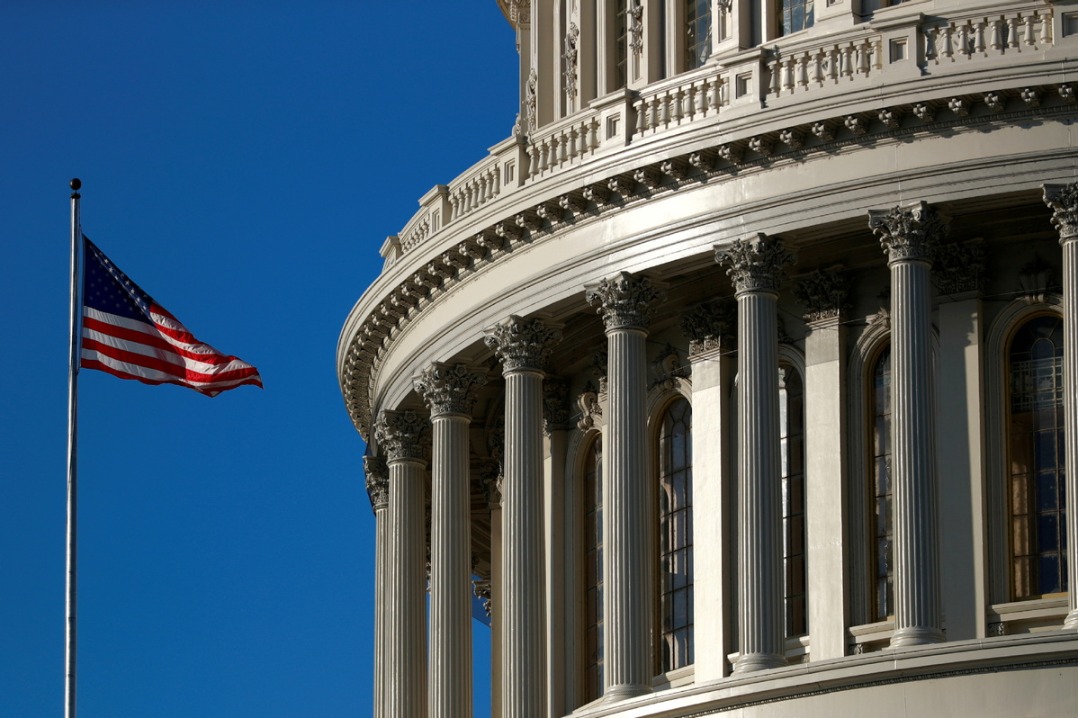
United States President Donald Trump cut short his meeting with Democratic People's Republic of Korea top leader Kim Jong-un in Hanoi on Thursday by walking away, but he could still agree to a simple Washington-Pyongyang peace accord at a later date.
And if Trump does that and lifts the US sanctions against the DPRK, the two countries could establish trade and economic relations to their mutual benefit. That would lead to economic reform in the DPRK, which would open up its economy, allowing foreign investment to flow into the country. That in turn would lead to an economic boom and better livelihoods for DPRK citizens. And nobody will have the time to risk all of this by playing around with nuclear weapons.
"From Pyongyang's perspective, a peace treaty is the next step," said Rudi Sirr, special economic adviser to the DPRK and chairman of the Daegian Pte Ltd, which manages the Rajin port complex in the DPRK that serves as a gateway to the Pacific and a land route to Europe connecting the economies of China, Mongolia, Russia, the Republic of Korea, Japan as well as the DPRK.
Treaty needed to change history
"All these nations are awaiting a peace accord to be struck between Washington and Pyongyang," Sirr said. "The Americans have had some trouble getting their minds around this idea. So to some extent North Korea has been leading the process. Kim Jong-un knows exactly what he wants. Pyongyang has a very clear direction and is giving Washington the right nudges.
Pyongyang wants (Washington) to end sanctions and in order to do this some sort of a peace accord with clarifications on non-interference or intervention needs to be put in place."
Sirr also said that "it is not all black or white as Washington would like to see it. This is all about gray and taking the sharp edges away", adding that a bilateral peace treaty is ultimately what is needed to change history.
"This should have been the outcome at the Hanoi summit. Both sides should keep talking. This is still further than they have gone with all the previous meetings."
But now it's time for the US to lift the sanctions. "It needs someone to step over the line and embrace the situation," Sirr said.
US must act according to changing times
The second US-DPRK summit in Hanoi was Trump's missed opportunity to restore peace on the Korean Peninsula and begin the process of denuclearization. Obviously, China, Russia, Mongolia, Japan and the ROK all wish to see such an outcome, and as the DPRK's neighbors, they, especially China and the ROK, are supporting the efforts to achieve sustainable peace. It is now up to the US to cross the line-as in some ways, everybody else already has.
The DPRK has already signaled it is ready to denuclearize, and even announced that it will accept inspections by the International Atomic Energy Agency. And Seoul has not only opened direct dialogue with Pyongyang but also started inspections of the rail network in the DPRK as a first step toward establishing infrastructure connectivity.
The ROK is also planning joint ventures in areas where economic sanctions do not apply, like tourism, cultural exchanges and humanitarian projects. No wonder ROK President Moon Jae-in has won hearts and minds on both sides of the 38th Parallel. And why not-his symbolic step into the DPRK at Panmunjom last year was the trigger to reconciliation on the Korean Peninsula.
US considers wrong model to solve issue
The Trump administration has been talking a lot about a "Hanoi Model", which the US used after the end of the Vietnam War: Washington retained its sanctions-a trade embargo-against Hanoi, which ended with the normalization of relations after Washington came to terms with its own ideological problems.
But the model that should be followed this time is the DPRK-ROK model. In April 2018 both countries entered into a bilateral agreement that is equivalent to a peace treaty ending direct conflict between the two sides. Actually, their Panmunjom Declaration says: "The two leaders solemnly declare before the 80 million Korean people and the whole world that there will be no more war on the Korean Peninsula and thus a new era of peace has begun."
Likewise, the US and the DPRK need to enter into an effective peace treaty so that the latter does not feel threatened. And once its own security is assured, the DPRK can begin to really work toward denuclearization.
An appropriate model to implement reforms
The other "model" the DPRK should consider is sequenced gradual reforms-followed by both China and Vietnam-which involve both market and planning, and facilitate the easing away from planned economy toward more market-driven stimulus.
Another major problem is that negative image perceptions have been thrown at the DPRK by many Western media outlets, which lack clear information on the widespread reforms the DPRK has been implementing. Locked in a prism of the past, they don't even try to understand the present. Now that the Hanoi summit is over, maybe they will begin to write about what is happening rather than spreading fear based on old assumptions.
As for the US, it should know that sanctions are the worst violation of human rights any nation can commit. Sanctions cut medical supplies. Sanctions eliminate opportunities for people. They are anti-market, anti-business, anti-enterprise, anti-innovation, anti-globalization and inhumane. Now let us see if sanctions can finally be put into museums.
The author is the founding director of the Himalayan Consensus and a senior international fellow at the Center for China and Globalization. The views don't necessarily represent those of China Daily.