



BRI offers a massive space for learning







For more than a decade now, the world has been talking about the "China model". From a paper issued in 2004 by Joshua Copper Ramo for the Foreign Policy Centre in London on what he called the "Beijing Consensus", standing in contradistinction to the better known (at the time) Washington Consensus, he described a different mode of operation and different dynamics for the Chinese philosophy of development.
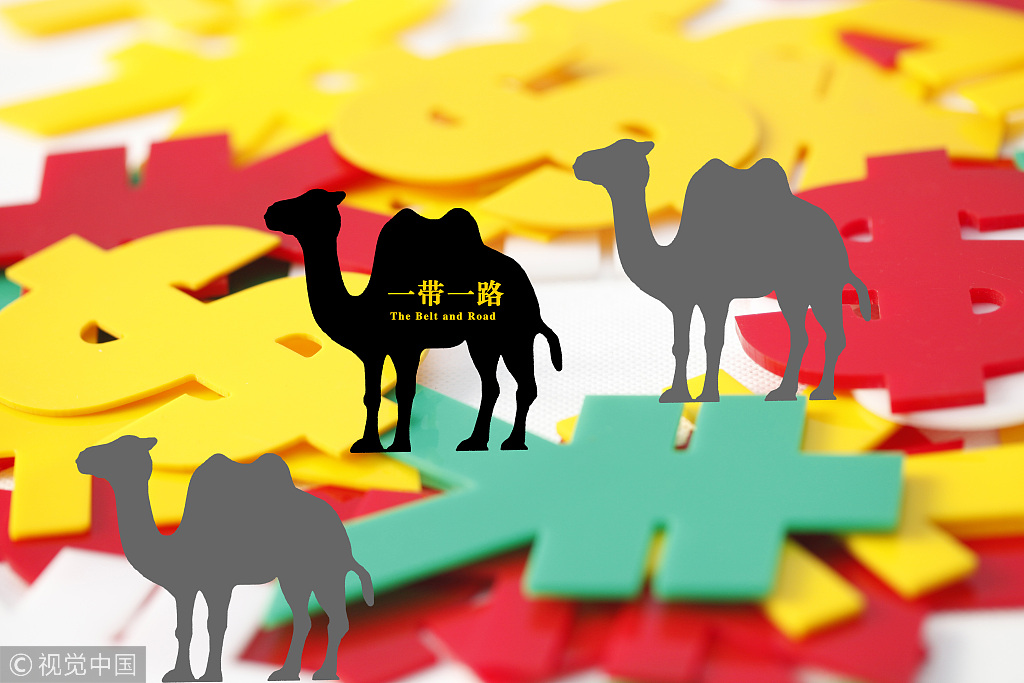
The Belt and Road Initiative, which became a core foreign policy idea after it was proposed by President Xi Jinping in 2013, has many different angles. It is, after all, China's signature geopolitical idea, widely seen, in part, as a response to demands as the Chinese economy has enlarged over the past two decades, to communicate more clearly the country's main mode of engagement with the outside world as it becomes a more central and important player. In many senses, therefore, the question of how the BRI embodies the notion of a Chinese model is an important issue to properly understand.
Before we think about this issue, we need to attend to the question of what a "model" is. In English, of course, the word denotes something prescriptive. In art, one is given a model to copy. In learning a subject, it is the same idea. Something is presented that is then used as a framework to try to duplicate or follow. Replication is a good thing.
In Chinese thinking, however, perhaps the equivalent notion does not map the sort of cognitive space of the one used in English so closely. This is common, after all. Translators wrestle all the time with the way that different words in one language do not precisely equate to those in another. The notion of "model" in Chinese (mofan) is an important one to reflect on. In the work of Sinologist Donald J. Munro in the 1970s and '90s, he talked of the idea that teaching through Chinese history, and moral education, from the period of the earliest Confucianists onward, involved the use of models. These were important to convey ways in which something could be done, but they also operated as dynamic spaces where, beyond broad parameters, people could develop and work on specific, and sometimes new, ways of solving problems and acquiring new techniques.
The notion of a learning model offers one way of trying to get to grips with what the BRI is at heart. There is clearly no set pattern for how projects under the BRI are meant to be run. There is also an embedded notion of flexibility. This aspect of the BRI has so far caused frustration and puzzlement in some foreign audiences. It seems that the word "model" has made them expect something with a much more concrete definition, laid down as an alternative to the current way of undertaking projects and developing economies. But of course, in terms of the way it has been conveyed, the BRI clearly isn't this kind of entity.
That lack of absolute clarity and definition might well be different, and at times unsettling. But this at least means that many people outside of China are finally grappling with what a larger role in their lives for China and Chinese ways of thinking actually is.
As China has become a larger overseas investor, and a bigger geopolitical player, this situation has changed. We are now, to borrow another phrase from China's long intellectual history, in the period of the "great learning"-where for once, we, meaning the outside world, are now needing to pay attention to and learn a bit more about how Chinese see the world.
If the BRI is a massive space for learning, and for mutual engagement, that removes something of what has been criticized as its prescriptive aspect. This is, like most models in the Chinese pedagogical tradition, a dynamic one. There are, as the French philosopher and Sinologist Francoise Jullian pointed out, no conclusions that need to be striven for, or neat, tight outcomes that have to be achieved. Instead, there is an acceptance of the looseness of process, and of the need to accept constant evolution and change, without reaching a final resting place.
This alerts us to the most crucial thing about the BRI-that it is at heart an immense learning opportunity and, in learning about ways in which China thinks and understands the outside world, it offers us all an opportunity to see the world in a different way.
Changing attitudes and minds and seeing the world transform is never easy. It is also not a process that can be ignored. For all the current challenges, China and the rest of the world cannot vanish before each other. They have to continue to work together and find a framework to collaborate.
The Belt and Road Initiative offers at least one basis to start on this immense pedagogical project. And it offers a good way to remind us all that, in the second decade of the 21st century, we are all students now and we all need to take opportunities to learn.
The author is a professor of Chinese studies and director of the Lau China Institute at King's College London. The views do not necessarily reflect those of China Daily.










