



Hometowns steal housing thunder from metropolises







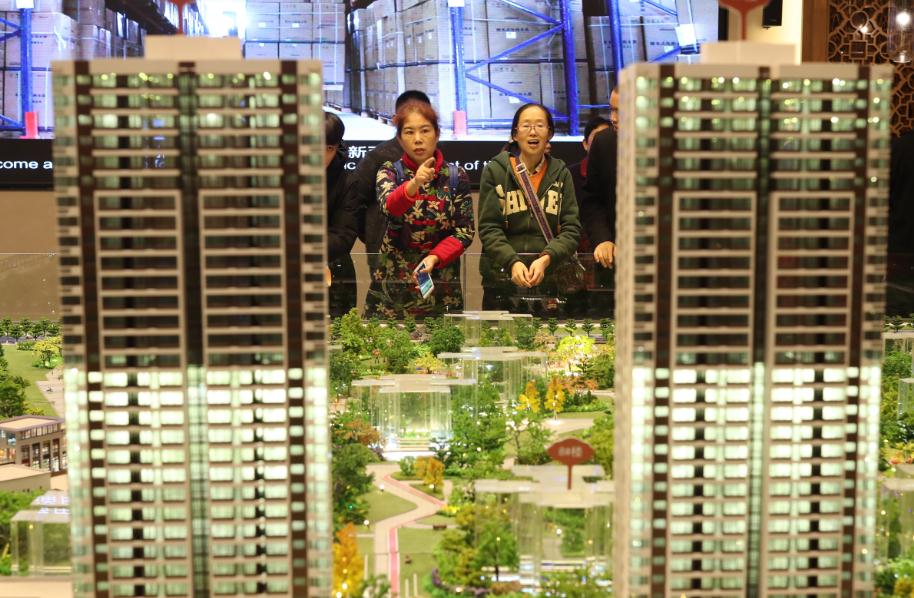
Migrant employees use Spring Festival holiday to ponder investments in lower-tier cities
Spring Festival has come and gone, and China's property industry is pondering if the real action is in lower-tier cities, away from the hustle-bustle of metros like Beijing and Shanghai.
Typically, property sellers record peak sales around Spring Festival (which fell on Feb 5 this year). But an industry report is giving them sleepless nights.
Majority (almost 53 percent) of migrant professionals and workers prefer to buy residential property in smaller cities or their hometowns, away from their places of work in big cities, according to a joint report from Anjuke, an online property information provider, 58, a life services platform, and 36Kr, a science and technology media company.
Xu Jiachun, a book editor in Beijing, is one such migrant professional. He bought his first house in 2016 when he was 29 and single.
Xu is not a case in isolation. Many of his ilk in China think owning a house before getting married is essential.
But, since property prices in the national capital were beyond his means, Xu invested in a home in Zhuozhou, a city in Hebei province that is 80 kilometers from Beijing and is its closest railway station, just a 25-minute high-speed train ride away.
"After all, it may take decades for me to buy a flat in Beijing," Xu said.
A salesman surnamed Wang, 27, in Beijing, will probably agree. He and his parents bought a house in his hometown Baoding, Hebei province, in 2017, his hometown, ahead of his wedding.
A year later, he and his wife bought another house in Fangshan district, on the outskirts of Beijing, which they rented out for 2,000 yuan ($296) per month, or just 10 percent of their monthly expenses toward home loan repayment, car loan repayment and their rented home.
Wang said he dreams of owning a house in urban Beijing one day in the future when he hopes their incomes will rise on higher wages, and property prices will be lower.
"If not, at least we have a guarantee at home. The current house is near a hospital and a school. My parents can move from our village to live there."
Homebuyers such as Xu and Wang belong to an urban demographic who are deciding to buy houses in their hometown or other smaller cities around, of whom 62 percent are born after 1990.
They have a growing demand for housing as they get married and start or build their careers, the joint report said.
"It's common for the younger generation to seek a sense of settling down," said Li Daxiao, chief economist at Shenzhen-based Yingda Securities. "The rise in home prices in previous years continues to make them worried they may not be able to afford a house their whole life, if they don't act now."
About 53 percent of young homebuyers interviewed for the joint survey before Spring Festival said they had plans to return to their hometown for the annual holiday (and scout for local residential property); 24 percent said they will buy houses as they are on the verge of marriage; and nearly 16 percent said they will invest in a new home to offer a better life for their aging parents.
In 2018, nearly 59 percent of young homebuyers intended to buy homes in their hometowns or smaller cities around. The drop from 2018 appears to suggest fewer metro-based migrant professionals are vying to buy local property.
The drop is a result of preferential policies extended to talented professionals by metro cities.
Also, China is promoting rental accommodation and long-term mechanisms for the stable and healthy development of real estate, the report said.
Ever since China underlined the principle that "housing is for living in, not speculation", and imposed restrictions on purchase, prices, home loans and residential property sales, the overheated market cooled. So, few migrant workers make speculative investments in homes in their hometowns these days, said Zhang Bo, chief analyst at the 58 Anjuke Institute.
Li of Yingda Securities said strong demand from homebuyers during Spring Festival may prove to be a short-term phenomenon, hence it may not reverse the current cooling trend, especially in third- and fourth-tier cities, where land supply is adequate and population less dense.
"But it's a good time for property developers to promote sales."
Demand for housing in first-tier cities is still healthy in spite of tightened regulations, he said.
So, the trend of young migrant professionals buying homes in hometowns will continue, said Liu Bo, an analyst with consultancy Roland Berger.
Regional central cities, or relatively new first-tier cities, such as Wuhan, Chongqing and Nanjing, will welcome more returnees, due to their growing economic competitiveness on the back of innovation and new job opportunities. Home prices in such regions are likely to grow, he said.
After impressive price growth since 2017 due to massive renovation projects of shanty towns, lower-tier cities will face a risk of downturn this year.
In first-tier cites, where the real estate market faces a yearlong stringent regulation, home prices are more influenced by policy, and will, to a large extent, stay stable, he said.




















