China-US talks should aim for common good







Editor's note: Invited by US Secretary of Treasury Steven Mnuchin, Chinese Vice-Premier Liu He arrived in Washington on Jan 28 for the next round of Sino-US trade negotiations. What impact the China-US trade conflict has had on the two countries? And how should Chinese enterprises, especially the export-oriented ones, cope with the new reality and seek new growth amid the ongoing trade conflict? Two experts share their views on the issue with China Daily's Liu Jianna. Excerpts follow:
Settling conflict will benefit all
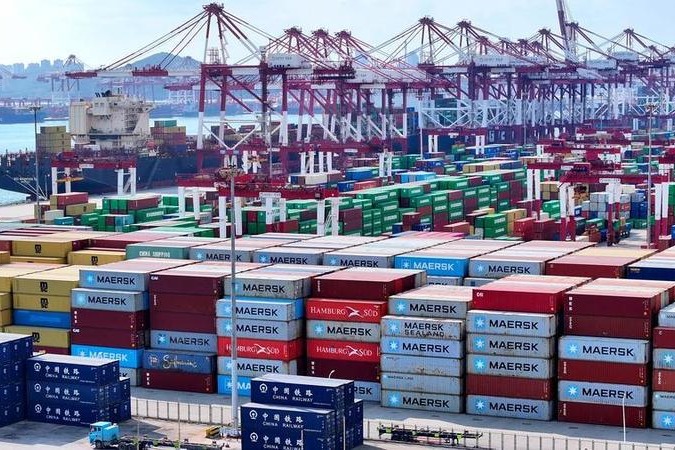
The Chinese and US economies are so inextricably intertwined that a blow to one would most likely make a dent in the other, too. This interdependence is not only reflected in the sheer size of bilateral trade and the dragging dispute's undermining effect on China's trade, as the December data show, but also foretells the more intricate and far-reaching damage to both countries' optimum resource allocation if an all-out trade war were to break out. The United States needs Made in China as much as China needs US equipment and spares.
Yet China can afford the price of fighting a trade war if it has to. Different from that in 2008 when the global financial crisis broke out, China's dependency on trade has declined as a result of the government's greater emphasis on boosting domestic demand and striking a better balance among investment, consumption and export over the past decade.
Besides the encouraging advancement of China's multiple proposals and development plans represented by the Belt and Road Initiative and China-ASEAN free trade area offer China much maneuvering room.
Nonetheless, a stable and healthy Sino-US relationship is beneficial to not only the two countries and the two peoples, but also the rest of the world, which is evident in the trade conflict’s drag on dozens of countries' economic outlook.
Thus we should prepare for the worst by quickening the pace of reform and improving our overall competitiveness in the global industrial chain while hoping for the best results from Liu's discussions with Mnuchin.
Chinese private enterprises, particularly export-oriented companies, are most vulnerable to the China-US trade conflict. In this regard, the Chinese government should implement more favorable policies for private enterprises on top of the recent tax cuts while enterprises themselves should try to gain the initiative and make the best of the external pressure to accelerate the transition to high-value added growth.
Bai Ming, a senior research fellow at and deputy director of the Institute of International Market, Chinese Academy of International Trade and Economic Cooperation
Innovation is the only solution
Despite its obvious harms to China's trade in December, the China-US trade conflict is yet to visibly influence China's overall economic growth as China registered a GDP growth of 6.6 percent in 2018. If the trade talks progress well and generate consensus, the prospects for the Chinese economy, even the global economy, in 2019 would be much brighter.
Although the past few years have witnessed a booming US economy with record-low unemployment rates, the downside risks have gradually accumulated. The US could enter a downward cycle this year itself as many predict. This concern could prompt US President Donald Trump to seek a resolution to the China-US trade conflict.
Especially, since Trump seems to be focusing on seeking re-election in 2020, he may realize that inking a Sino-US trade agreement would add vitality to his presidential campaign.
As for the struggling Chinese enterprises, many may hesitate to invest much in innovation given the slow returns and ensuing huge financial tensions. However, innovation is the path that must be embarked on by the Chinese enterprises to break the technology blockade set up by the US.
And this is where the government should jump in by developing relevant policies that encourage innovation and conform to international norms, in order to prevent outside opposition and boycott.
Su Qingyi, a senior research fellow and deputy head of Department of International Trade at the Institute of World Economics and Politics, Chinese Academy of Social Sciences