



Lingering pollution menace, ozone, gets renewed scrutiny







Declines in PM2.5 trigger rise in gas at ground level as natural sponge is lost
China's top environmental watchdog has vowed to take more steps to help reduce ozone pollution, as ground-level ozone is the only one of six major pollutants that is rising in China.
The six include air pollutants such as nitrogen oxide, sulfur dioxide and PM2.5. The ozone experienced a rise in density in the country's 338 major cities in 2018. The concentration averaged 151 micrograms per cubic meter last year, up by 1.3 percent year-on-year, according to the Ministry of Ecology and Environment.
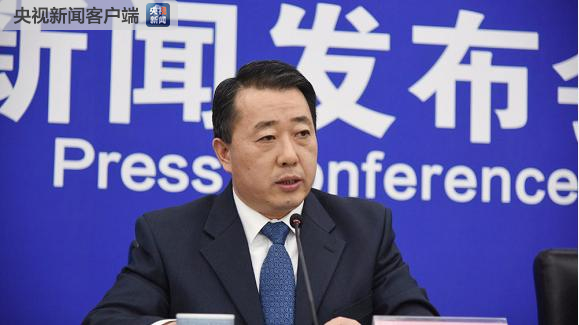
Despite the increase, there has been a marked downward growth rate trend, Liu Bingjiang, head of air quality management at the ministry, told a news conference on Monday, adding that the density has fallen for three consecutive years in Beijing.
He also noted that days with heavy ozone pollution in the 338 cities was just 0.1 percent of the total.
The possibility of the occurrence of photochemical smog-a potent respiratory hazard and pollutant-in China is "extremely low", he said.
Since 2015, the 1,436 air quality monitoring stations in the major cities have been monitoring ozone, with results made public every hour to remind people to take precautions.
He also said people could protect themselves from being affected by pollution by reducing outdoor activities, as research has found that the indoor ozone density hovers at around 60 mg/cu meter, which is the background level, even when the outdoor concentration reaches 400 mg/cu meter.
A joint study by the John A. Paulson School of Engineering and Applied Sciences at Harvard University and the Nanjing University of Information Science & Technology in Jiangsu province found that the dramatic reduction of PM 2.5 in China led to the increase of ozone density at ground level.
Most ozone in the troposphere is formed by a chemical reaction when sunlight interacts with nitrogen oxide and other organic compounds generated by coal-burning emissions, vehicle exhaust and some natural sources. Excessive concentrations of ozone can cause respiratory irritation in humans, damage the body's immune system and affect lung function.
The two institutes found that particulate matter could suck up the radicals needed to generate ozone pollution. The rapid reduction of PM2.5 made more of the radicals available to produce ozone, according to a story published on the Harvard school's website.
"We haven't observed this happening anywhere else because no other country has moved this quickly to reduce particulate matter emissions," the story quoted Daniel Jacob, a corresponding author of the joint study, as saying.
Jacob said it took China just four years to do what took 30 years in the United States.
The density of PM2.5 particulate matter in major cities dropped by 9.3 percent and reached 39 micrograms per cubic meter last year.
"I consulted some experts and we generally agree with the study," Liu said, adding that the ministry will publish a series of standards related to volatile organic compounds, including one for industrial emissions and a quality standard for products. VOCs may contribute to both PM2.5 and ozone.
"We will intensify efforts to control volatile organic compounds to promote the reduction of PM2.5 and ozone," Liu said.
The Chinese government has formulated a plan to reduce the density of nitrogen oxide and VOCs by 15 percent and 10 percent respectively by 2020. The ministry had imposed VOC controls at 280,000 enterprises last year, he said.
"We firmly believe the increasing trend of ozone pollution will be relieved," he said.


- Hainan's 1st batch of daily consumer goods duty-free shops for island residents opens
- Cross-Strait affairs should be settled 'like family', official says
- Whale injured in collision with fishing boat near Weizhou Island
- Lizard found on high-speed train brought by passenger, rail authorities say
- Zeiss top exec: Learn from China speed
- Ancient tomb cluster in Changsha offers a glimpse into millennia of history











