China investment feels Australian chill







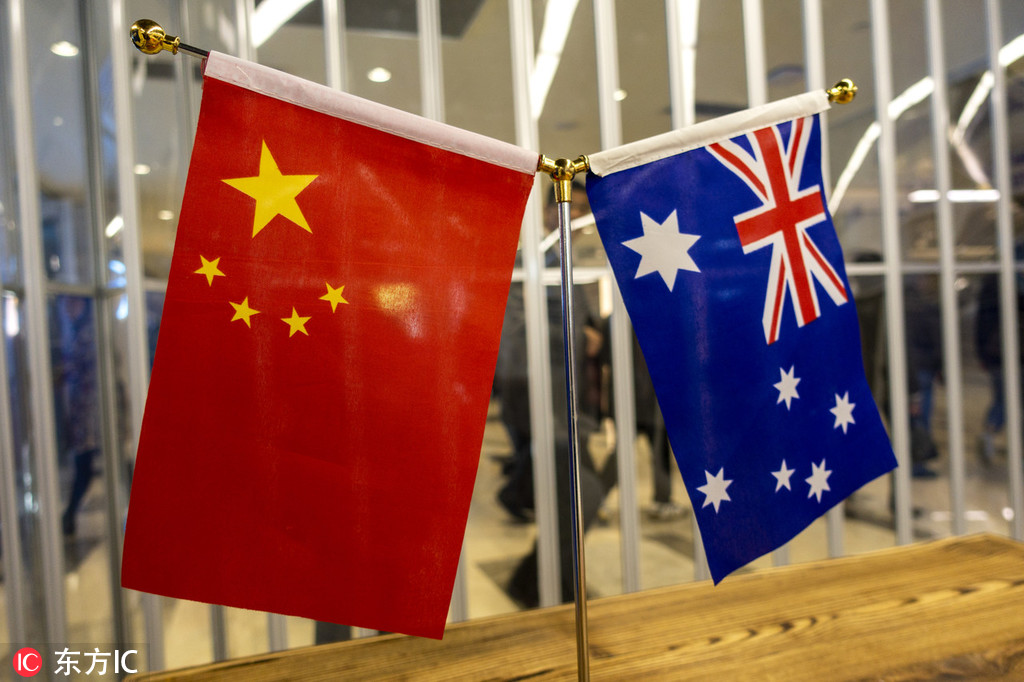
The Australian business environment for Chinese investment seems to be getting colder despite interests of investors and expectations of mutual benefits.
After rebuffs in recent years, the board of Healius, one of Australia's biggest health groups, turned down the offer of an all-cash A$2 billion ($1.42 billion) takeover by Shanghai-listed Jangho Group on Jan 7.
In a statement on the same day, Jangho said it was "disappointed" the Healius board had "so promptly dismissed an offer that represents compelling value for Healius shareholders".
On Jan 3, Jangho-the single biggest shareholder in Healius with 15.9 percent of the company-offered to buy the shares it did not own for A$3.25 a share, which represented a 33 percent premium to Healius' closing price of A$2.44 on Jan 2.
The Beijing-based company expressed its desire to meet with Healius' board and management to explain why it was in the best interest of Healius shareholders to consider the proposal.
The bid for Healius comes at a time when Chinese investors are jostling to acquire healthcare operators, not only in Australia but internationally, to serve a growing demand for better doctors and services in China.
Chinese investment in Australia's healthcare sector surged from near zero in 2015 to A$5.5 billion in 2017, according to a report from KPMG and The University of Sydney Business School.
The 2018 report, Demystifying Chinese Investment in Australian Healthcare, said: "Investments in Australia made by entities from the People's Republic of China through mergers and acquisitions and joint ventures in calendar years 2015 to 2017, found that investment has been concentrated in the health supplement and medical treatment sectors in Australia."
Healius, formally known as Primary Health Care, is one of the biggest owners of general practitioner clinics and pathology centers in Australia.
The company has been under pressure over the past year with its share price dropping from around A$4 in March to a low of A$2.19 just before the market closed for Christmas. Last August the company went back to the market after a A$250 million equity raising drive.
With a background in construction supplies, Jangho is one of the world's biggest manufacturers of curtain walls. But it has been diversifying into the healthcare sector in recent years.
In July 2015, it bought a 19.9 percent stake in the Australian Securities Exchange-listed Vision Eye Institute from Healius (then Primary Health), and then bought the entire eyecare group just a month later.
It is also the fourth-largest investor in Monash IVF, which runs some of Australia's most established fertility programs, with a 4.5 percent stake.
Listed on the Shanghai Stock Exchange, it has a market capitalization of $1.8 billion, according to Bloomberg.
Healius operates about 2,400 pathology centers, 70 medical centers and is partnered with about 1,500 general practitioners, dentists and other healthcare specialists across Australia.
Chinese investment in Australia's healthcare sector now exceeds its investment in the sector in the United States, according to Alice de Jonge, senior lecturer at Monash University's Business School in Melbourne.
Chinese investors in Australia's healthcare sector are predominately private companies and not State-owned enterprises, she told China Daily.
Many of the investors include hospitals, specialized healthcare providers, pharmaceutical companies, construction companies and private equity firms.
There have been no large investments in pharmaceuticals, biotechnology or elderly care as China seeks to develop local expertise in these areas, according to de Jonge.
She said the main attractions for Chinese investors are "the digitization of healthcare services and technical capabilities; Australia's management expertise in specialized healthcare services; a stable regulatory (including political) and economic environment in Australia, and our cultural diversity".