



Aggressive tax cuts aim to improve fortunes of small businesses







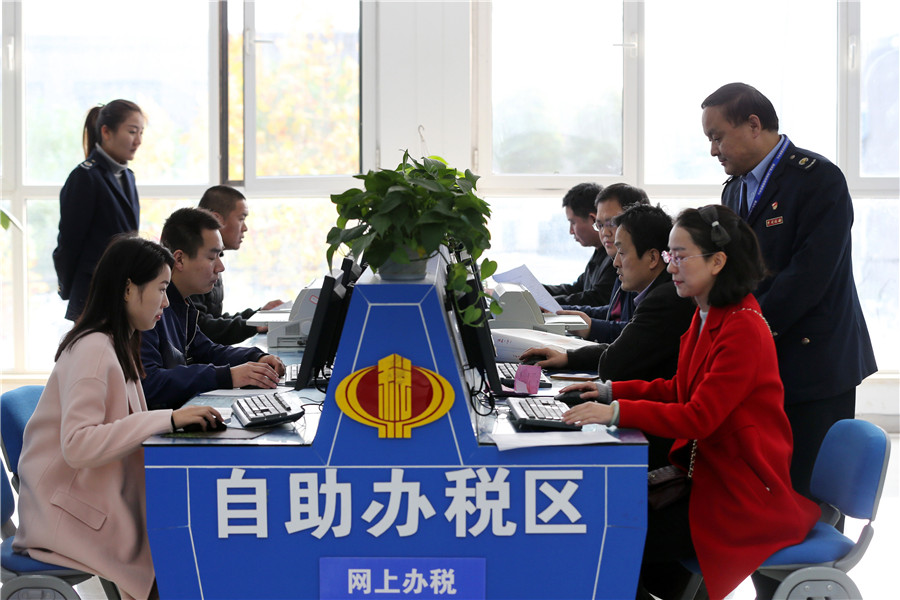
If 2018 marked the start of "a tax-cut new era" in China, after more than 1.3 trillion yuan ($192 billion) was slashed from the nation's tax bill, then policymakers expect 2019 to be the year when the effects begin to filter through to the economy, and said that more aggressive reforms could be on the way.
Tax reductions for corporate and household sectors have boosted Chinese residents' confidence of a stabilized economy - GDP growth sat at around 6.5 percent in 2018, without higher unemployment or deflation, despite a fast-changing global trade environment, market headwinds, and a host of uncertainties.
"Chinese tax system reform will continue to deepen this year, with more aggressive tax cut plans. But the key is to balance relationships between fiscal income and expenditure, as well as between the central and local governments," said Deng Liping, a professor from the school of economics at Xiamen University.
"Tax reform should support China's economic supply-side structural reform, encourage production through reducing tax and fee costs for businesses, and promote industrial upgrading through an increase of fiscal spending in key areas," said Deng.
The larger-scale tax cut in 2019, according to officials from the Ministry of Finance, will especially support small and micro businesses and deepen value-added tax reform.
The first tax policy change of this year was announced after a State Council executive meeting on January 9. Small businesses with less than 100,000 yuan ($14,800) sales revenue per month will no longer pay any value-added tax-effective immediately. The tax threshold was also raised from 30,000 yuan.
The tax authority also modified the definition and enlarged the group of "small and low-profit companies," to be those with an annual taxable income of less than 1 million yuan. Each now only needs to pay about 5 percent tax, 20 percentage points lower than the normal level, according to the Finance Ministry.
These companies, of which 98 percent are private firms, can also enjoy special tax cuts, including on resource tax, stamp tax and tax on using urban land levied by local governments.
In addition, the tax burden on venture capital investments could be eased by 70 percent, if the fund is for technology startups.
Another big move last year was the revision of the individual income tax law and the debut of special individual income tax deductions. All these measures took effect on Jan 1. In the reform of the individual income tax - one of three major contributors to China's treasury, along with value-added taxes and enterprise income taxes - the tax brackets and threshold were raised, effectively giving everyone a tax break, and lifting millions out of paying any income tax altogether.
The Finance Ministry is also working with other government departments on a plan to reduce the social security premium rate, said Finance Minister Liu Kun in a recent interview.
Fiscal expenditure will at the same time moderately expand and increase financing in areas including poverty alleviation, agriculture, technological innovation, environmental protection and efforts to improve people's livelihoods, Liu said.
To extend the tax cuts and fiscal spending means that the public debt could rise, and the government is considering whether to widen the budget deficit moderately this year.
"To offset part of the tax reduction, new local government tax items are under research, such as the resource tax, to better adjust tax incomes among different regions," said Liu Yi, a professor from the school of economics at Peking University.
The latest data from the Ministry of Finance showed that the country's fiscal revenue stood at 1.08 trillion yuan in November 2018, a 5.4 percent decline year-on-year. The decline widened from a drop of 3.1 percent in October, the first fall this year.
In November, China's tax revenue reached 805.1 billion yuan, down 8.3 percent year-on-year, compared with a 5.1 percent decline in October, the ministry said.




















